Art Basel Miami Beach Preview: Artists We’re Watching
At Art Basel Miami Beach, a mirror of the global art market, the artists we highlight are not only responding to the present but actively shaping the future. Through material, the body, memory, and cultural lineages, they reimagine abstraction, narrative, and painting—producing works that combine intellectual rigor with long-term collectibility, and increasingly occupy the center of institutional and market attention.
Art Basel Miami Beach is one of the most important art events of the year-end season, functioning as a mirror of the global art market—reflecting shifts in collecting tendencies, evolving cultural narratives, and the formation of new cycles of artistic value. The artists we have selected this year are not chosen merely for their presence at the fair, but for how precisely their practices respond to the current and future structures of the market, as well as to broader cultural contexts and evolving artistic languages.
Among them are artists who redefine abstraction through materials and cultural lineages; others who rewrite narratives through the body, movement, and identity politics; and practitioners who continue to explore the future of painting through image, memory, and perception. What unites them is that their work possesses not only aesthetic depth, but also interdisciplinary resonance and long-term value potential—capable of forming sustained relationships with institutional collections, exhibition frameworks, cultural discourse, and future markets.
Chen-Kong Fang (1931–2007)
Chen-Kong Fang was a singular artist whose career bridged Eastern and Western visual languages, spanning China, Brazil, and key international art centers. Beginning in the 1960s, Fang developed a deeply personal pictorial vocabulary centered on tranquil interior scenes, wind-bent branches, and everyday objects imbued with a sense of life. Through subtle shifts in proportion and masterful use of negative space, these subjects acquire a quiet spirituality and a warm, anthropomorphic presence. The enduring power of Fang’s work lies in his ability to capture the qi—the inner vitality—of things, revealing a silent yet enigmatic energy within seemingly ordinary scenes.
Trained early in watercolor and ink painting, Fang later studied Western oil painting in Brazil under Yoshiyuki Takaoka, cultivating a distinctly cross-cultural visual sensitivity. His mature works emphasize the Eastern aesthetic of imagery and spirit while maintaining the chromatic rhythms of Brazilian modernism, resulting in paintings that resist easy categorization. It is precisely this hybridity that has led to a renewed contemporary appreciation of his work, now increasingly recognized as a critical case study at the intersection of Asian diasporic art and Latin American modernism.
In 2025, Fang’s work was included in The Hong Kong Jockey Club Series: Picasso for Asia—A Conversation at M+, reaffirming his significance within a global art-historical framework.
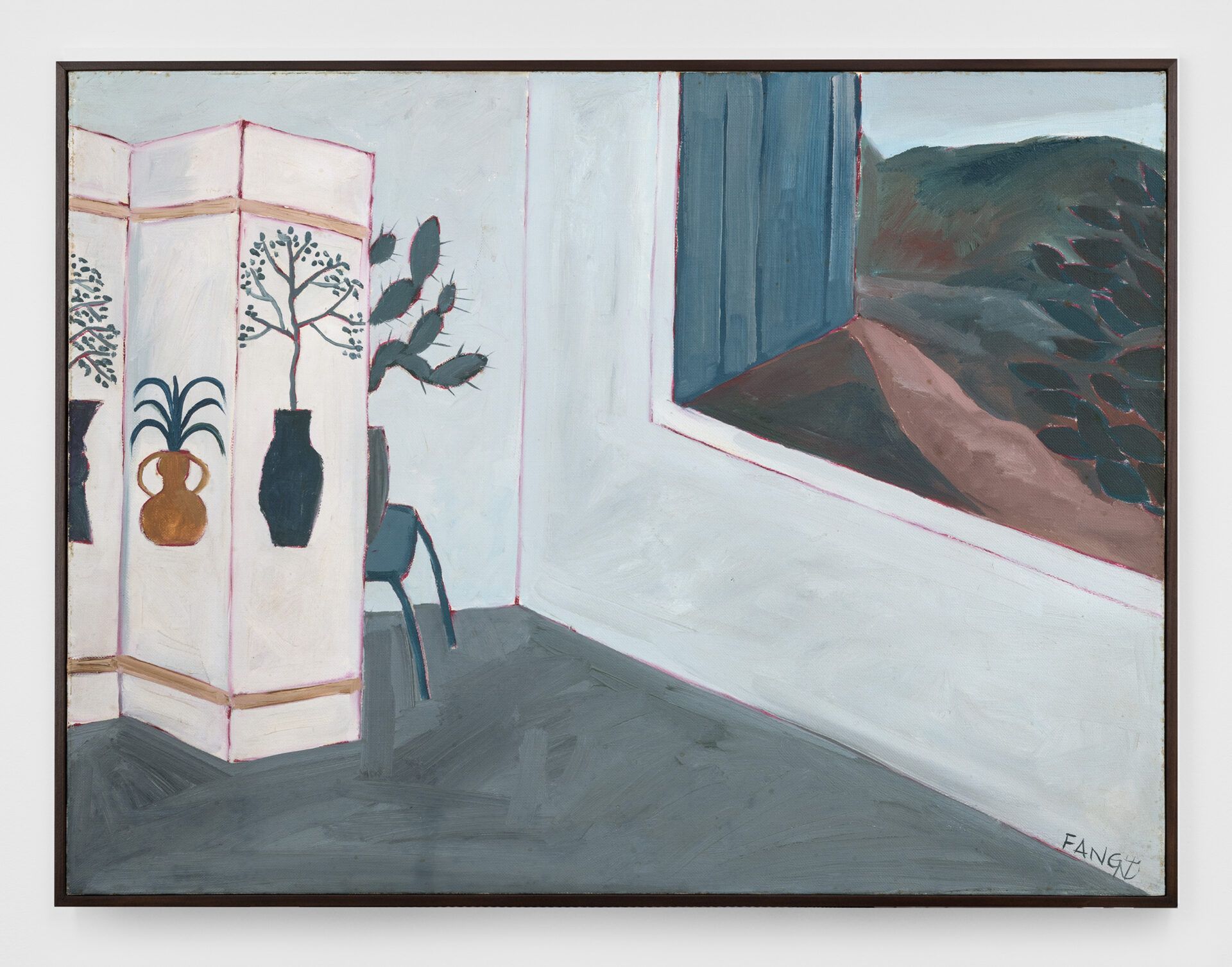
Chen-Kong Fang, Untitled, 1980
Miyoko Ito (1918–1983)
Miyoko Ito’s works from the 1950s represent the most prized period of her career, marking the crystallization of her unique artistic language. With a restrained yet tender touch, she transformed modernist abstraction into emotionally resonant, structural landscapes. These early works construct psychological spaces that hover between figuration and abstraction—defined by gentle geometric forms, layered planes of color, and luminous tonalities. They evoke tides, stones, or twilight atmospheres, containing immense tension beneath their quiet surfaces, setting Ito apart among postwar abstract painters.
In recent years, the market has rediscovered the artistic significance and rarity of Ito’s early works. At Sotheby’s Contemporary Day Auction this past November, a painting from the same year as the one recommended here achieved USD 330,000. Another work from the 1950s sold at Sotheby’s in May for more than four times its low estimate, underscoring the strong collector demand for this period.
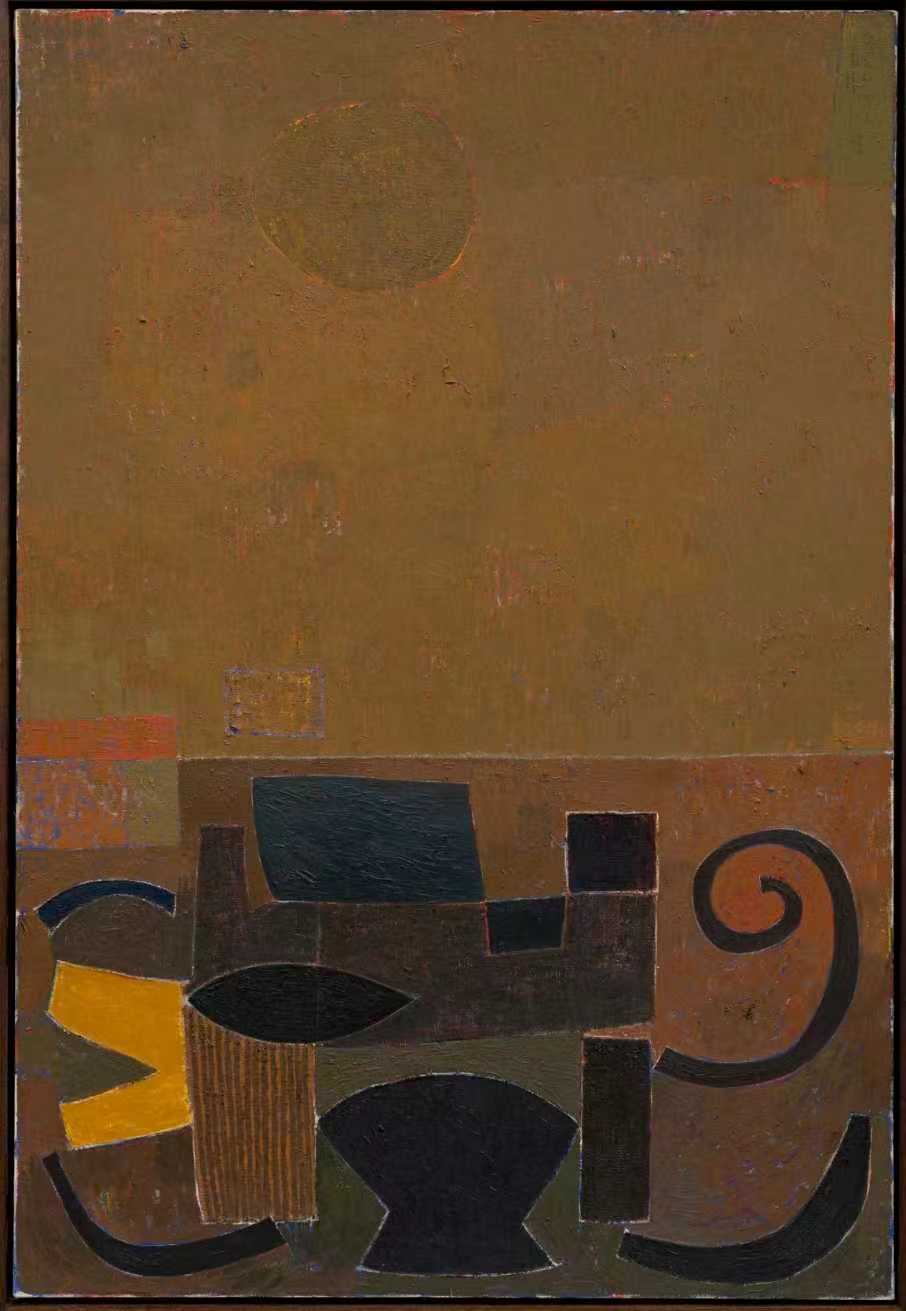
Miyoko Ito, Untitled, c. 1955
Olivia van Kuiken (b. 1997)
This new work continues Olivia van Kuiken’s core visual language—reconsidering the boundaries of body and form through compression, multiplication, and distortion. Squished Malevich directly references Kazimir Malevich and Suprematism, yet not as mere appropriation. Instead, pure geometry is compressed into the dynamics of the human figure, creating a collision between abstraction and figuration within a single pictorial field. The act of “flattening Malevich” is at once humorous and critical, repositioning early 20th-century avant-garde language within 21st-century body politics and accelerated social conditions. It marks one of the artist’s most mature and intellectually rigorous directions to date.
The work also exemplifies the most notable breakthroughs of her Bastard Rhyme series this year: nonlinear compositions, multiplied limbs, folded spatial structures, and pronounced kinetic trajectories. These elements combine Futurist energy, Baroque theatricality, and the spatial ambiguity of non-objective painting, forming a highly recognizable personal language—one reason her recent Los Angeles solo exhibition saw works sell out rapidly.
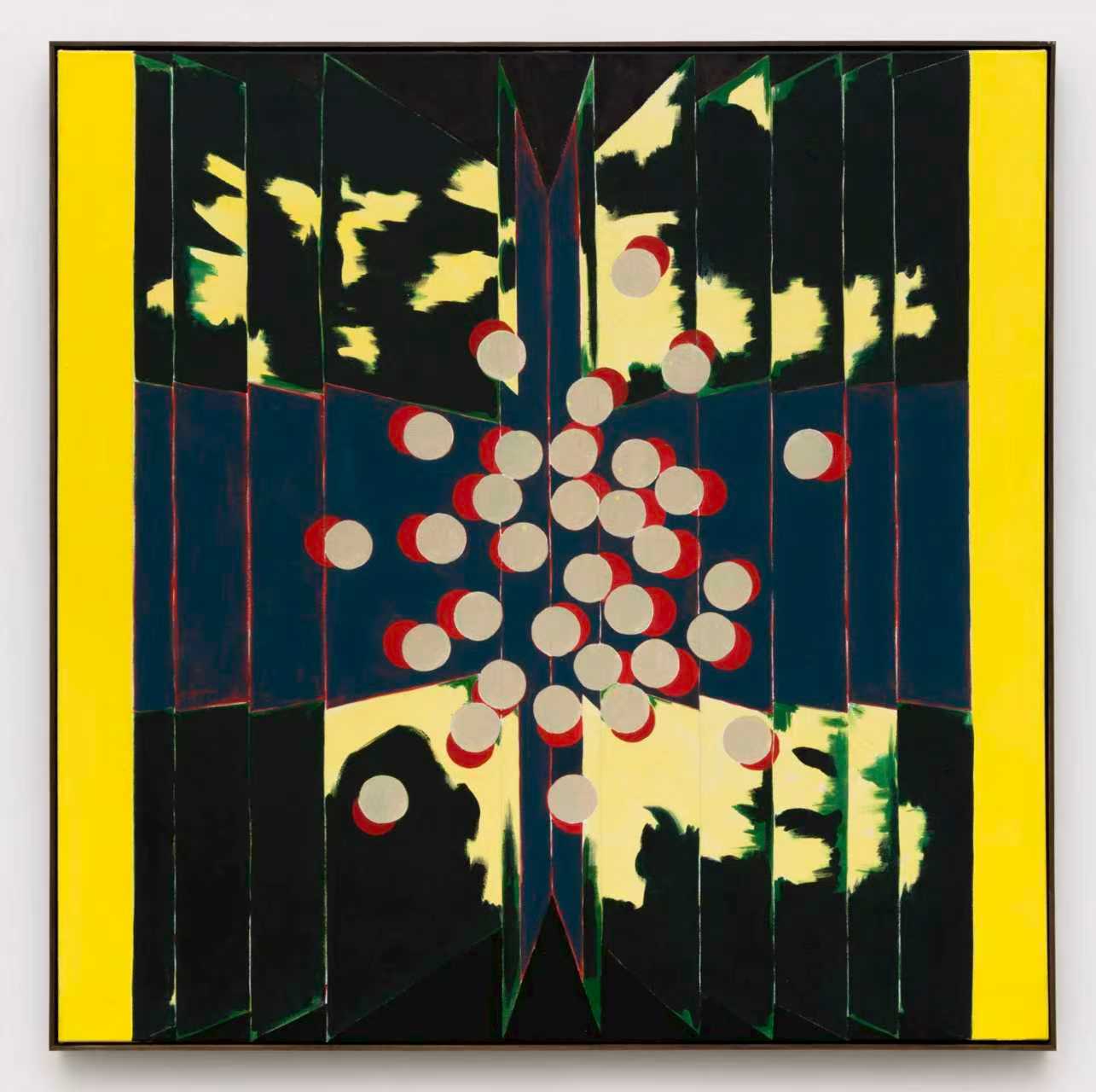
Olivia van Kuiken, Squished Malevich, 2025
Kamrooz Aram (b. 1978)
Kamrooz Aram is widely recognized for placing non-Western decorative traditions into dialogue with Western abstraction, producing works of exceptional conceptual depth and cultural sensitivity. His paintings and sculptures traverse the boundary between “decoration” and “fine art,” critically examining the institutional and historical power structures that have shaped such classifications. Born in Shiraz, Iran, and emigrating to the United States in the 1980s, Aram’s personal experience of cultural multiplicity informs his understanding that classification does not merely describe identity—it produces it.
His works are visually rich with geometric and ornamental forms, while conceptually challenging the privileged position of Western abstraction in art history. Aram has received international recognition, including the Rome Prize and a Guggenheim Fellowship. His works are held in major public collections such as the Metropolitan Museum of Art, M+, and Sharjah Art Foundation, attesting to his global significance.
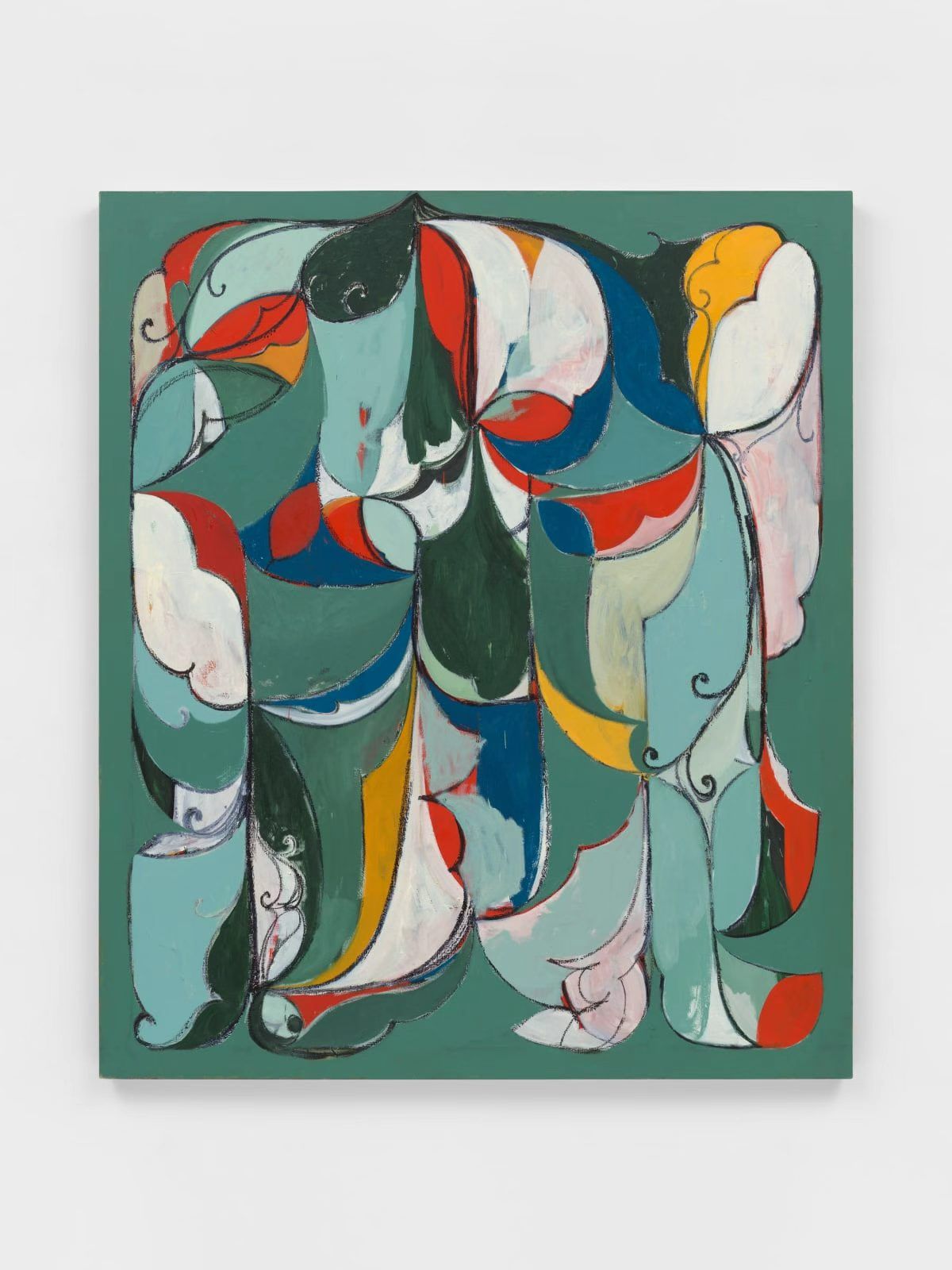
Kamrooz Aram, Untitled (Arabesque Composition), 2022–2023
Igshaan Adams (b. 1982)
Igshaan Adams approaches “movement as material,” decoding histories of community through tactile processes. His multidisciplinary practice—spanning weaving, sculpture, installation, and performance—addresses personal and collective memory, tracing the cultural and bodily landscapes of growing up in a segregated suburb of Cape Town. Through the reworking of ritual, reinterpretation of tradition, and foregrounding of queer identity, Adams collaborates with communities to reshape concrete memories into narratives of resistance, survival, and healing.
His dance imprint tapestry series, initiated in 2023, records the footsteps of members of the Garage Dance Ensemble. Using pigment imprints, colored beads, cotton rope, fabric, chains, and mohair, Adams constructs dense, layered compositions in which each footprint carries a distinct life story. Works such as Opheffing (2024), with violet fibers tracing luminous footprints against dark grounds, pulse with memory in motion, articulating visions of liberation and renewal.
His solo exhibition Lulu, Zanele, Zandile, Savannah will open on December 2, 2025, at the Institute of Contemporary Art, Miami (ICA Miami), coinciding with Art Basel Miami Beach.
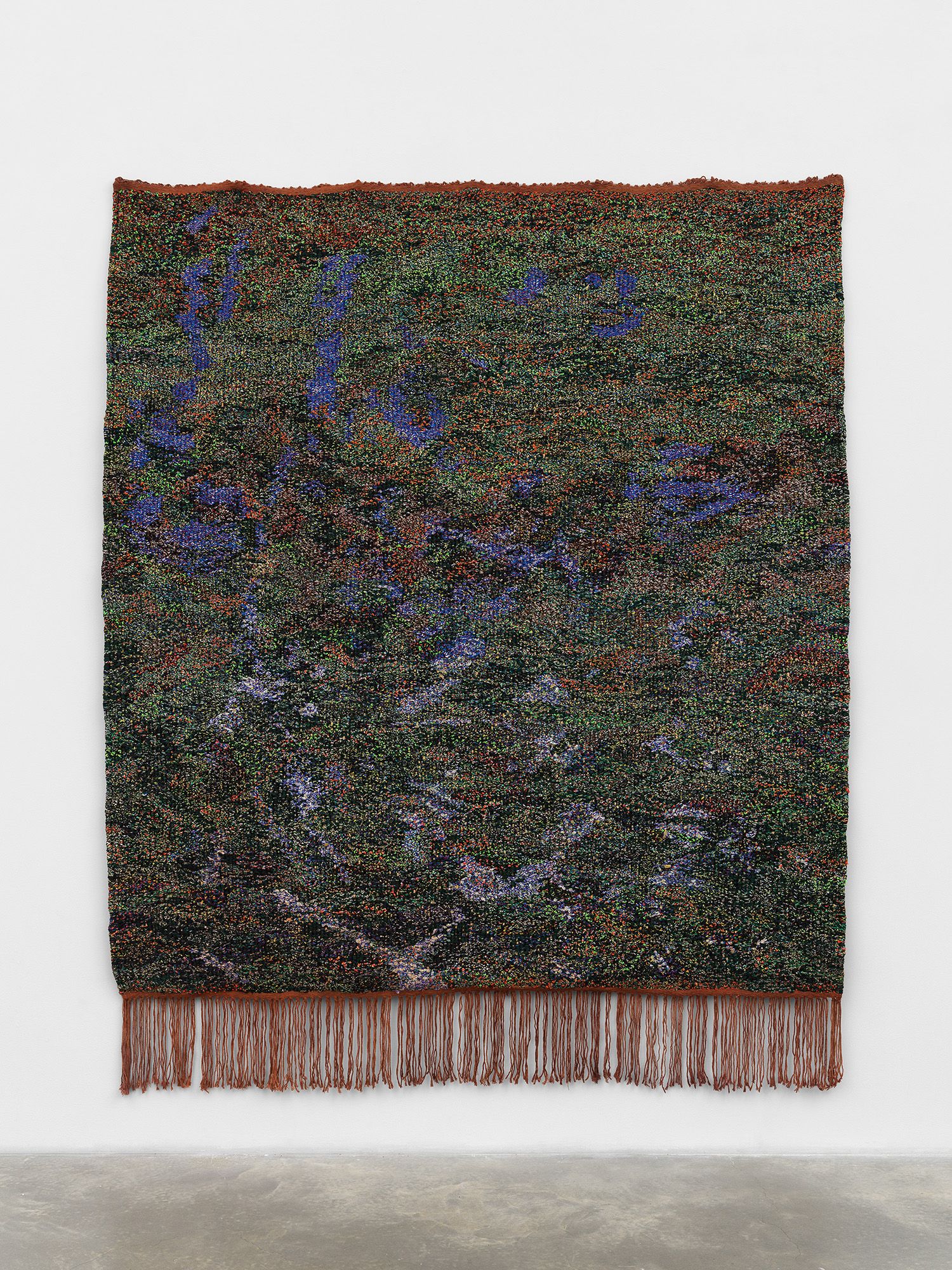
Igshaan Adams, Uplifting, 2024
Trevor Shimizu (b. 1978)
Trevor Shimizu’s recent work Dahlias and Daffodils (4) exemplifies his distinctive painterly language and mature conceptual approach. Painted entirely from memory, the work foregrounds immediacy of gesture and traces of reflection, merging vivid subject matter with a deliberately distanced mode of representation. The scale of the canvas recalls Color Field painting, offering a sensory richness that resists digital reproduction and enhances the work’s spatial presence.
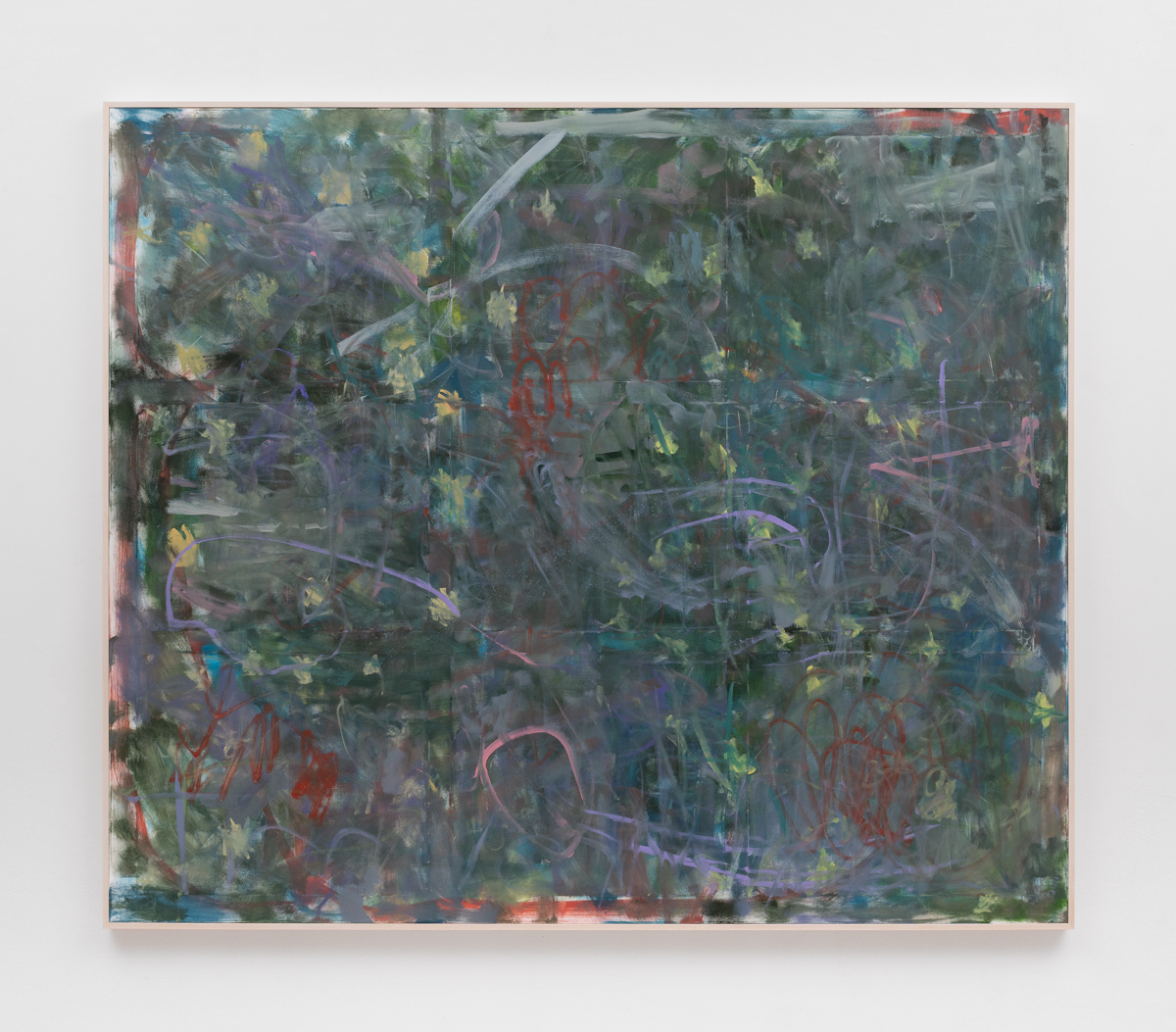
Trevor Shimizu, Dahlias and Daffodils (4), 2025
As an art student, Shimizu visited the 1998 Pierre Bonnard exhibition at The Museum of Modern Art, New York, an experience that initially left him disillusioned with painting and led him toward video and performance. Yet Bonnard’s assertion—“All my subjects are within reach”—remained deeply influential. Drawing from Bonnard’s experiments with immediacy, Shimizu translated his earlier narrative humor into a purely painterly language, expanding possibilities of form, composition, and color. His new works retain wit and poetry while achieving greater formal clarity, offering a contemplative viewing experience that balances emotion and intellect. Since his solo exhibition at Modern Art last year, Shimizu has garnered significant attention, and this work represents a deeper and more distinctive evolution of his practice.