A New Chapter in Contemporary Landscape: At the Starting Point of Accelerating Value
This article traces the development of Western landscape painting, showing how “mountains and waters” have evolved from mere depictions of nature into contemporary visual language that carries identity, memory, and emotion. It focuses on four post-1990s artists—Michael Ho, Francesco Cima, Jake Grewal, and Su Yu-Xin—highlighting how they reinterpret the landscape tradition through diverse cultural backgrounds and creative methods, revealing new possibilities for contemporary landscape in both art history and the collecting context.
Landscape has long been a favored subject among artists. While “landscape painting” in Western art history does not possess an independent and continuous lineage comparable to that of East Asian traditions, a closer examination reveals that its emergence in the West was, in fact, a gradual process of “discovering nature.” From what is often regarded as one of the earliest European landscape paintings—Albrecht Altdorfer’s The Battle of Alexander at Issus (1529)—to the establishment of landscape as an autonomous genre in the seventeenth century, and onward to the Romantic visions of J.M.W. Turner and the well-known figures of Impressionism, landscape painting has continually evolved in form and meaning.
During the height of the art market frenzy in recent years, landscape painting was dominated by artists such as Nicolas Party, Shara Hughes, and Matthew Wong. Today, a new generation continues to inherit and expand this rich tradition. Here, we take a closer look at several promising post-1990s landscape artists who are redefining the genre.
Michael Ho (b. 1991)
Michael Ho grew up in Germany and is of Chinese descent. As a second-generation Chinese artist in Germany, he subtly integrates the aesthetics of Chinese ink painting with the traditions of pre-modern European art. His subject matter frequently addresses blurred boundaries of identity, incorporating symbols and gestures associated with the Asian diasporic experience and queer culture.
“There is a place you come from, yet no place that truly feels like home—that is a strange feeling,” Ho has remarked. His works resemble worlds he constructs by hand, spaces that hold his sense of floating, unsettled selfhood.
Ho developed his distinctive technique through an accidental experiment with painting on unprimed canvas. He begins by pushing pigment through the back of the canvas, allowing color to seep and spread through the fibers, forming abstract textures—sometimes reminiscent of wind-blown leaves, at other times evoking microbial rhythms. Once dried, these textures become a dense yet visually unstable ground. Ho then flips the canvas and uses these reverse-side formations as a natural template, painting figures and imagery on the front with oil paint. Each work thus embodies a delicate balance between front and back, abstraction and figuration, solidity and permeability.
Ho attracted significant attention with his solo exhibition at High Art in Paris in 2023. That same year, he participated in group exhibitions at BLUM Tokyo and White Cube Hong Kong, followed by shows at Modern Art and Thaddaeus Ropac the following year. His growing presence across established galleries has rapidly elevated his profile. In 2025, his work was included in the annual exhibition 360°: Why We Paint? at Tianmuli Art Museum in Hangzhou, marking his steady transition from the gallery circuit into institutional contexts.
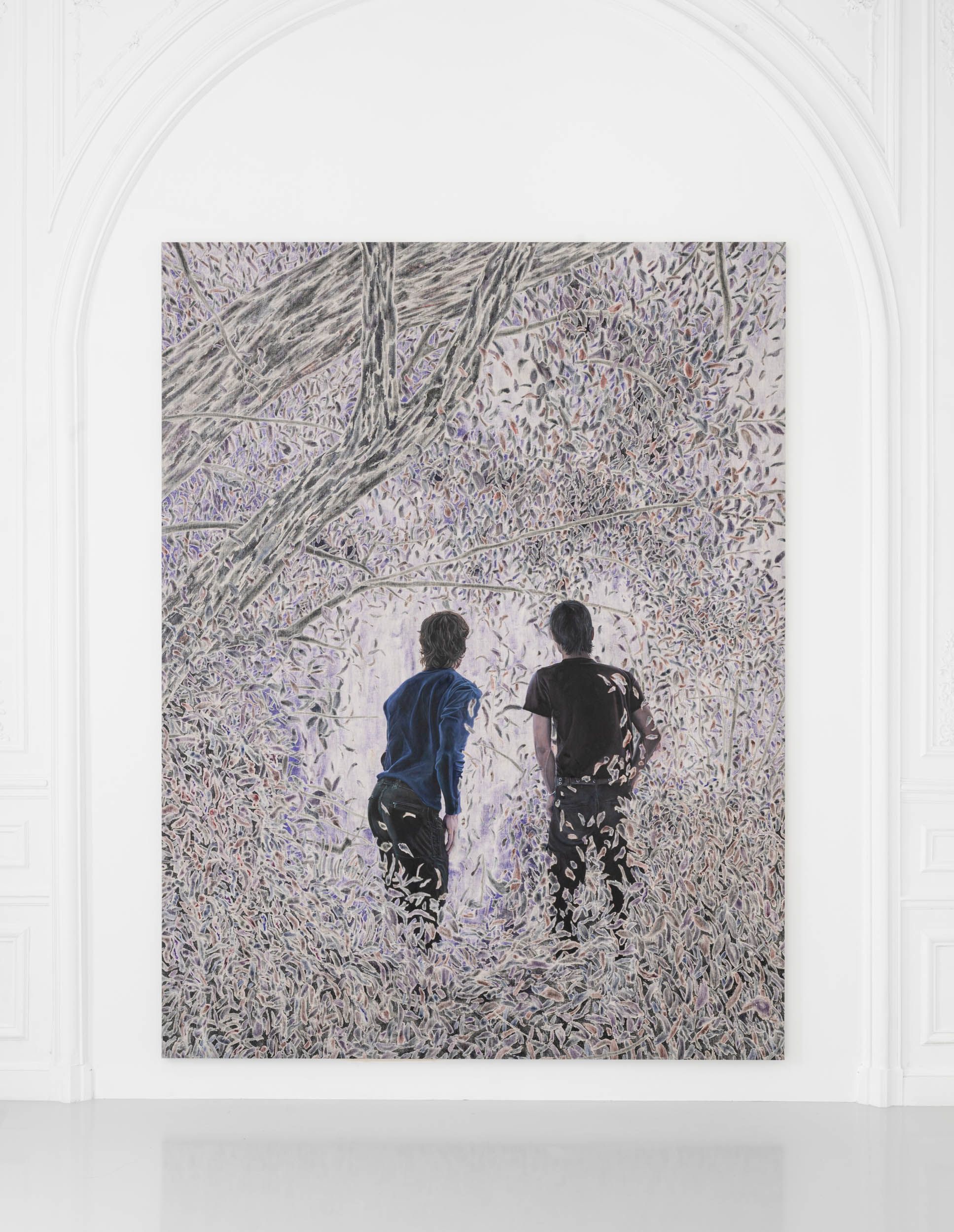
Michael Ho, History Will Wait for Us, 2023
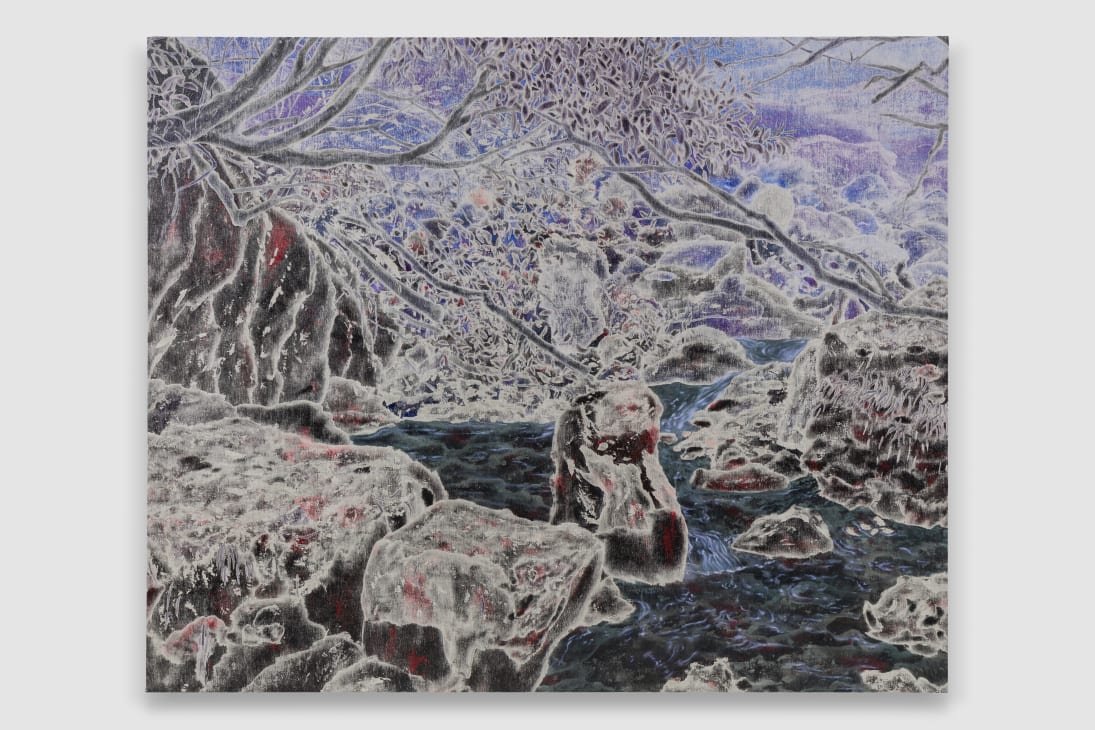
Michael Ho, Hunting in a Dream of Summer, 2024
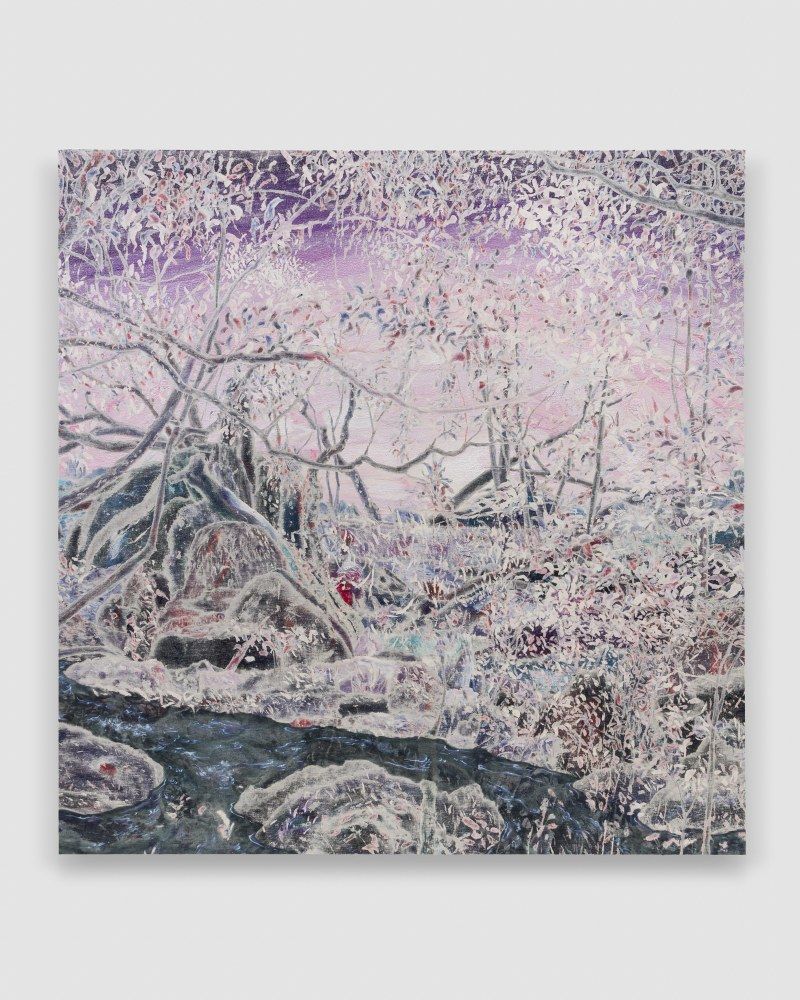
Michael Ho, Ashihara No Nakatsukuni, 2025
Francesco Cima (b. 1990)
Francesco Cima’s artistic trajectory and inspiration stem from his contrasting experiences of nature in Tuscany and Venice. He grew up in the small town of Stiava in Tuscany, where the fertile land and distinct seasons shaped his early sensitivity to the natural world. Later, while studying in Venice, he became deeply captivated by the city’s waterways and canals, eventually settling there and establishing landscape painting as the core of his practice.
A deep sense of nostalgia rooted in personal memory runs throughout Cima’s work. His landscapes are often based on real locations, transformed through memory and imagination so that fragments of the past intertwine with present emotions and seasonal shifts. Through layers of delicate brushwork and nuanced light, he constructs visual worlds that feel both real and poetic.
Cima’s landscapes evoke, for me, the yellowed texture of aged Chinese xuan paper or the earthy tones of ancient grotto murals. This sense of familiarity arises from his meticulous attention to detail and his intuitive ability to connect distant times and terrains. His approach resonates strongly with ideas found in Chinese landscape painting, such as the notion expressed in Linquan Gaozhi (Lofty Ambitions in Forests and Streams): “Painting is the dance of the brush and the trace of the heart.” Landscape, in this view, is not a depiction of mountains and water, but an expression of the artist’s spirit, emotion, and cultivation.
This month, Cima’s solo exhibition Francesco Cima: Rhythms of the Seasons opened at X Museum in Beijing—his first institutional exhibition in Asia. Curated by Liu Chang and Lü Donghui, the exhibition brings together eleven new paintings created in 2025, alongside a recent work from the museum’s collection, offering a focused presentation of his sustained exploration of nature.
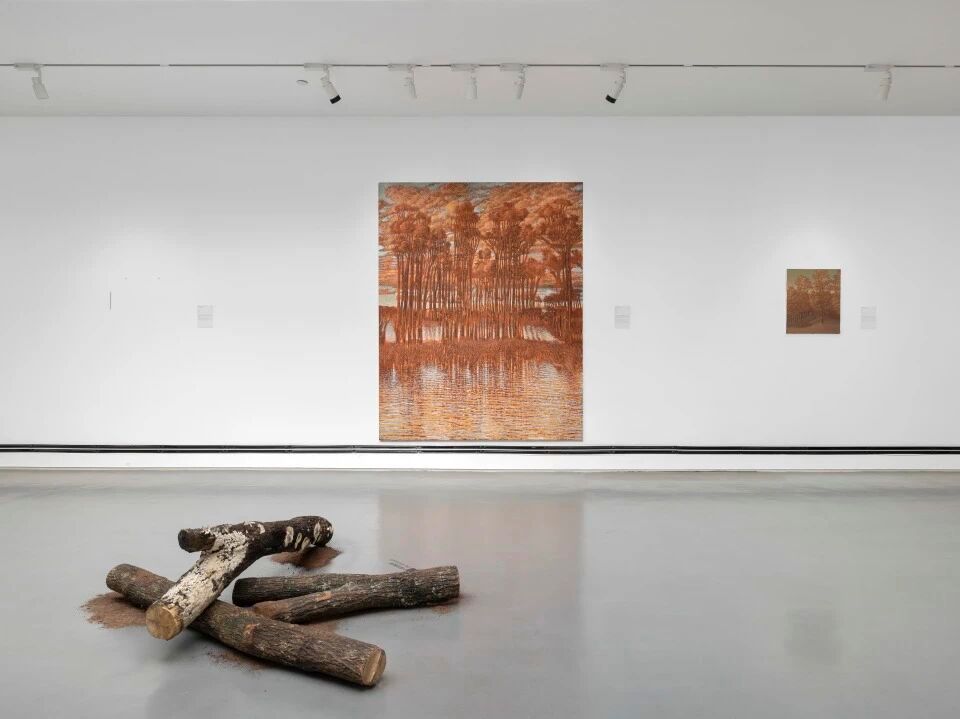
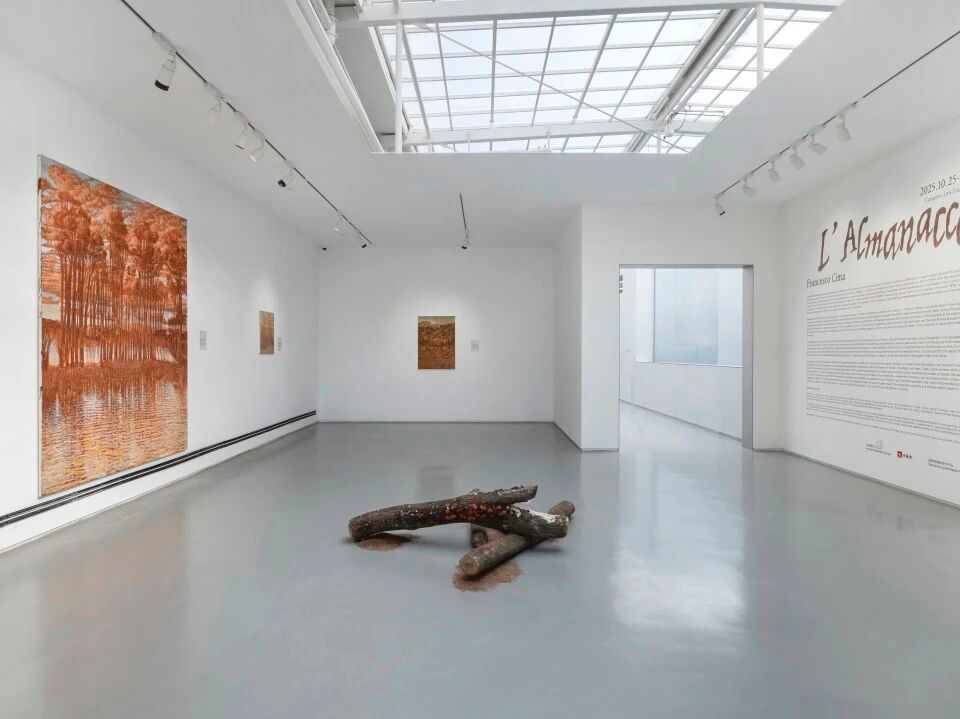
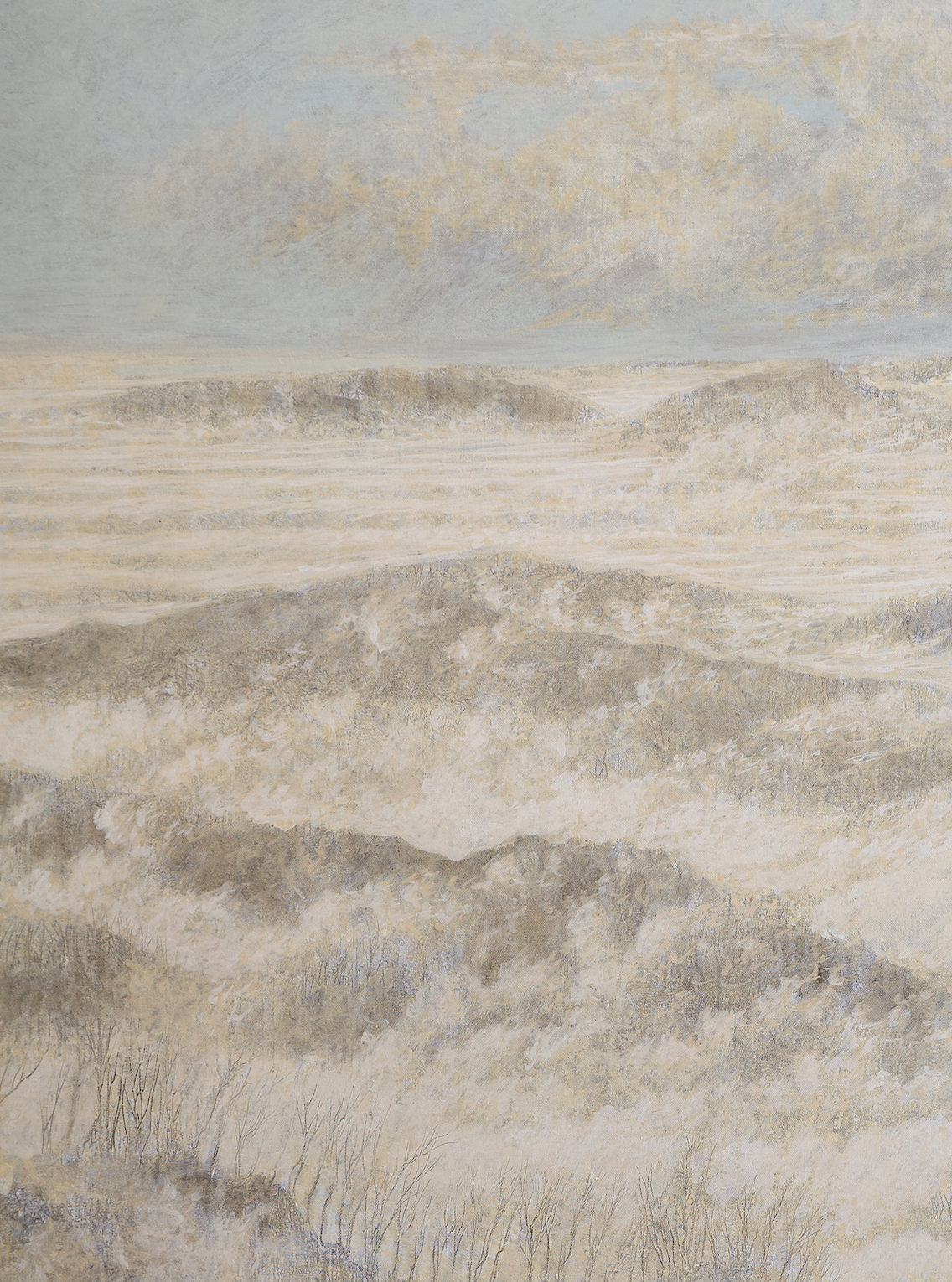
Francesco Cima, Bassano, 2025
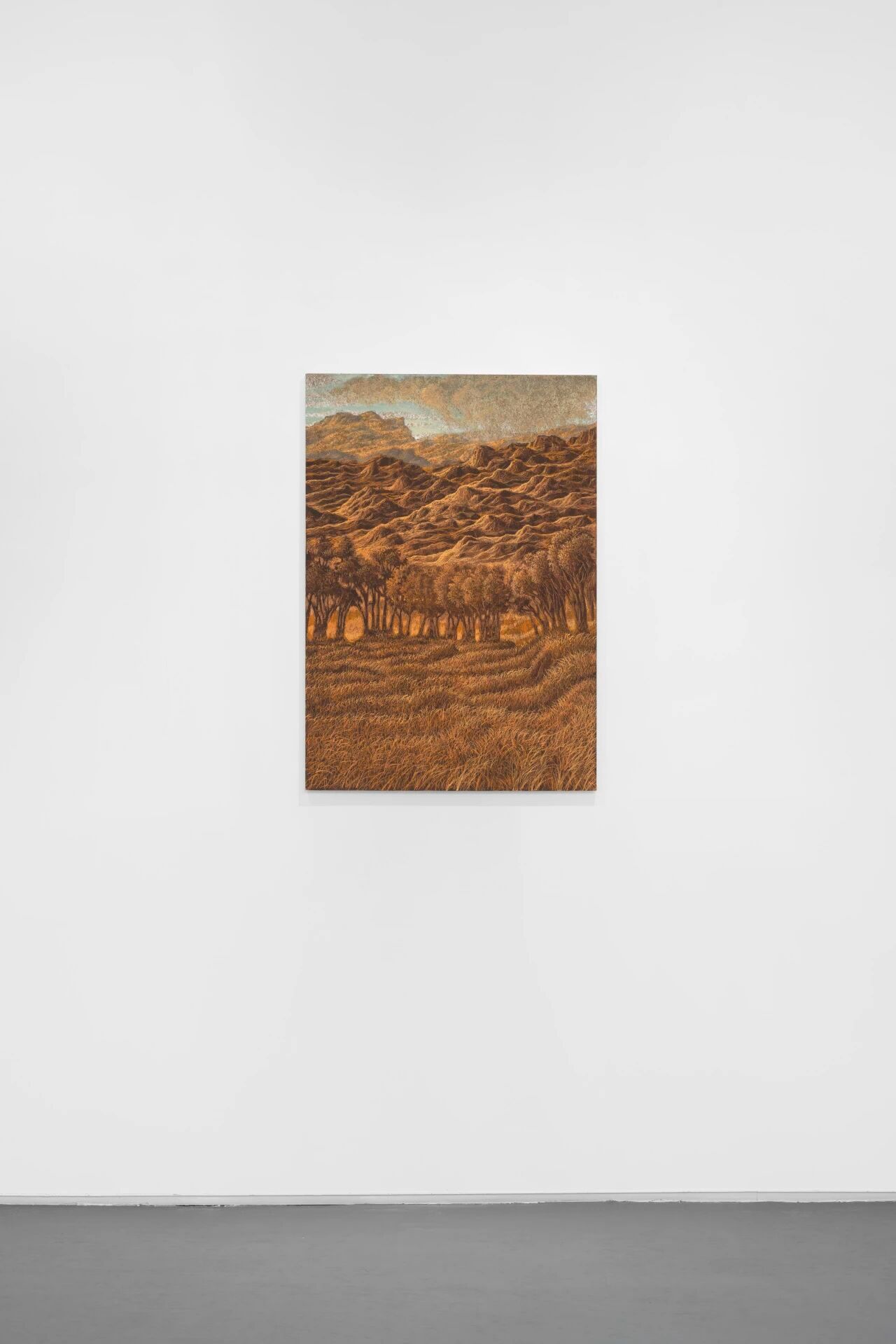
Francesco Cima, Cintura, 2025
Jake Grewal (b. 1994)
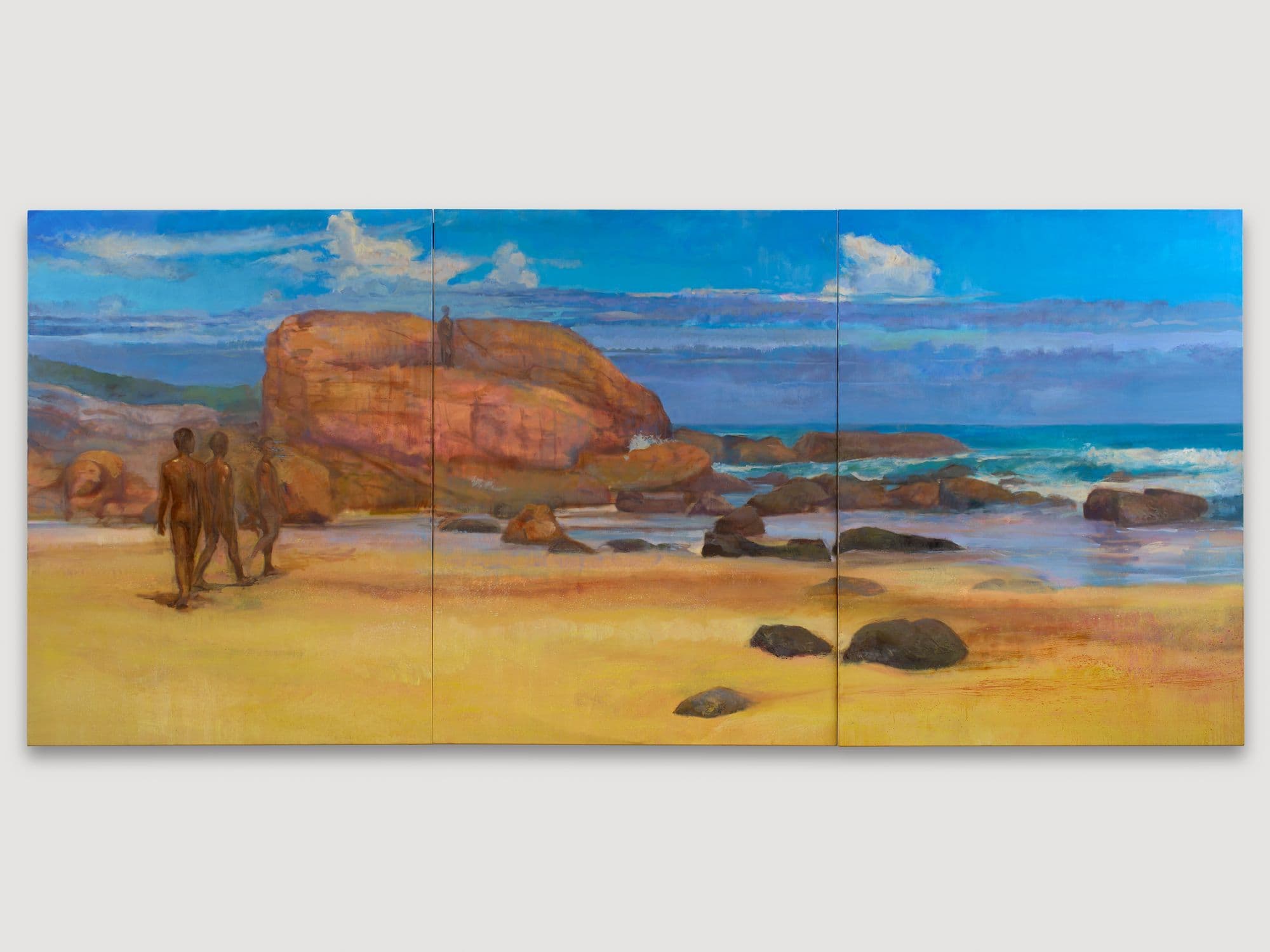
Jake Grewal’s practice is deeply informed by the European tradition of landscape painting, skillfully drawing upon Romantic structures and visual language. His paintings range from lush forests to charred, mist-laden terrains. Nude bodies—predominantly male—often appear within these settings, forming contemplative spaces that hold queer intimacy and desire.
Grewal’s work readily recalls Caspar David Friedrich’s iconic Wanderer above the Sea of Fog, yet while Friedrich emphasizes a heroic, masculine gaze, Grewal presents a subtler, more internalized flow of queer emotion—hidden, restrained, and quietly resonant.
His recent works both continue the tradition of plein-air painting and integrate imagery drawn from extensive art historical archives and found photographs. Through luminous, transparent color palettes, he captures the shifting interplay of light, form, and color in nature, transforming landscape into a medium of perception and memory.
Figures in Grewal’s paintings seem to emerge and dissolve between layers of rock and brushstrokes. The viewer cannot easily determine whether the image depicts overlapping bodies or a single figure passing through time in a fleeting gesture. With a cinematic sense of rhythm and light, Grewal captures the vastness and movement of coastal landscapes, opening a deep psychological field where nature, body, and identity permeate one another.
Recently, his solo exhibition at Studio Voltaire in London drew significant attention, as did his participation in the group exhibition A Room Hung With Thoughts: British Paintings Now at Green Family Art Foundation, alongside artists such as Cecily Brown and Lisa Brice.
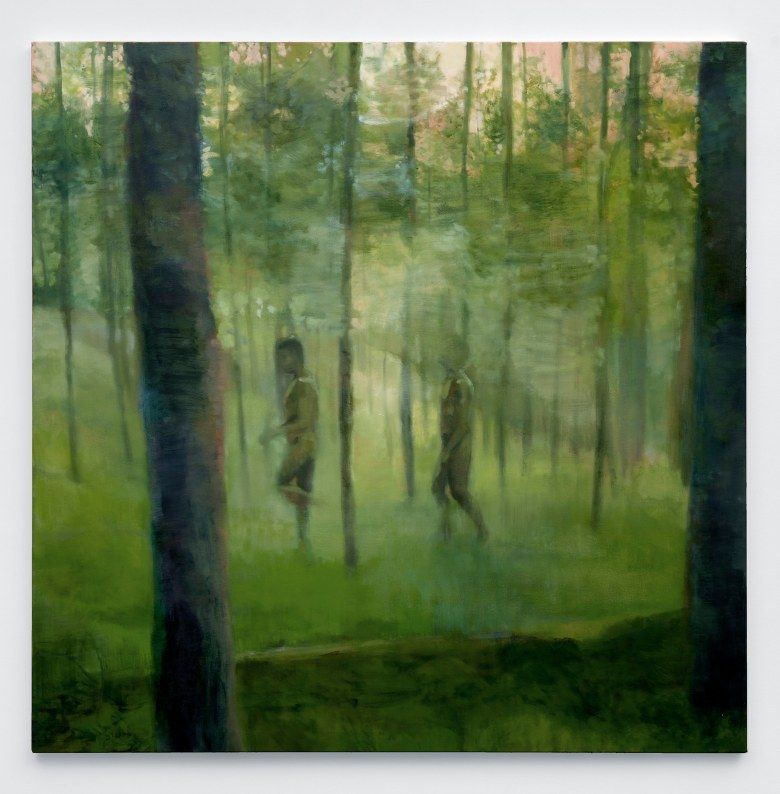
Jake Grewal, What I Thought I Knew, 2024
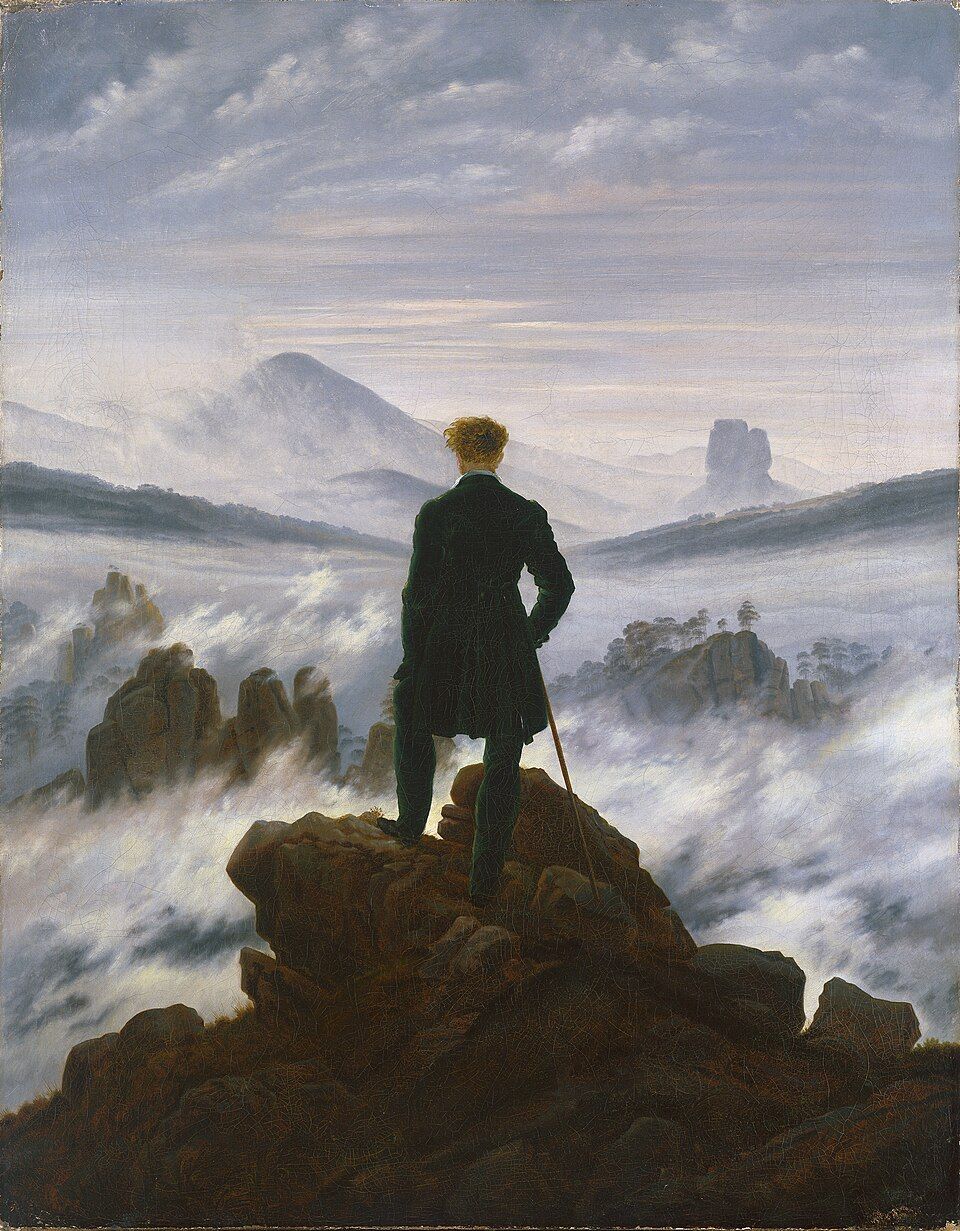
Caspar David Friedrich, Der Wanderer über dem Nebelmeer, 1818
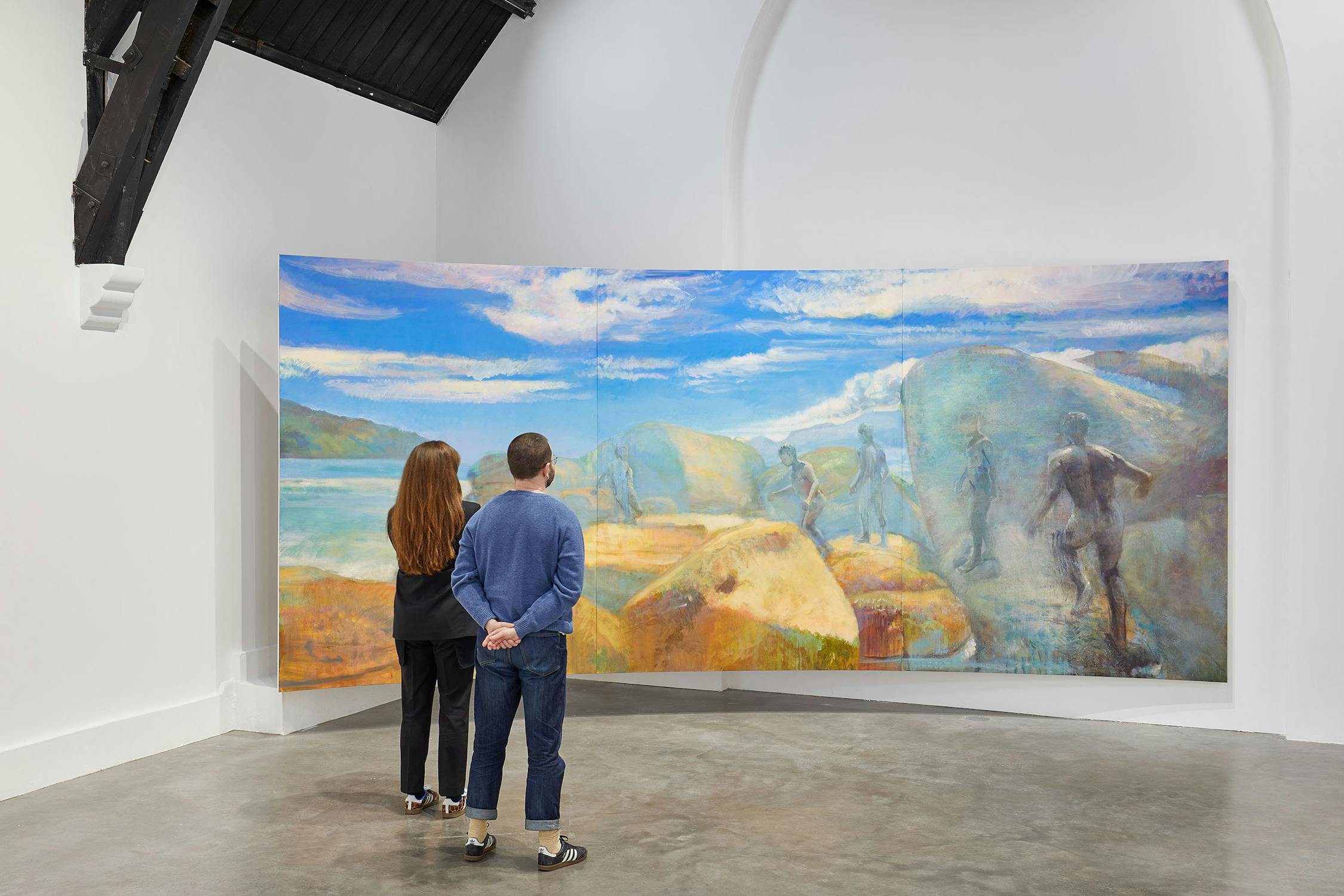
Exhibition view at Studio Voltaire
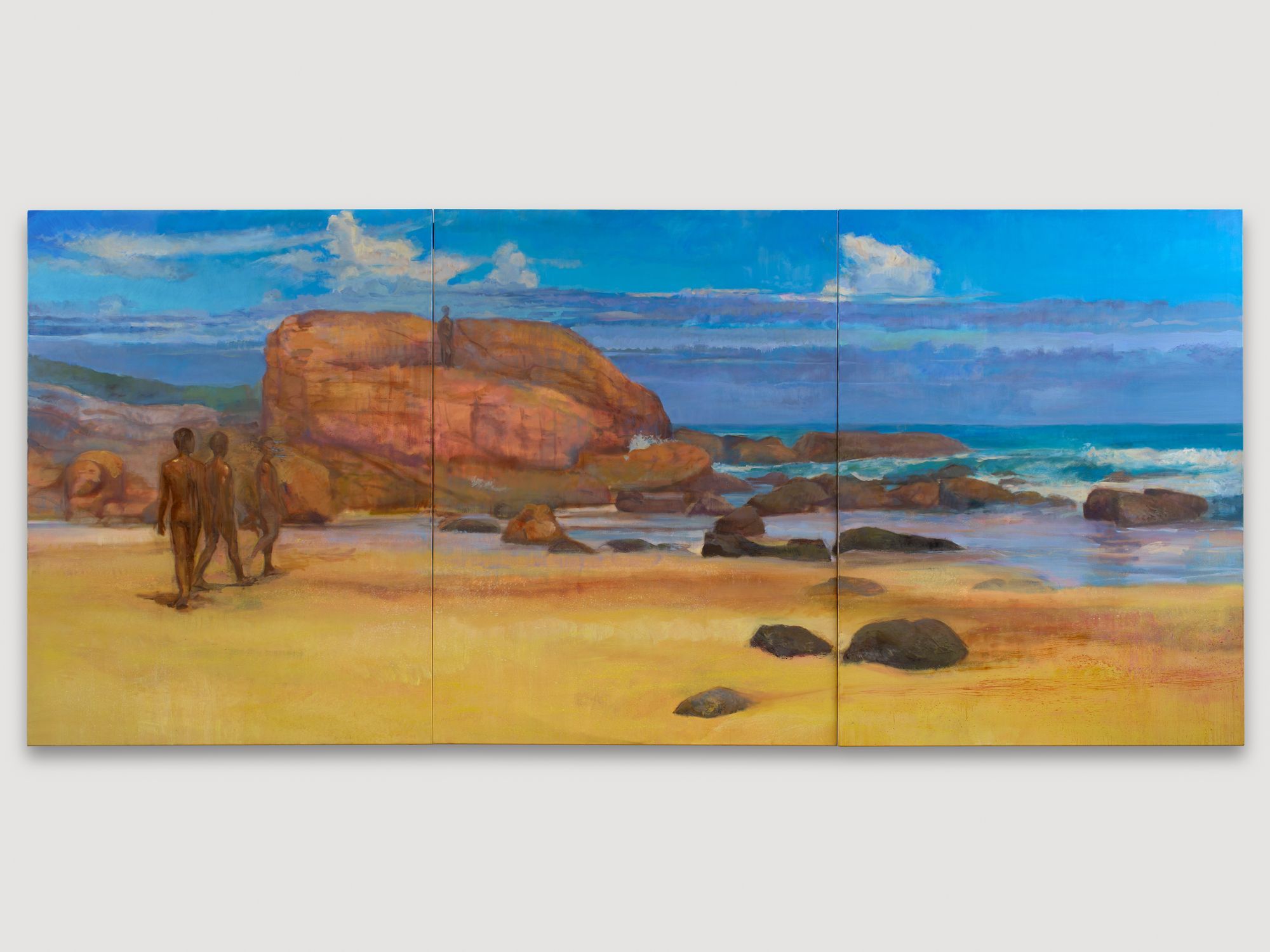
Jake Grewal, Too Much To Say, 2025
Su Yu-Xin (b. 1991)
For Su Yu-Xin, pigment is more than color. She collects stones, shells, minerals, and plants to create her own pigments, using material processes to trace histories of colonialism and migration, and to re-examine geological formations and fault lines. Her landscapes depict pastoral beaches or volatile volcanoes, with layered narratives embedded within the colors themselves.
In interviews, Su has spoken about her time studying in Europe, where she was limited to commercially available oil paints. She became acutely aware that most pigments used by artists are produced by only a handful of companies. “That’s actually quite frightening,” she noted, “because they are essentially deciding which colors enter art history.” This realization prompted her to begin making her own pigments from materials such as black tourmaline, red agate, precious coral, lapis lazuli, volcanic rock, conch shells, and cochineal insects. In her works, these mineral pigments emit a gem-like radiance.
In 2023, Su exhibited alongside Michael Ho at BLUM Tokyo. Recently, her first U.S. institutional solo exhibition, Searching the Sky for Gold, opened at the Orange County Museum of Art, presenting landscapes from her travels around the Pacific Rim, including Taiwan’s railways, Japanese hot springs, the central California coastline, and scenes of volcanic eruption. Prior to this, she held a solo exhibition at the Longlati Foundation in Shanghai. We have also recently received confirmation that she will participate in the Venice Biennale next year, and have already placed several of her works with Asian collectors.
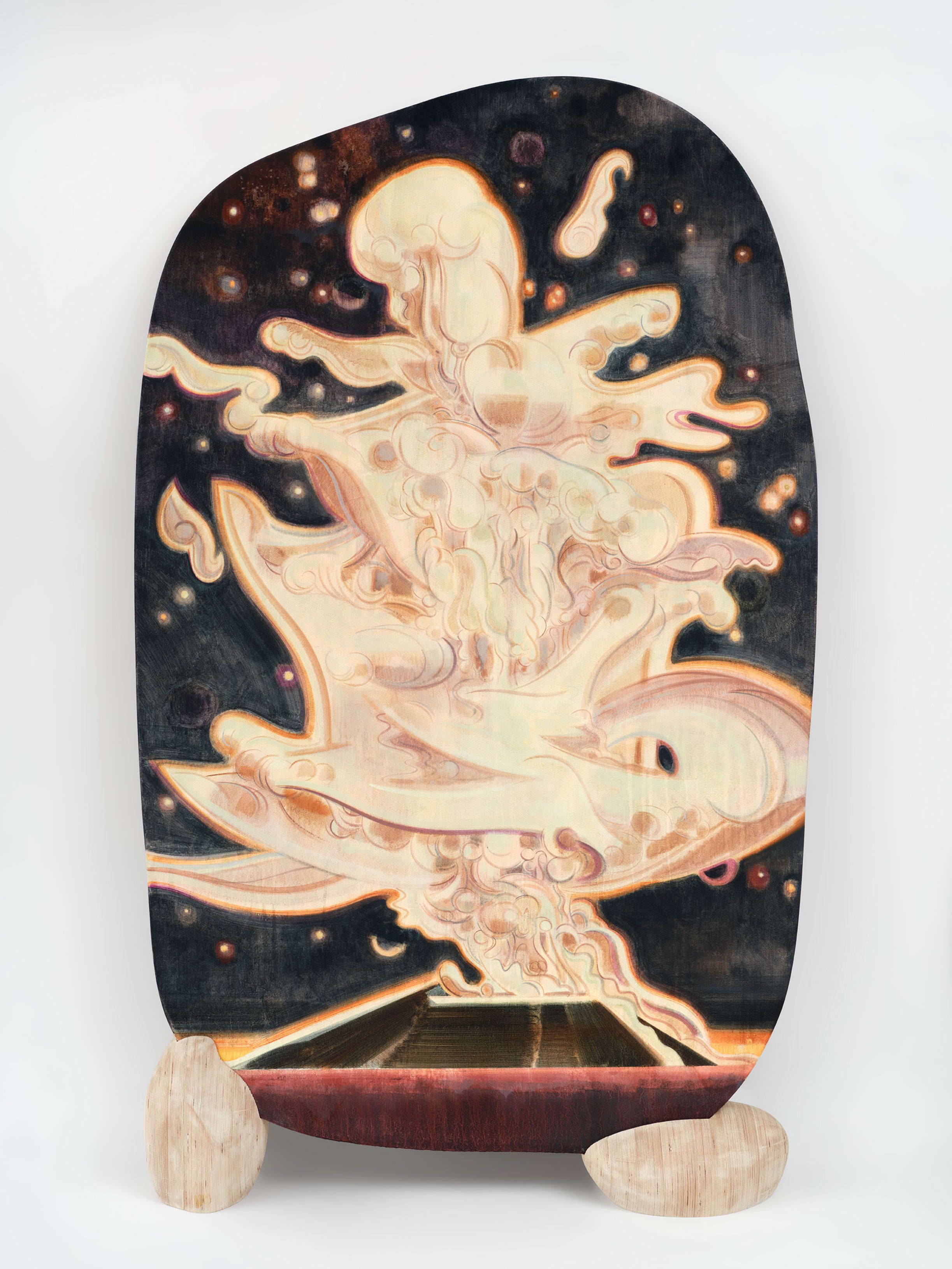
Su Yu-Xin,Dust Crown (Mount St. Helens) #2,2024
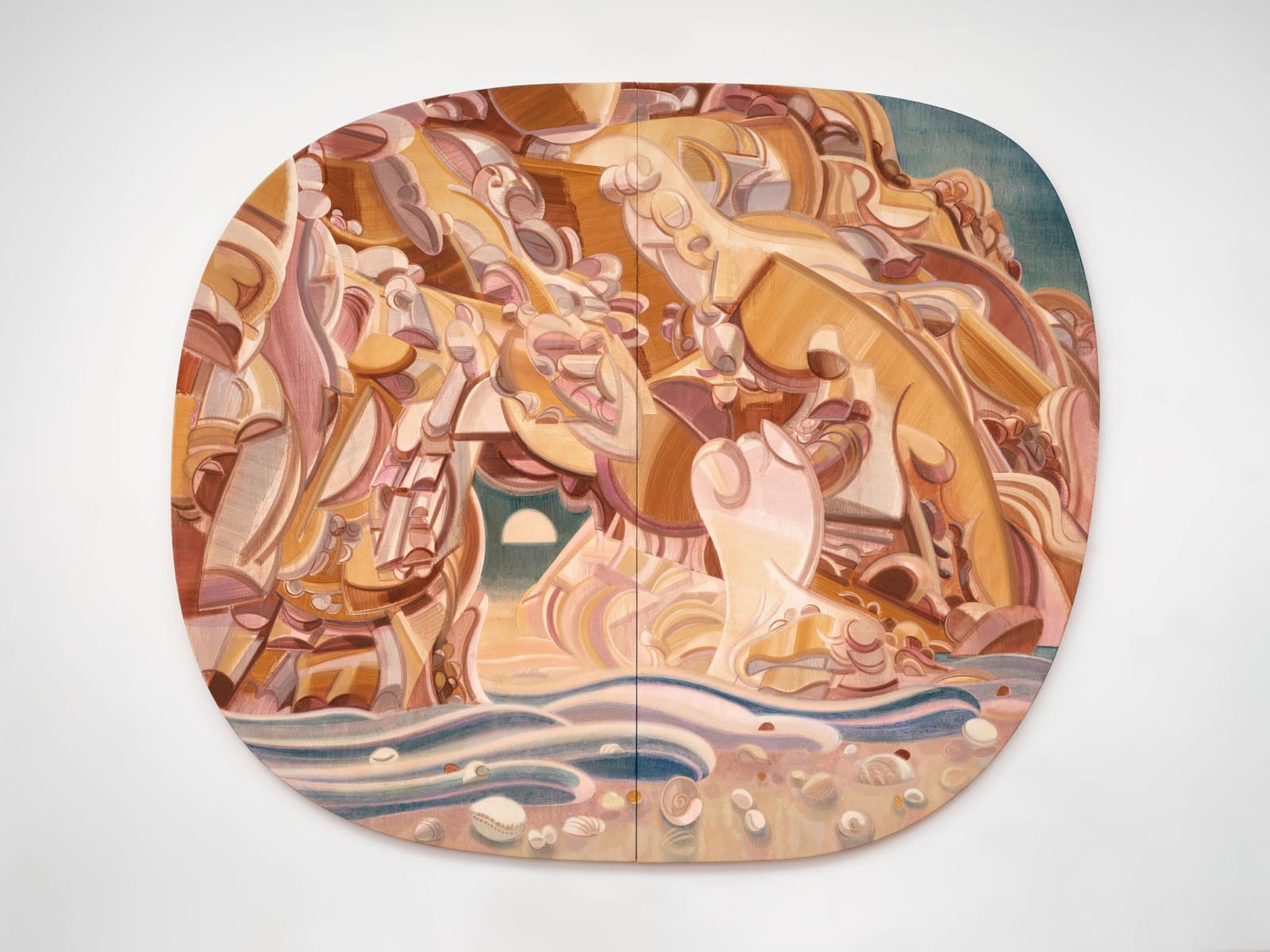
Su Yu-Xin,The Sky Trades With The Land In Shallow Water (California Coastline), 2024
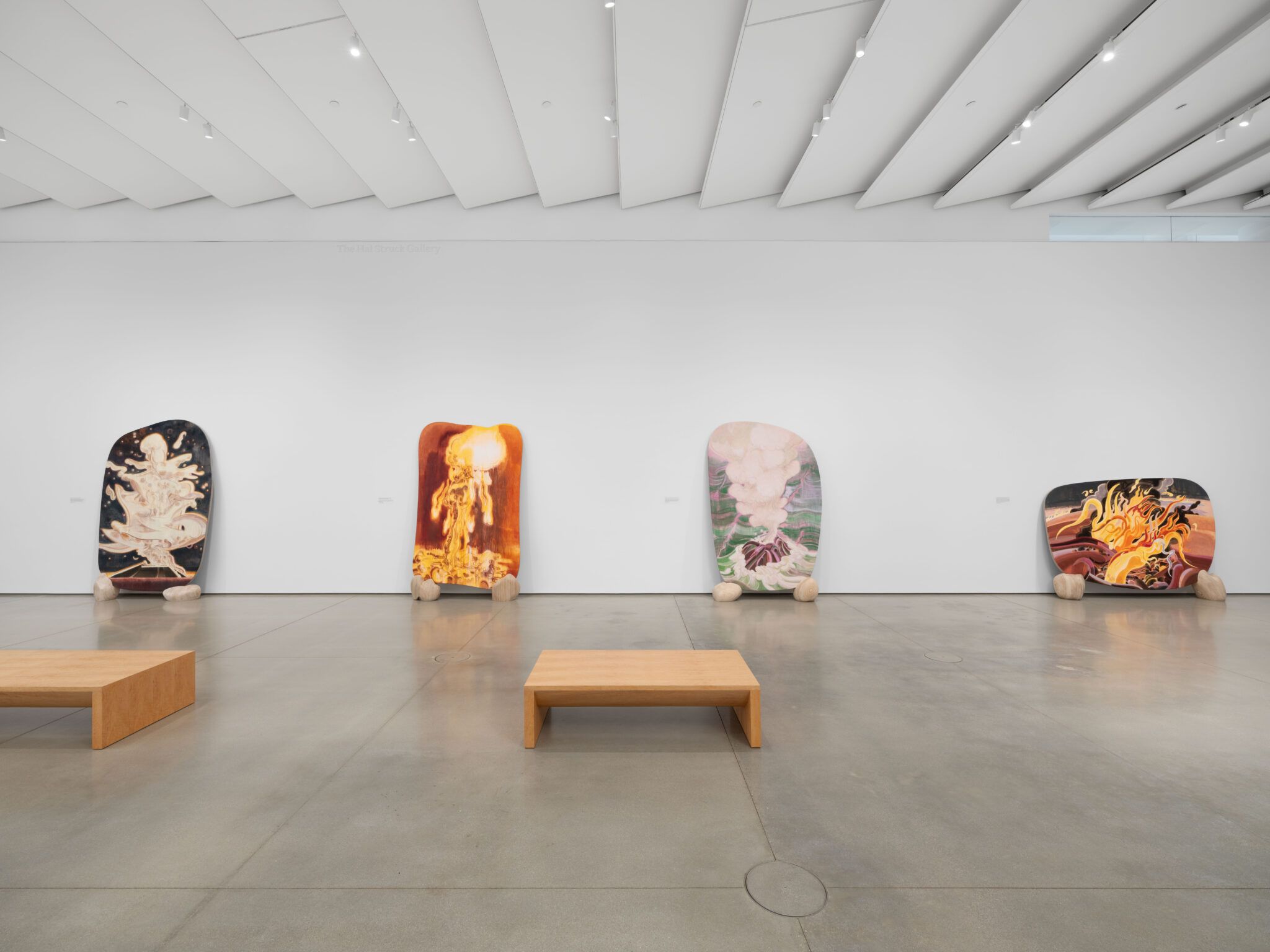
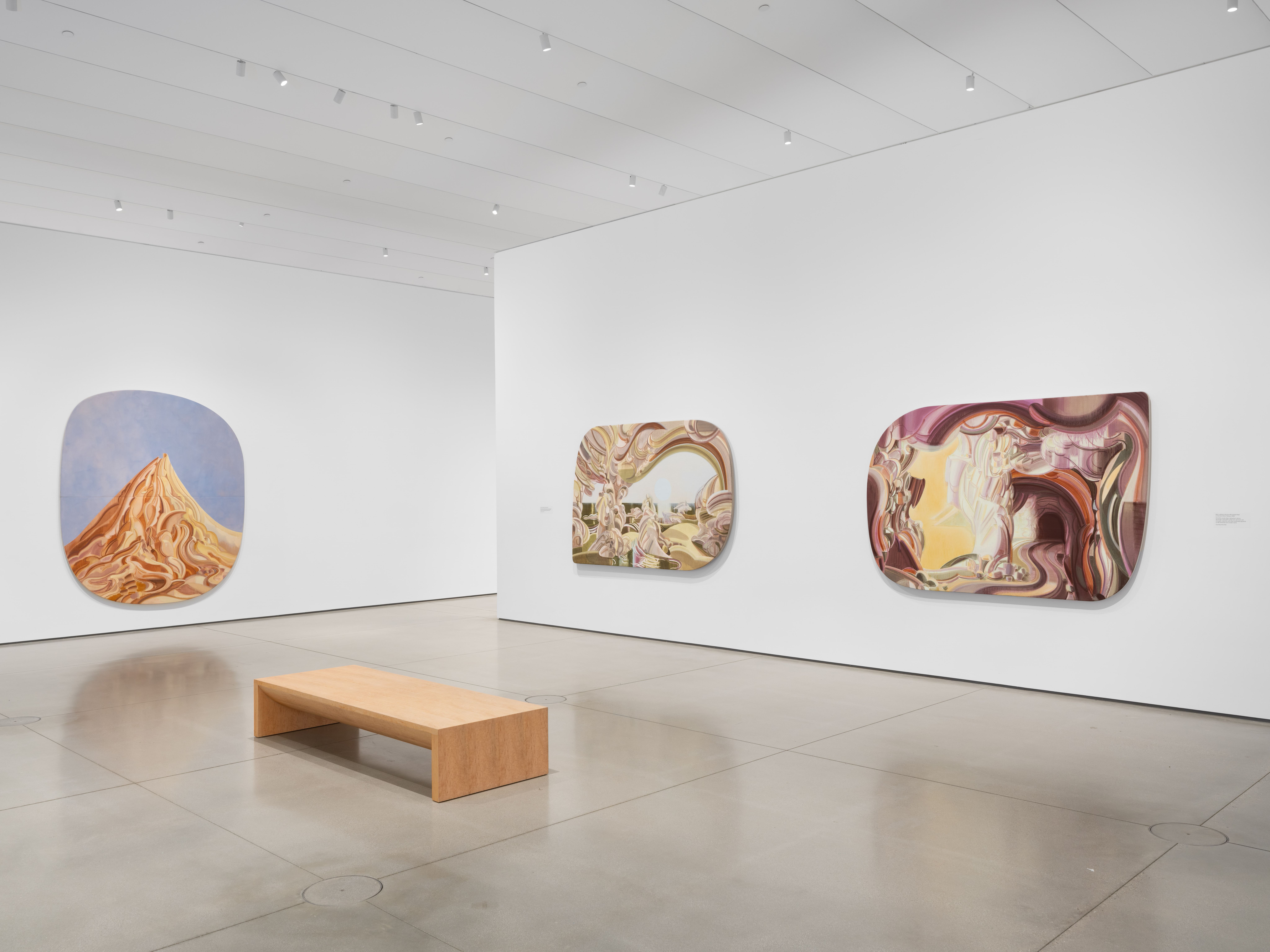
From Renaissance battlefield panoramas to Romantic inner landscapes, and onward to contemporary explorations of identity, memory, and materiality through landscape, “mountains and waters” have long ceased to be mere representations of nature. They have become a way of seeing and a mode of being. Through the works of Michael Ho, Francesco Cima, Jake Grewal, and Su Yu-Xin, we are invited to reconsider landscape not simply as physical terrain, but as a projection of culture, a vessel for identity, and a site of emotional flow. Perhaps this is precisely why landscape painting continues to be rewritten and reborn—serving as a metaphorical field through which our era understands both the self and the world.