Spring Auctions Rebound: What Signals Is the Market Sending?
The market is no longer shrinking—it is becoming more selective, driven by confidence, capital reallocation, and a renewed focus on quality and established names.
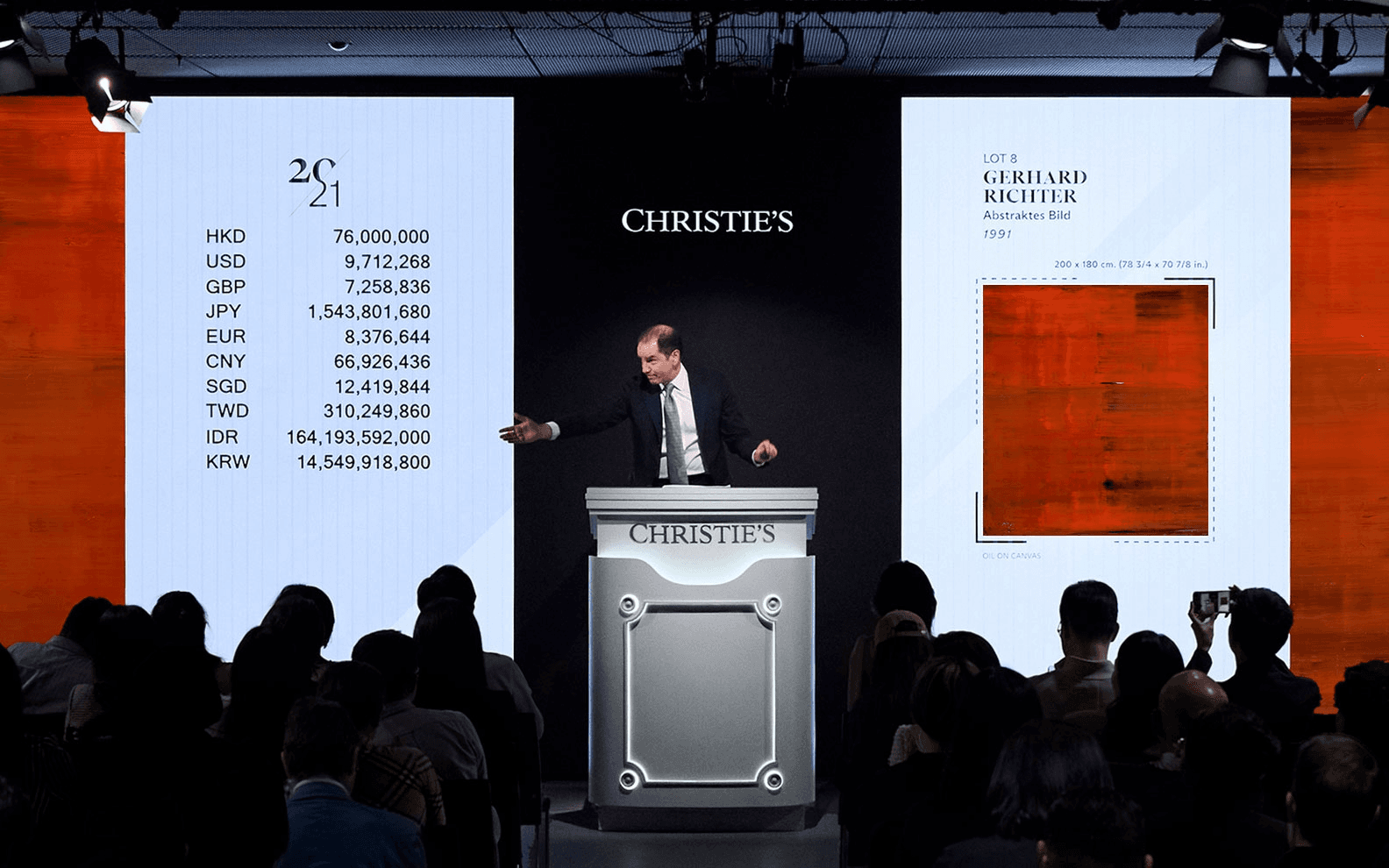
After several seasons of hesitation and stagnation, the art market has finally welcomed a long-awaited rebound this spring auction season. Both Sotheby's and Christie's saw unexpectedly strong on-site responses. The long-suppressed buying power became evident the moment the hammer fell. This surge was not accidental, but closely tied to the broader macroeconomic and geopolitical context. Recent tensions involving Donald Trump and the Middle East, particularly Iran, have led to significant volatility in global stock markets. Many seasoned collectors chose to cash out of equities and turn to art as a more stable and culturally grounded asset. This shift—capital flowing from stocks into art as a “safe haven”—directly fueled the strong auction results.
This recovery is not merely numerical; it reflects a rebuilding of market confidence. Strong sell-through rates at evening sales suggest not only liquidity among collectors, but also a shared consensus around “top-quality works” and “blue-chip names.” Within this context, several lots in Sotheby’s 20th Century Art Day Sale emerged as key indicators of the market’s new direction.
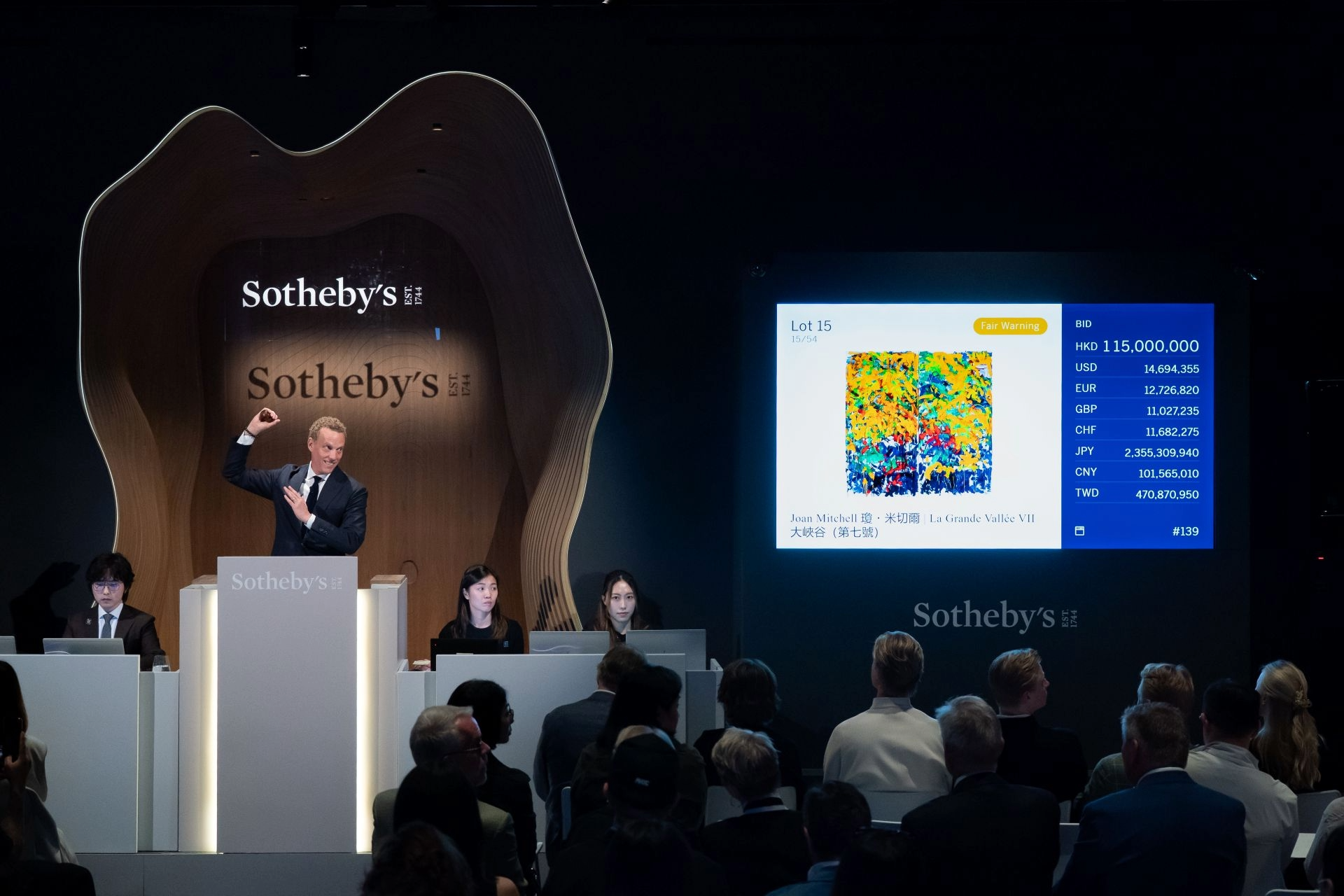
Installation view of Sotheby’s Hong Kong Spring Sale of Modern and Contemporary Art, 2026. Image courtesy of Sotheby’s.
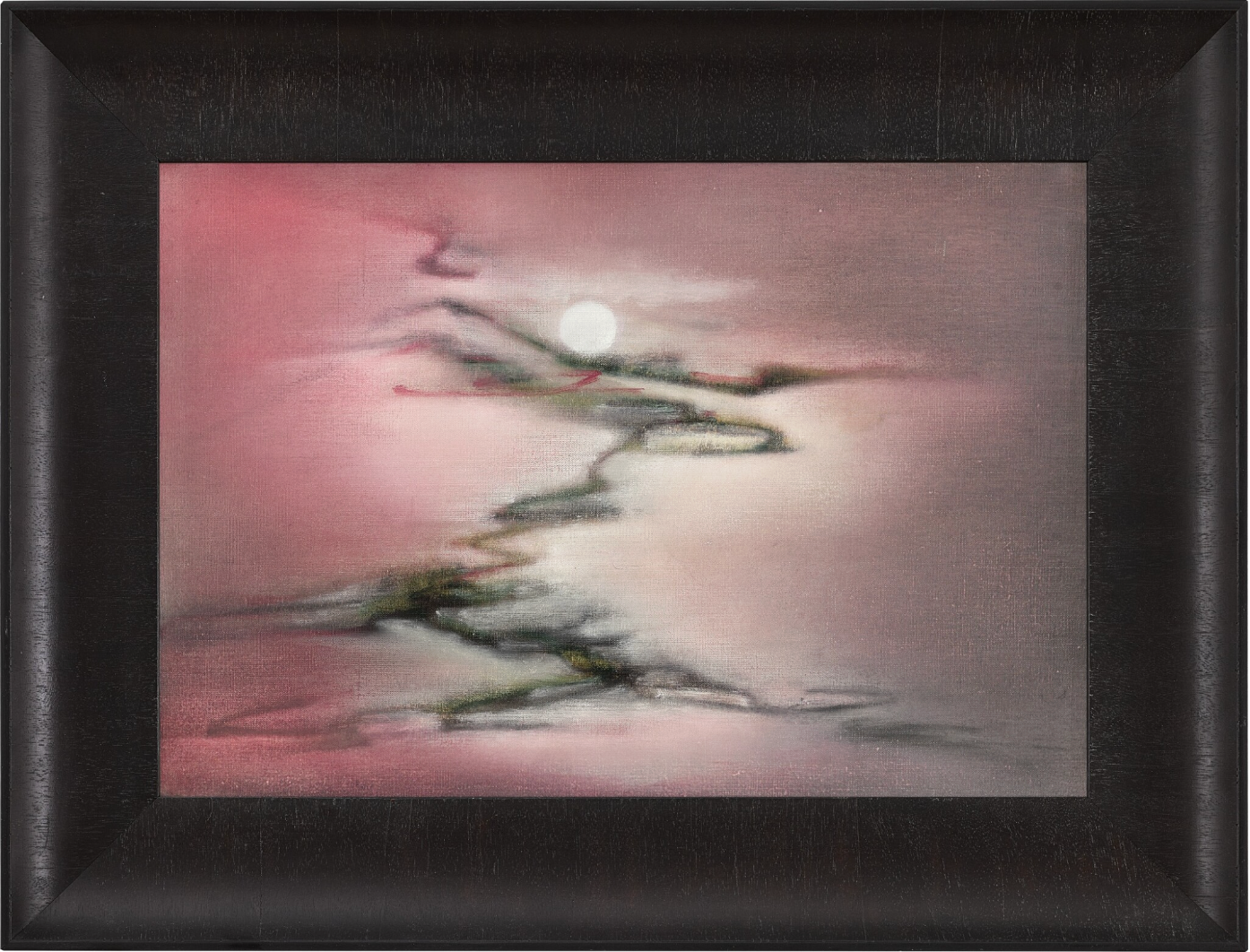
Lalan, Moon, 1974. Image courtesy of Sotheby’s
One of the most remarkable results was Lalan’s Moon (1974). The trajectory of this work is almost textbook-like. When it first appeared at Sotheby’s Hong Kong in October 2018, it sold for just HKD 220,000. Years later, it returned to the market and achieved HKD 7.8 million—an increase of over 35 times. This reflects a broader reassessment of 20th-century women artists, particularly those with diasporic, cross-cultural identities. Long overshadowed by Zao Wou-Ki and Chu Teh-Chun, Lalan is now being recognized for her unique synthesis of music, dance, and painting. Such dramatic growth demonstrates that when scholarly positioning is clear and works are scarce, returns can be explosive.
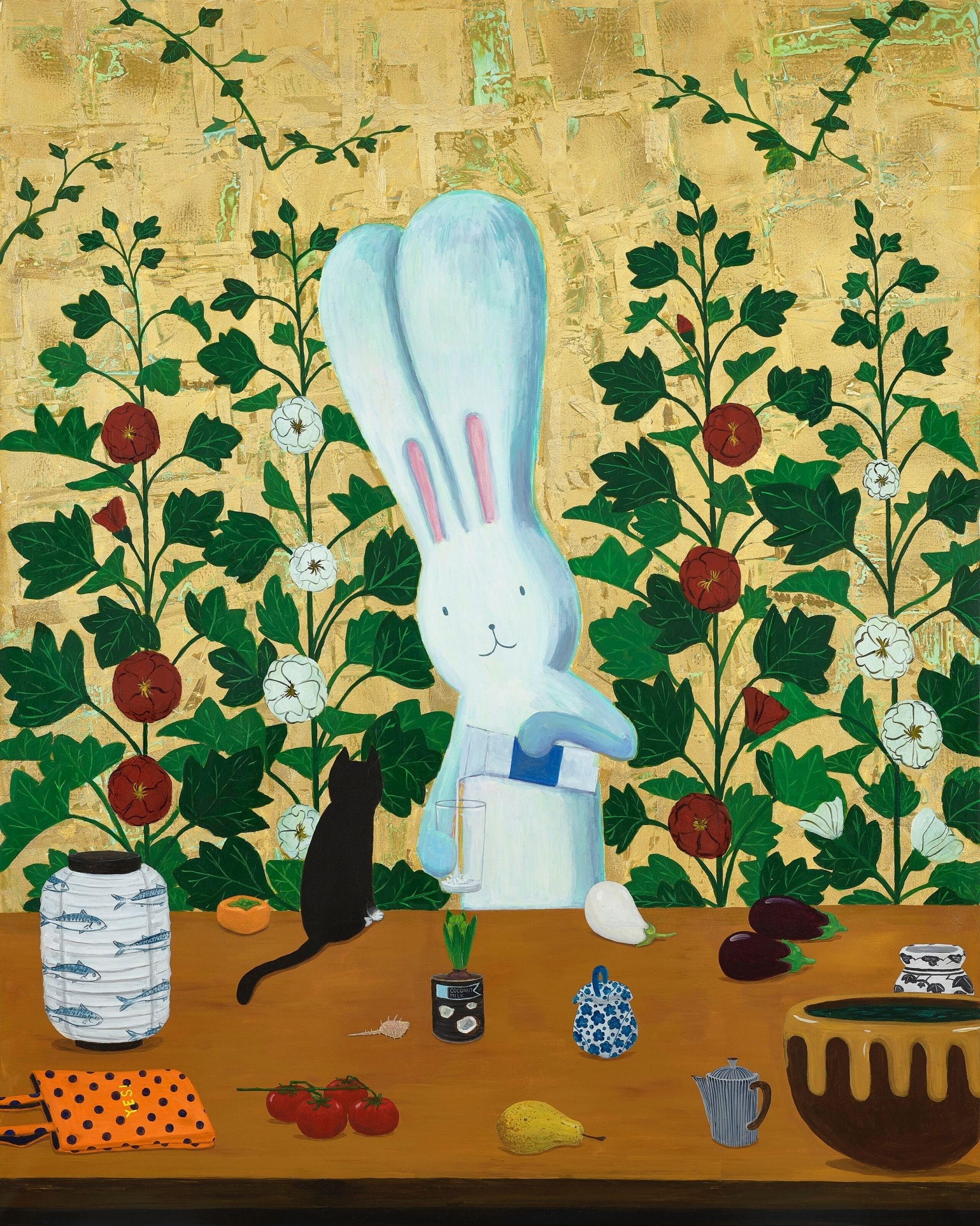
Atsushi Kaga, YES! (A bag made by my mother), 2021. Image courtesy of Christie’s
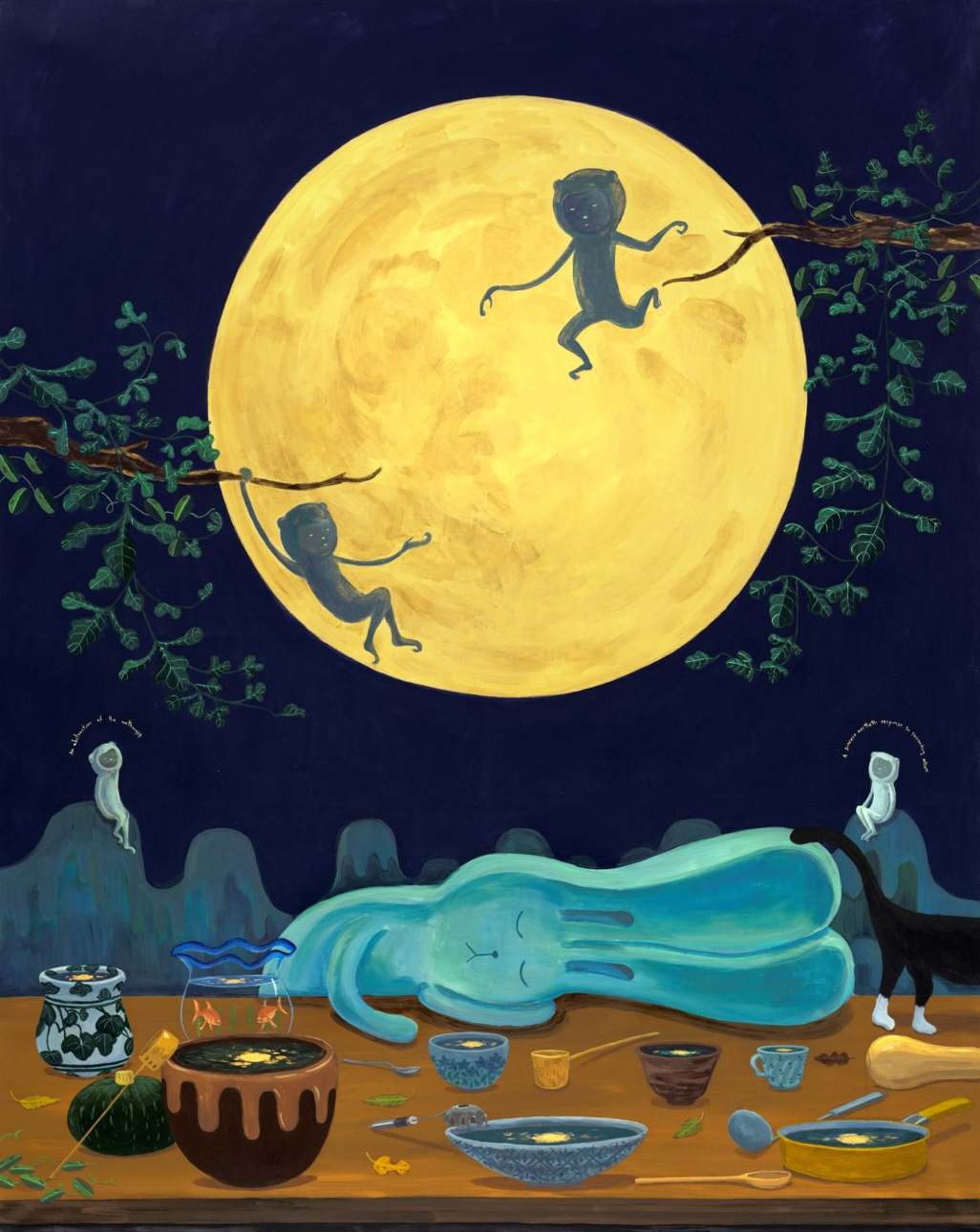
Atsushi Kaga, Moon Catcher, 2020. Image courtesy of Christie’s
In the contemporary sector, Atsushi Kaga delivered a striking “back-to-back” record performance. His melancholic yet healing “rabbit” paintings became highly sought after. After achieving HKD 4.57 million at Christie’s, another work broke the record again at Sotheby’s the next day with HKD 4.69 million. This doubling of value since 2023 highlights the strong demand for visually distinctive and emotionally resonant contemporary imagery.
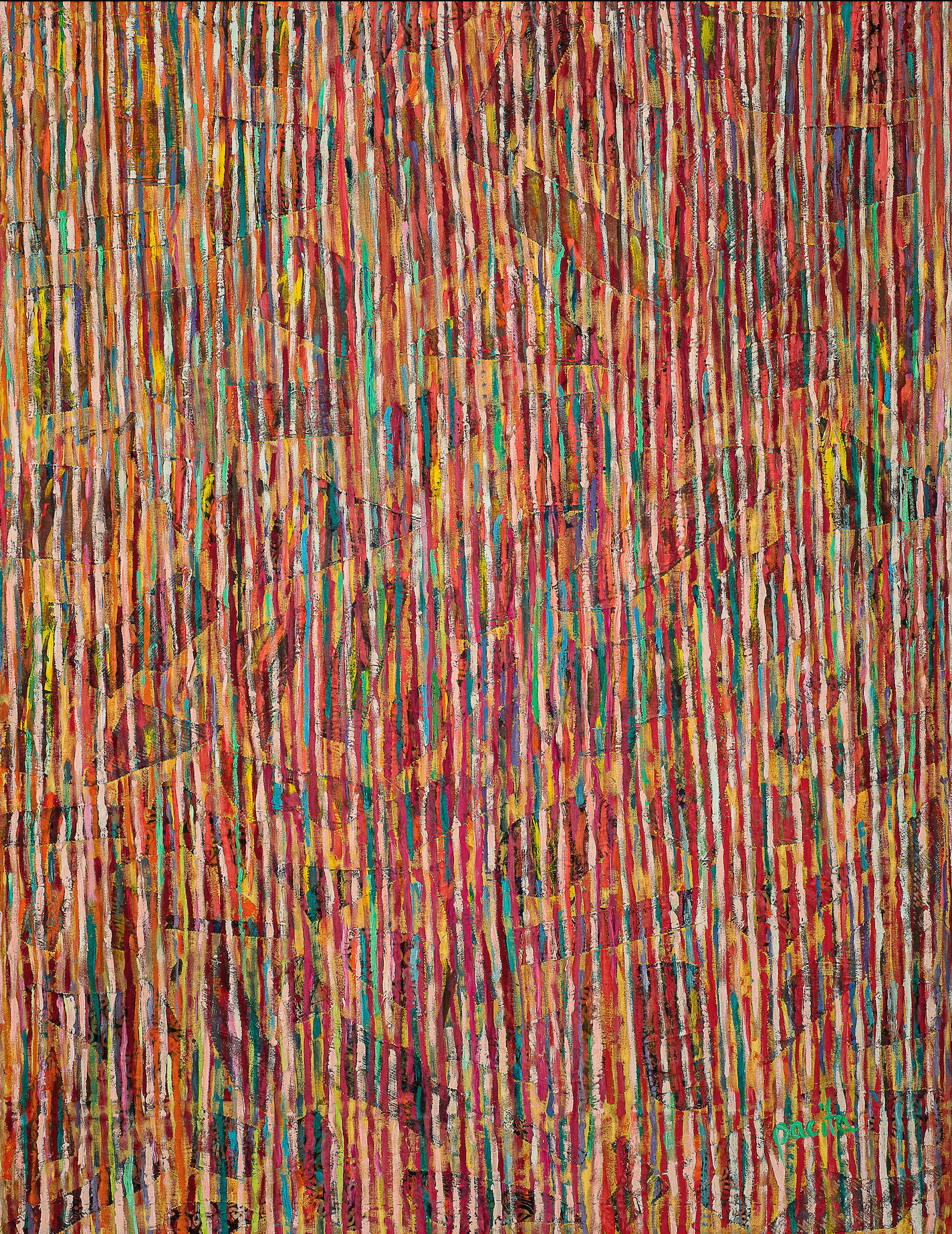
Pacita Abad, Burning Desire, 2002. Image courtesy of Christie’s
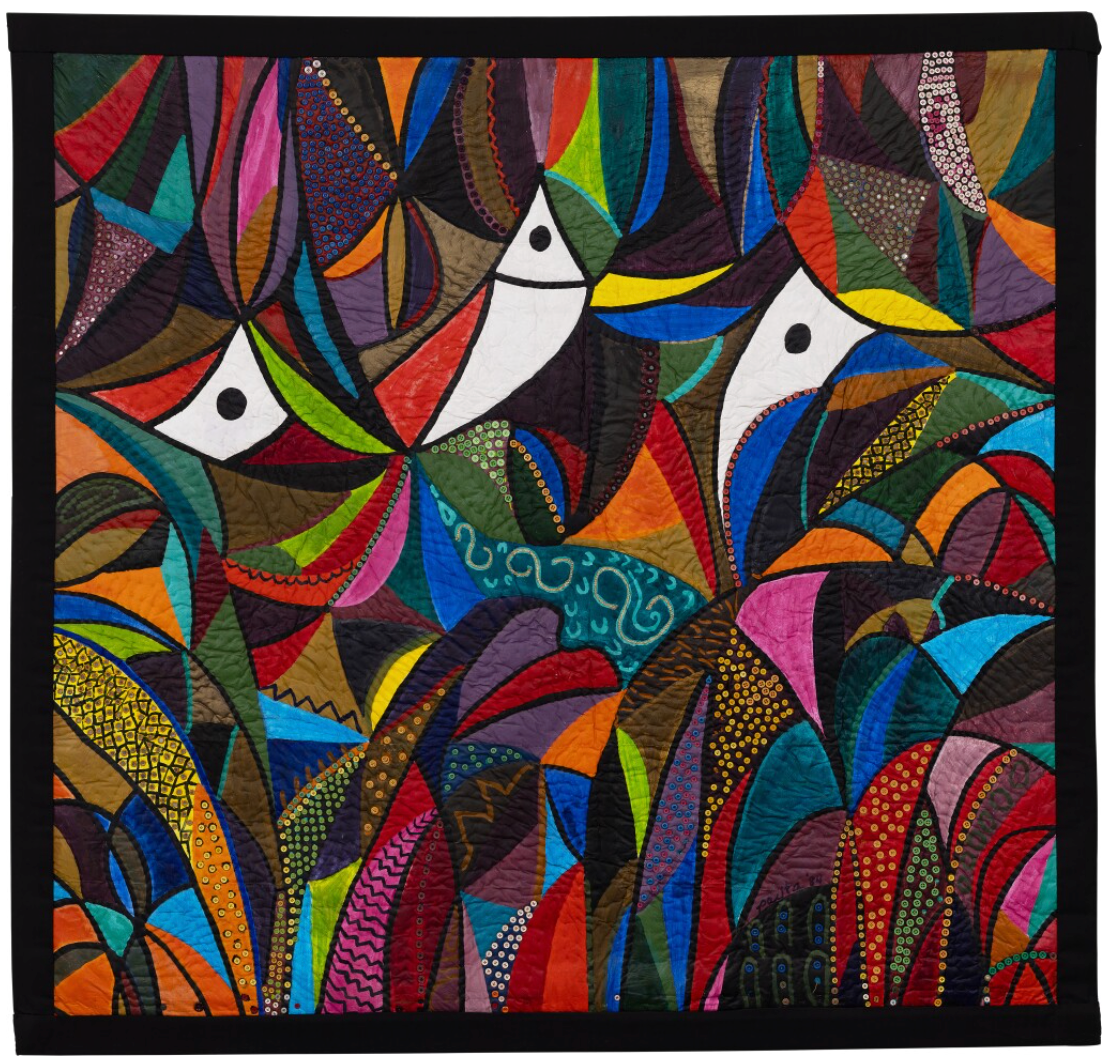
Pacita Abad, Assaulting the Eye with Ecstasy, 1984. Image courtesy of Sotheby’s
Similarly, Pacita Abad’s Burning Desire performed strongly. Originally purchased at Sotheby’s Hong Kong in 2017 for HKD 437,500, it was sold at Christie’s 20th Century Day Sale for HKD 1,397,000. This marks her second auction record following her earlier success in Singapore. Both Kaga’s rabbits and Abad’s vibrant compositions appear to function as emotional refuges in times of uncertainty, reflecting a broader shift toward globally resonant visual languages.
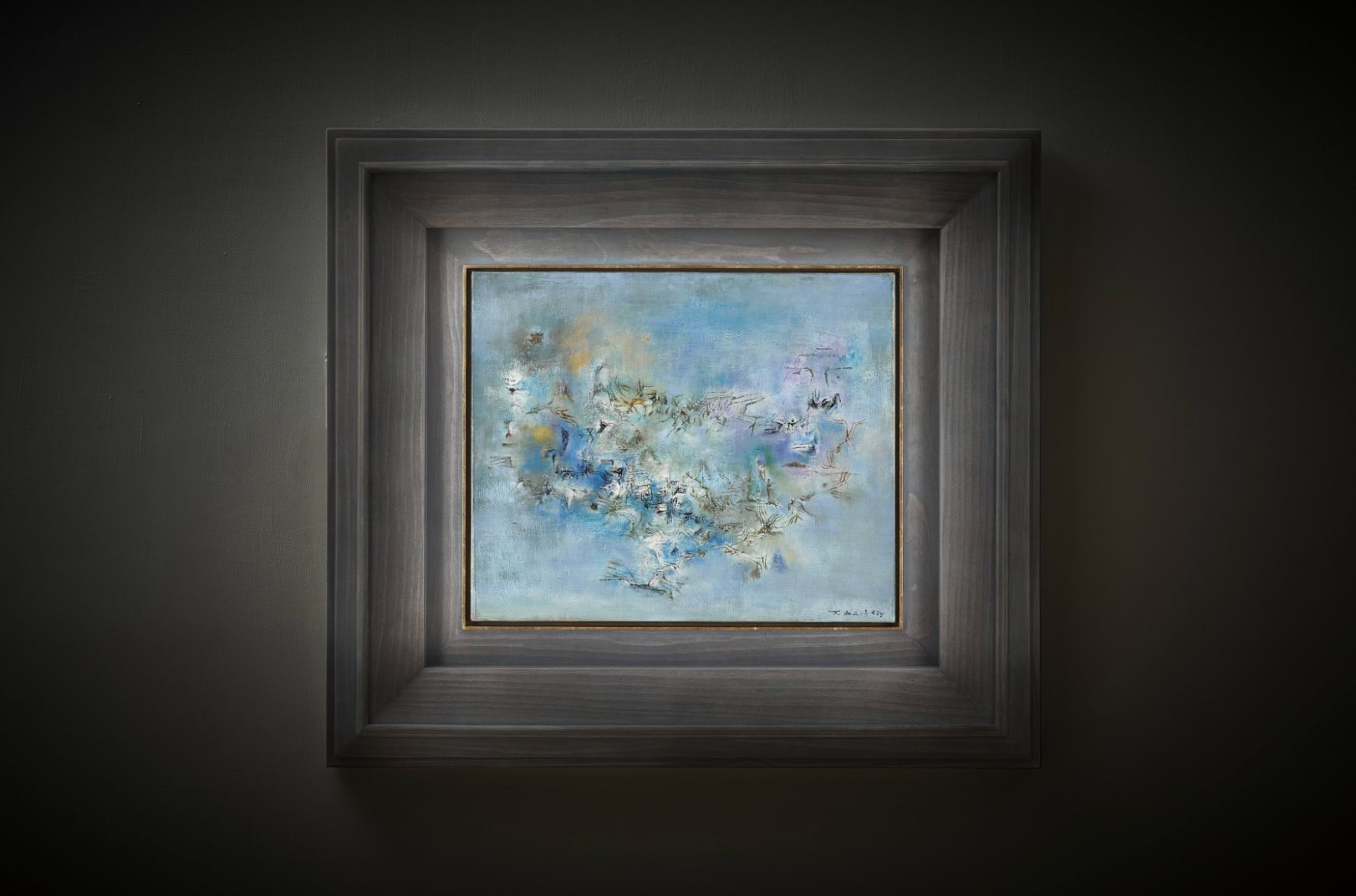
Zao Wou-Ki, Ville Chinoise, 1955. Image courtesy of Sotheby’s
As for market stability, few names are more indicative than Zao Wou-Ki. His Ville Chinoise (1955) drew strong attention at Sotheby’s. The work’s price history mirrors the trajectory of the Asian art market. After selling for RMB 13.8 million at China Guardian in 2021, it achieved approximately HKD 5 million more in the recent Hong Kong sale. Despite high transparency and frequent trading, his works continue to show steady growth, reflecting consensus between established and emerging wealth. The market is no longer chasing trends blindly, but returning to historically validated artists with strong liquidity.
We also observe a generational shift among collectors. Younger buyers tend to favor later works with brighter colors, larger formats, and room for price growth. This signals not only diversification within the modern art sector, but also an evolution in taste.
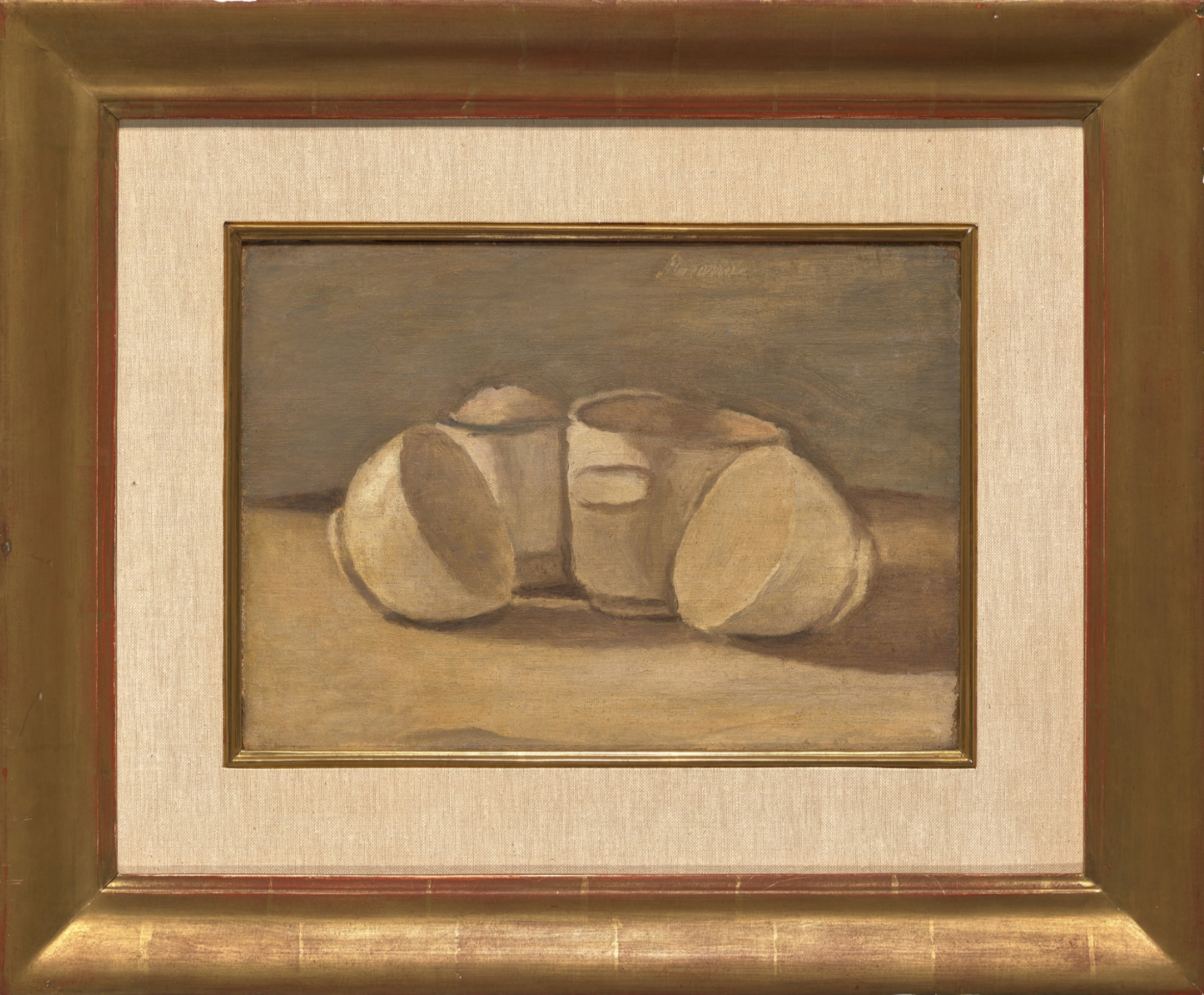
Giorgio Morandi, Natura morta, 1942-1943
Another important indicator is the performance of Giorgio Morandi in Asia. Known for his quiet and restrained aesthetic, Morandi has traditionally been considered less accessible. In 2023, one of his works failed to sell at China Guardian Beijing. However, his recent performance in Hong Kong improved significantly. This suggests that Hong Kong’s position as an international art hub remains strong, and that collectors’ tastes are shifting toward subtlety and restraint—what might be called the “power of quietness.”
Looking at recent London sales, the market now shows a clear “M-shaped” structure. Collectors are either willing to pay top prices for the best masterpieces, or seek affordable entry points into major names. This polarization reflects a more rational and mature market.
In conclusion, the market has moved from a period of adjustment into a phase of precision. As geopolitical uncertainty drives asset reallocation, art is increasingly seen as both a cultural and financial instrument. From Lalan’s dramatic rise, to Kaga’s record-breaking momentum, to the steady performance of Zao Wou-Ki and Morandi, each hammer price signals not contraction, but selectivity.
The recovery is no longer speculative—it is supported by real capital. When collectors sell stocks to compete for a painting like Moon or a melancholic rabbit, it is clear that the vitality of the art market has returned.
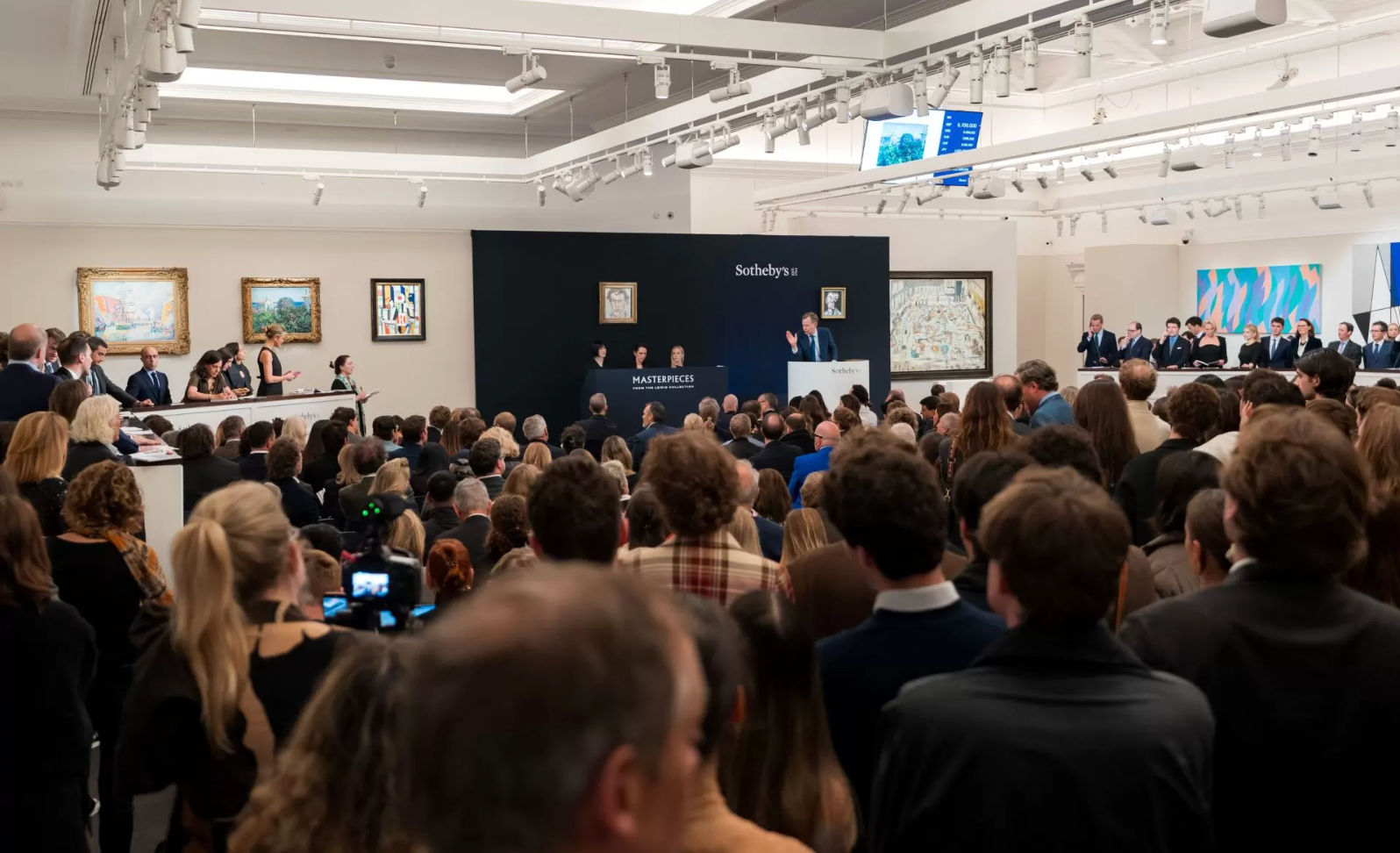
Evening Sale view of Sotheby’s London Sale of Modern and Contemporary Art, 2026. Image courtesy of Sotheby’s