Diane Arbus: Secrets within Secrets and the Psychological Revolution of Documentary Photography
Diane Arbus transformed documentary photography by exposing its inherent ambiguity. Through precise titles, frontal flash, and uncompromising detail, she challenged photography’s claim to objectivity and dissolved the boundary between documentary and high art. Her images reveal the ritual, mystery, and vulnerability embedded in everyday life, granting mythic dignity to marginalized subjects. Arbus’s work is not an act of sympathy, but a courageous confrontation with truth, demanding that viewers confront their own humanity.
When examining the artistic legacy of Diane Arbus, one must first recognize her extreme and uncompromising manipulation of photography’s presumed objectivity.
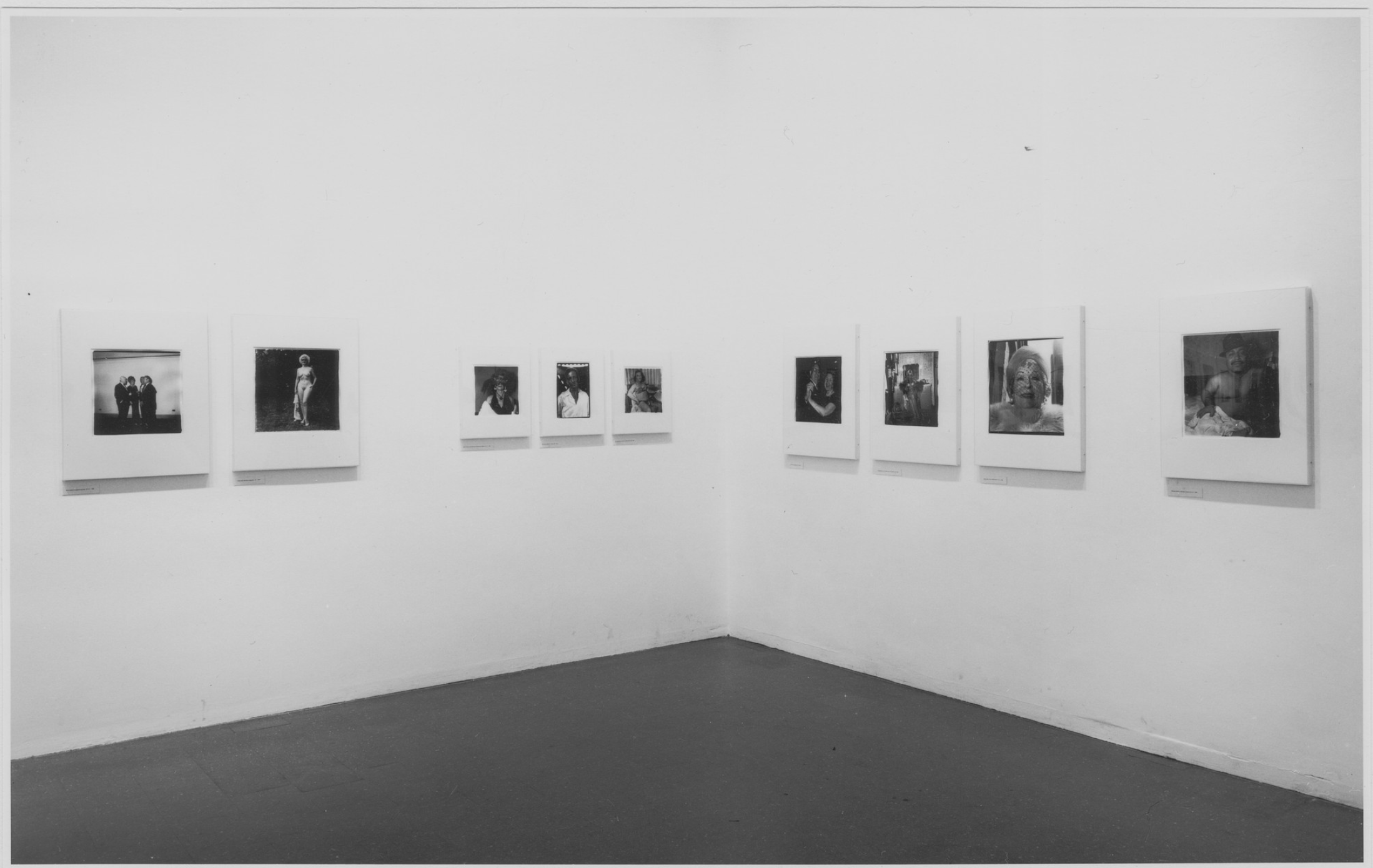
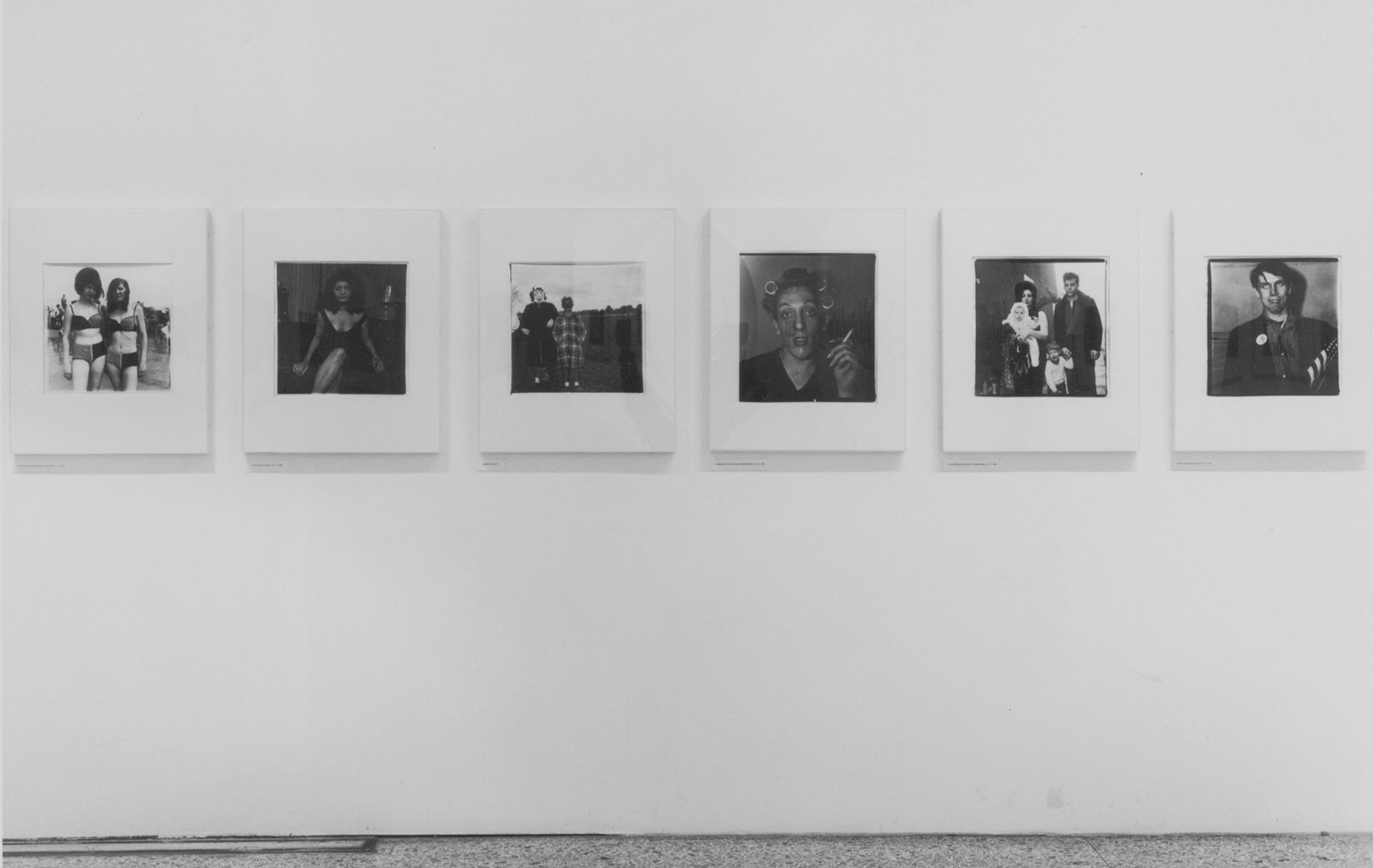
The titles of Arbus’s works consistently emphasize an ostensibly factual, documentary tone: she never reveals the personal names of her subjects, instead providing precise information regarding time and location. Personal and social content is thus presented as if it were an abstract, sociological category. This deliberate distance is precisely what enabled Arbus to transform photography into High Art and secure her elevated position in art history.
Arbus’s photographs reveal what is ordinarily invisible: the mysterious or ritualistic dimensions embedded in everyday life. Photography is often understood as a medium that produces “truthful” or “objective” records of the world. Paradoxically, Arbus challenged the assumed objectivity of documentary photography and the notion that the author could remain detached from the subject.
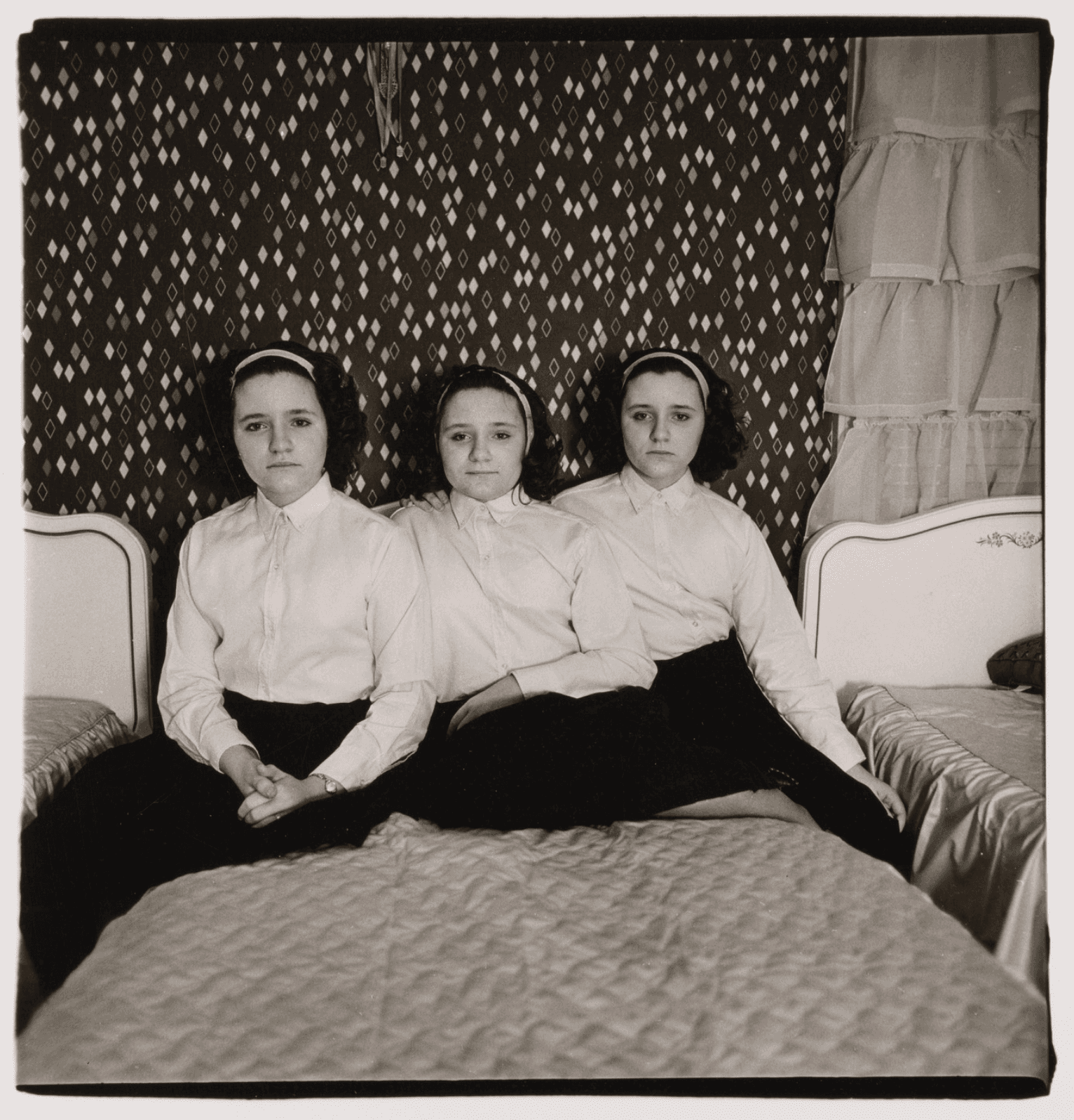
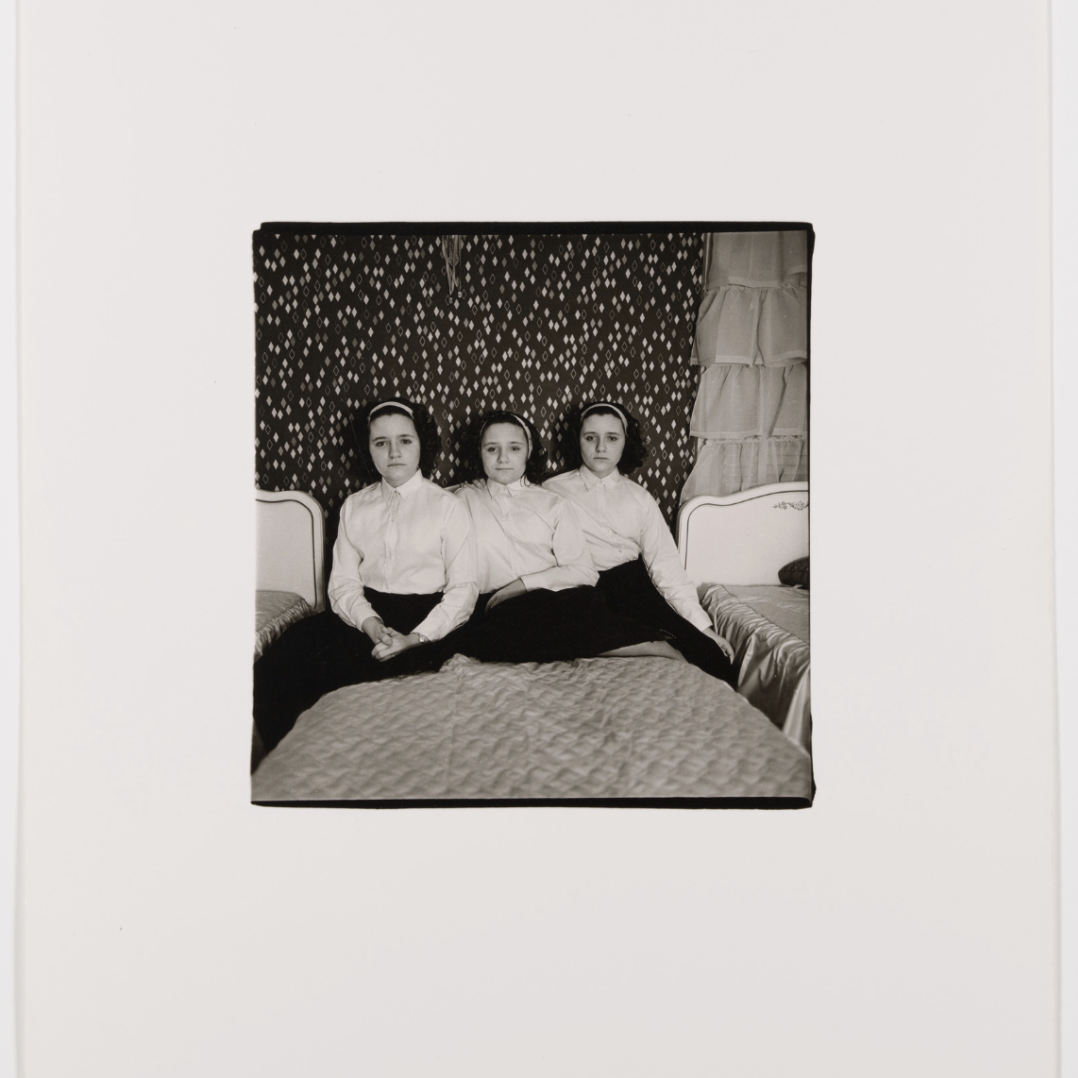
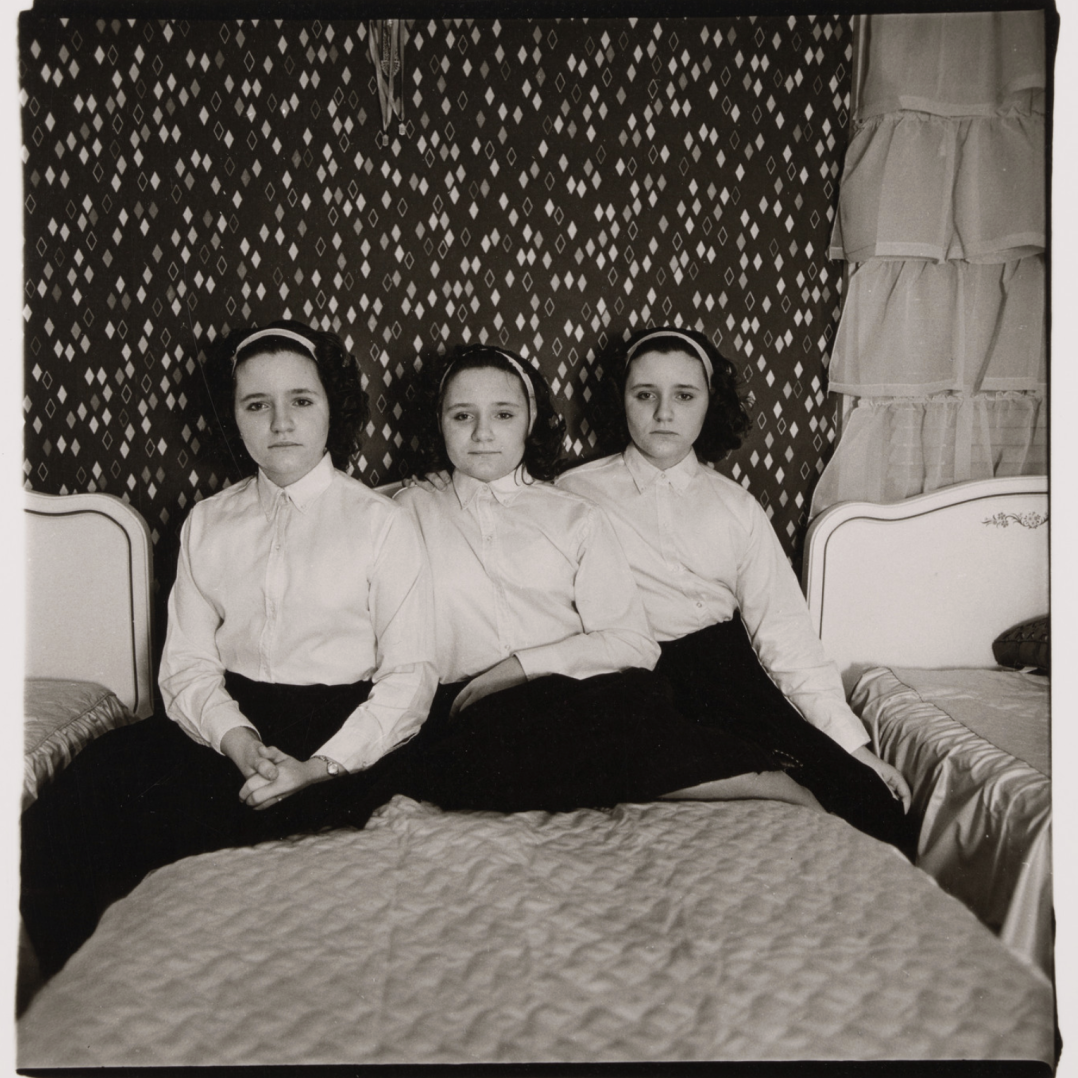
The origins of one of her most iconic works can be traced back to 1964, when Arbus met the Slota family and was invited to their home in Jersey City to photograph their triplet daughters seated in their bedroom, wearing identical outfits—Triplets in their bedroom, N.J., 1963. This encounter planted the conceptual seed for later work. Thus, when Arbus was invited in 1967 to attend the Christmas party hosted by the Suburban Mothers of Twins and Triplets Club at the Knights of Columbus hall in Roselle, she knew precisely what she wished to capture: a moment of stillness that combined high recognizability with an inexplicable sense of strangeness.
As these works emerged, Arbus’s career underwent a pronounced technical and aesthetic transformation. While her choice of subject matter remained consistent, her visual language shifted from early formal simplicity and diffused lighting to an intensified emphasis on detail and stark contrast. This aesthetic transition generated a tension between apparent objectivity and deep ambiguity. As Arbus wrote in 1971: “A photograph is a secret about a secret. The more it tells you the less you know.”
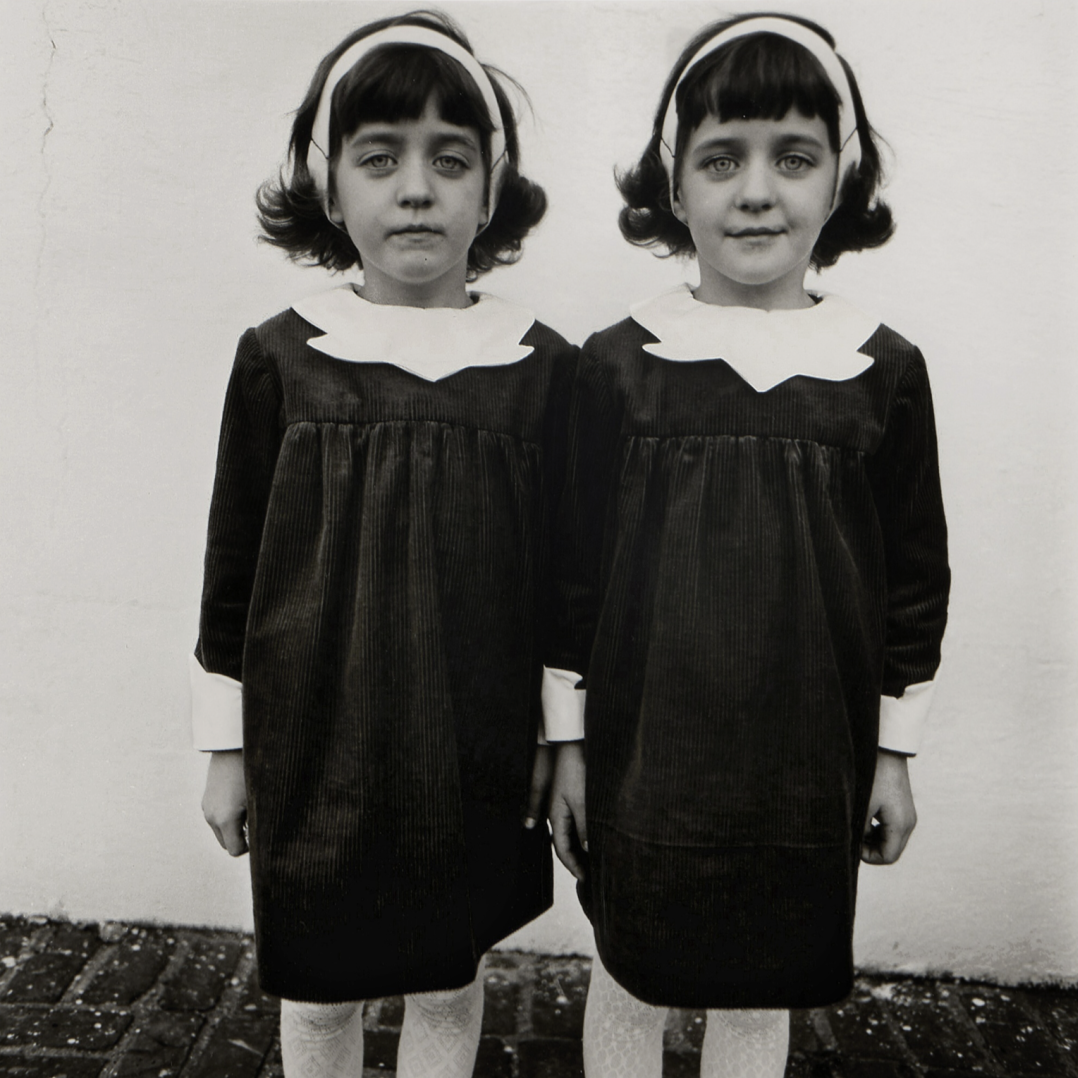
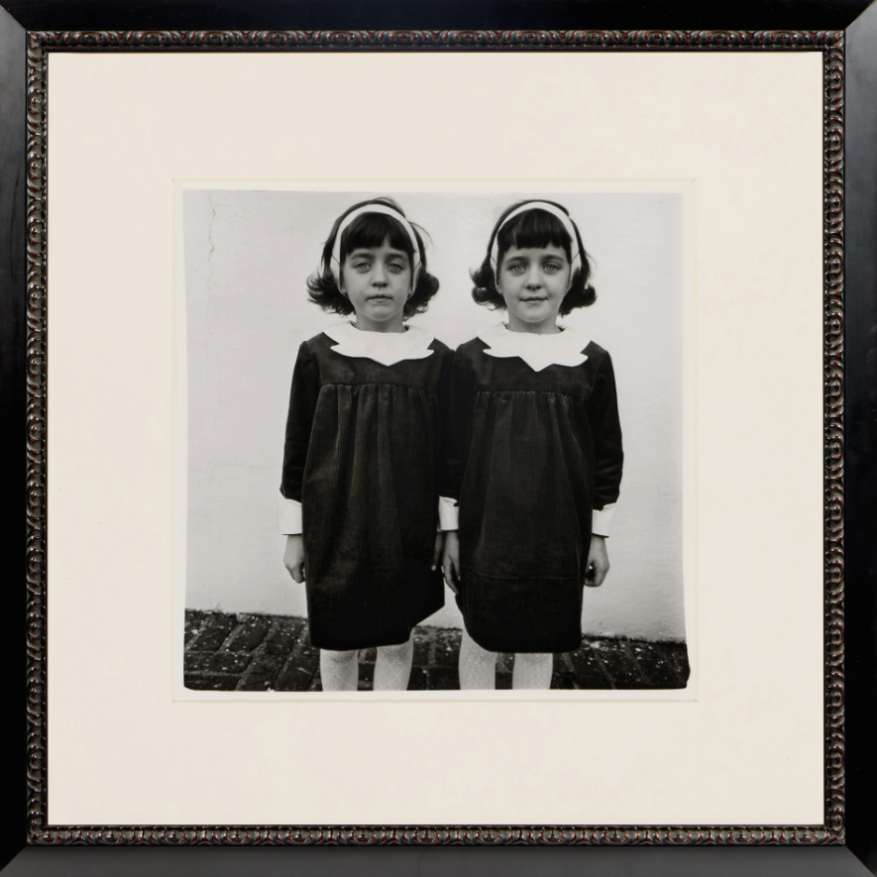
This transformation is particularly evident in Identical Twins, Roselle, N.J., 1967. Abandoning the hazy emotional atmosphere of her early work, Arbus presents hyper-clarity: hairpins, unruly strands of hair, and paint-stained floors are rendered with forensic precision. The twins appear as a singular entity, their expressions hovering between detachment and engagement. This movement toward a classical documentary style reflects Arbus’s pursuit of factuality. With the increasing availability of handheld flash units such as the Mighty Light in the mid-1960s, Arbus embraced flash as an aesthetic choice, privileging photography’s capacity to record fact over illusionism.
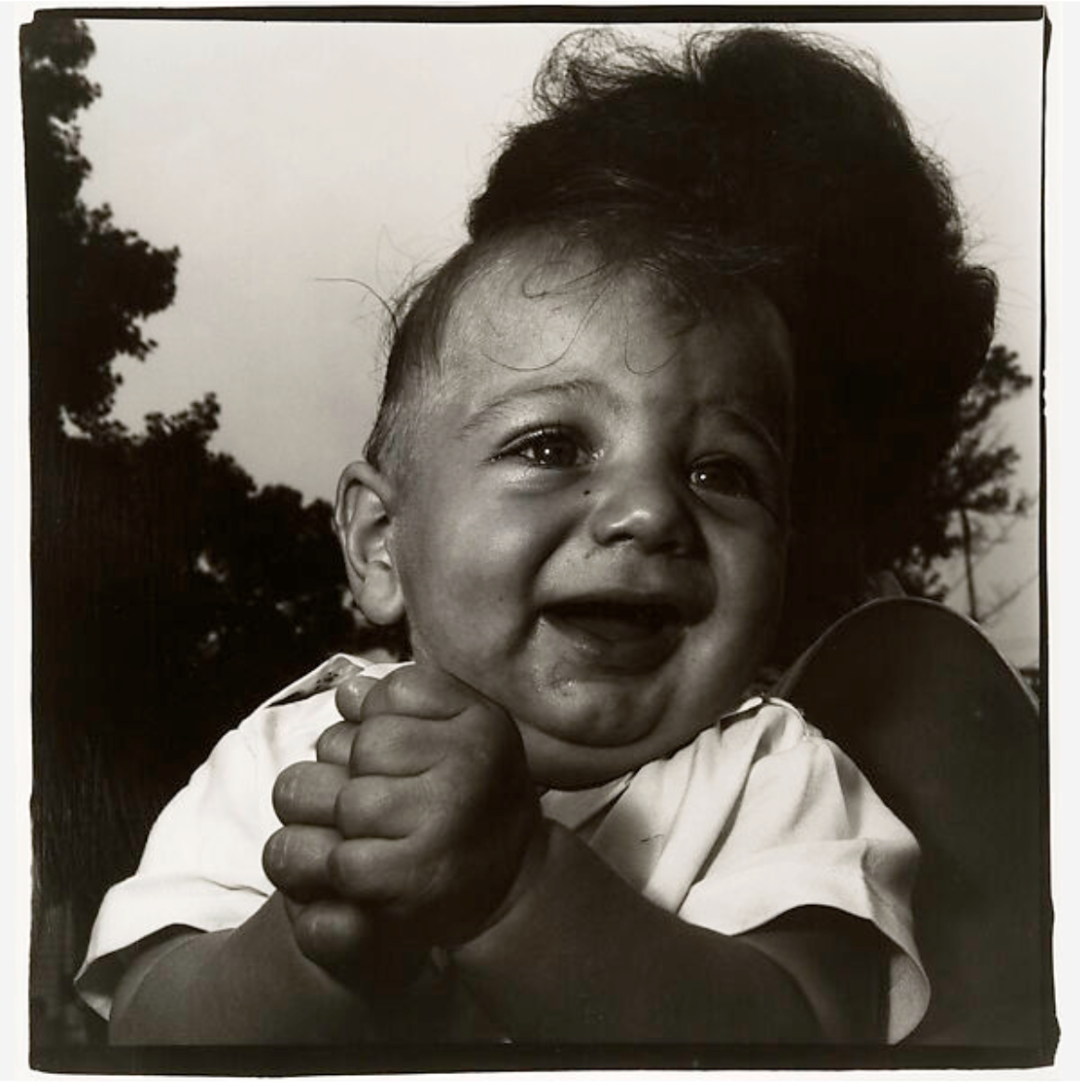
Diane Arbus,Loser at a Diaper Derby,1967© The Estate of Diane Arbus
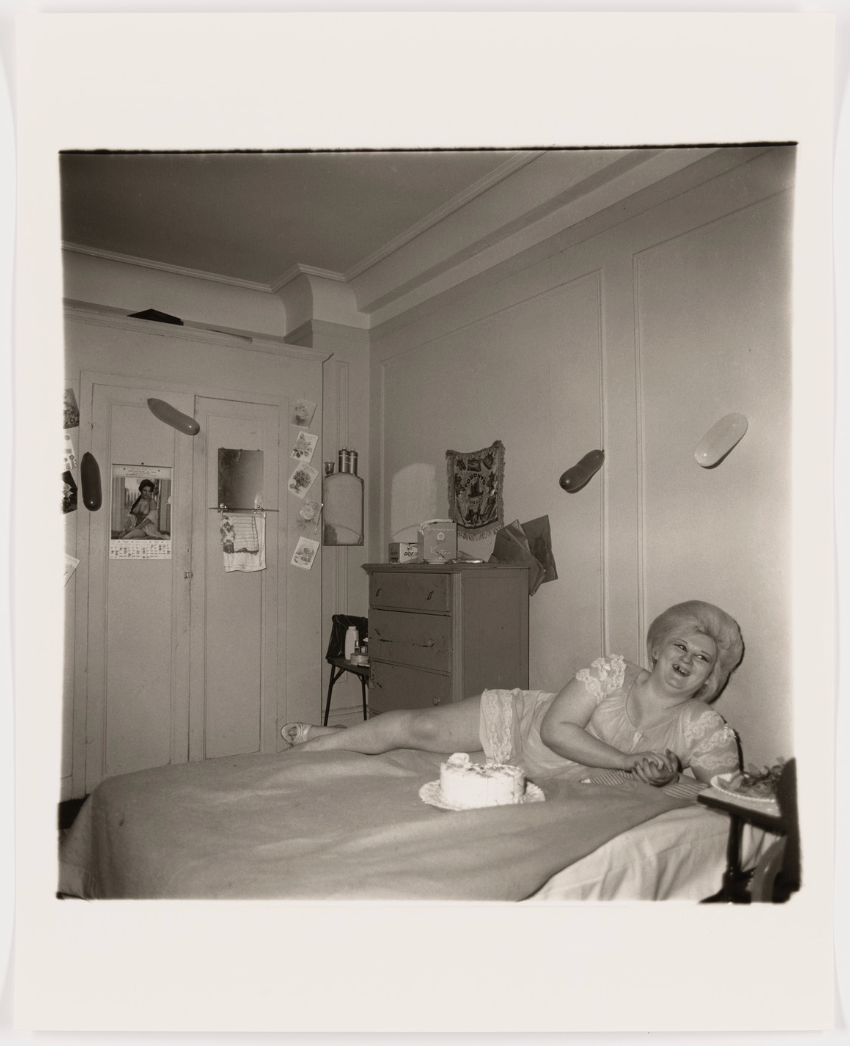
Diane Arbus, Transvestite at her birthday party, N.Y.C., 1968, 1968 © The Estate of Diane Arbus
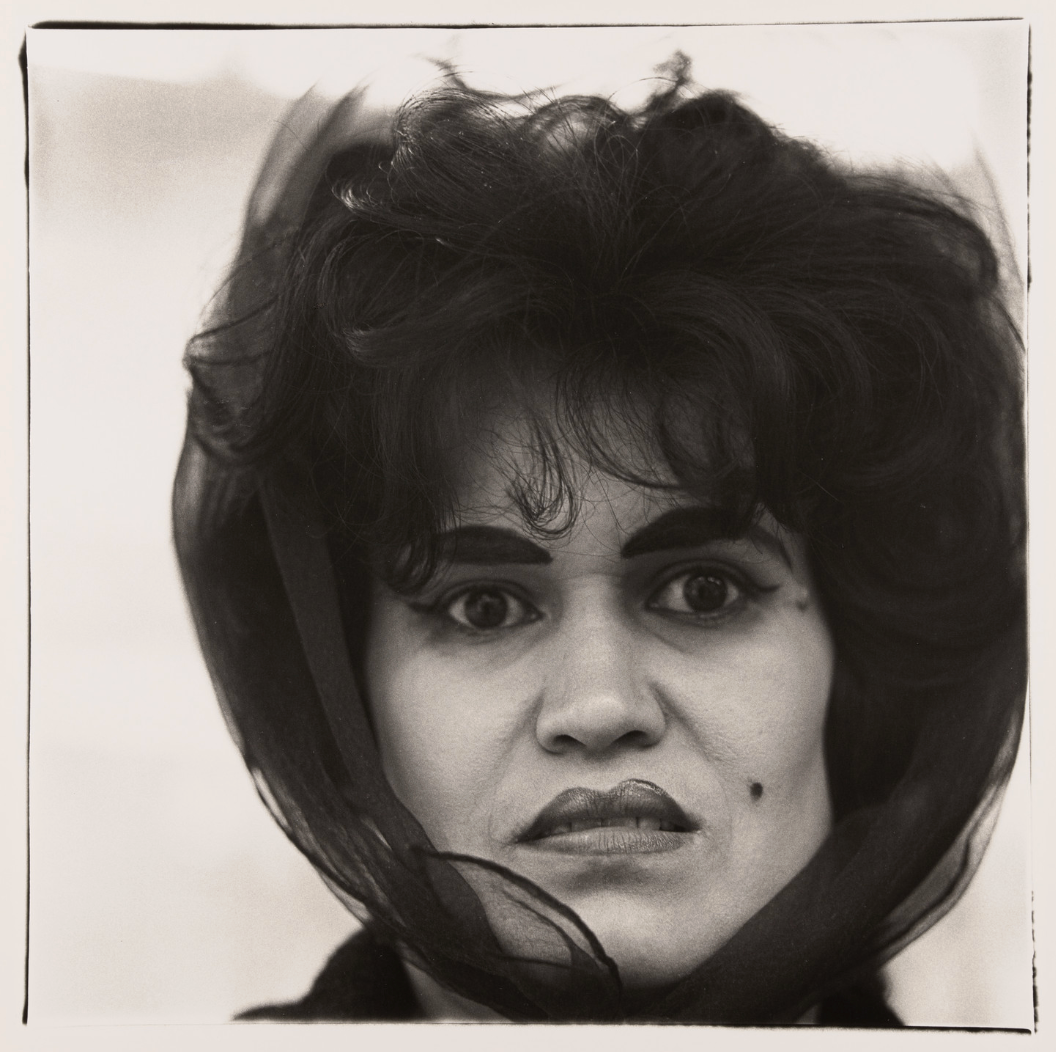
Diane Arbus, Puerto Rican woman with a beauty mark,N.Y.C.Diane Arbus American, 1965, 1965 © The Estate of Diane Arbus
This approach reaches its apex in Naked man being a woman, N.Y.C., 1968. The subject draws back a curtain beside the bed, unveiling a secret that is at once theatrical and sacred. His pose recalls Venus Anadyomene, rising from the sea foam, with even the positioning of his feet referencing Sandro Botticelli’s The Birth of Venus. Arbus’s flash accentuates the extraordinary beauty of the soft body and the defiant akimbo stance, linking contemporary marginal subjects to the lineage of classical art.
Within the art market and connoisseurship, the material qualities of Arbus’s prints are central to their value. Beginning in 1965, she produced prints with irregular black borders, revealing the full, uncropped negative. These borders remind viewers that a photograph is an image printed on a two-dimensional sheet of paper, rather than an “objective,” window-like view onto reality. This self-conscious attention to the medium’s physicality firmly establishes the photograph as a tangible, authentic object.
What makes Arbus enduringly compelling is her timeless proposition concerning human vulnerability. The sublimity of her photography does not arise from cheap sympathy for suffering, but from her nearly ruthless, unflinching gaze toward truth. She understood that honesty is not innate innocence, but a reward earned through courage in confronting reality. In her images, those cast aside by society do not appear as spectacle, but are endowed with mythic dignity. By erasing the boundary between High Art and documentary photography, Arbus compels us to halt before her unsettling images and ask, with sudden urgency, who we truly are. Her refusal to look away transforms photography into a form of visual testimony—almost religious in intensity—capable of reaching directly into the soul.