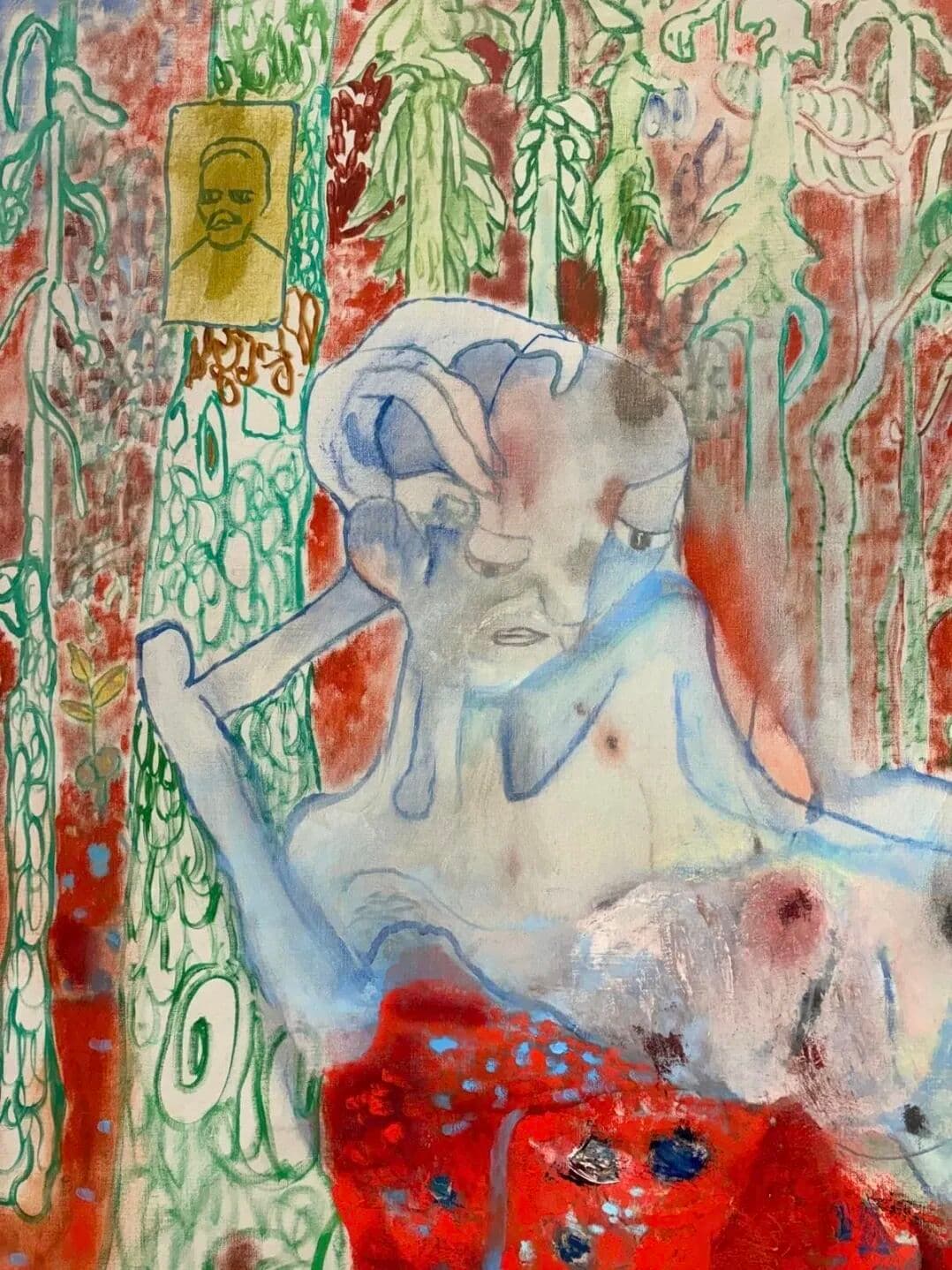
Qiu Xiaofei | A Canticle of Life and Time
Qiu Xiaofei’s recent work marks a decisive shift from personal memory toward a universal meditation on life, time, and renewal. In The Theater of Winter and Thrive, private family history expands into a theatrical space where birth and decay coexist. Through distorted horizons, ancestral figures, and painterly references to photography, Qiu affirms painting’s enduring power to give form to the invisible, transforming loss into a profound vision of human continuity.
We are honored to have placed two works with important collectors from Hauser & Wirth following Qiu Xiaofei’s first solo exhibition with the gallery.
In his early career, Qiu was widely recognized for his focus on personal memory. Over the past decade, however, he has consciously shifted his attention toward a fundamental inquiry into painting itself.
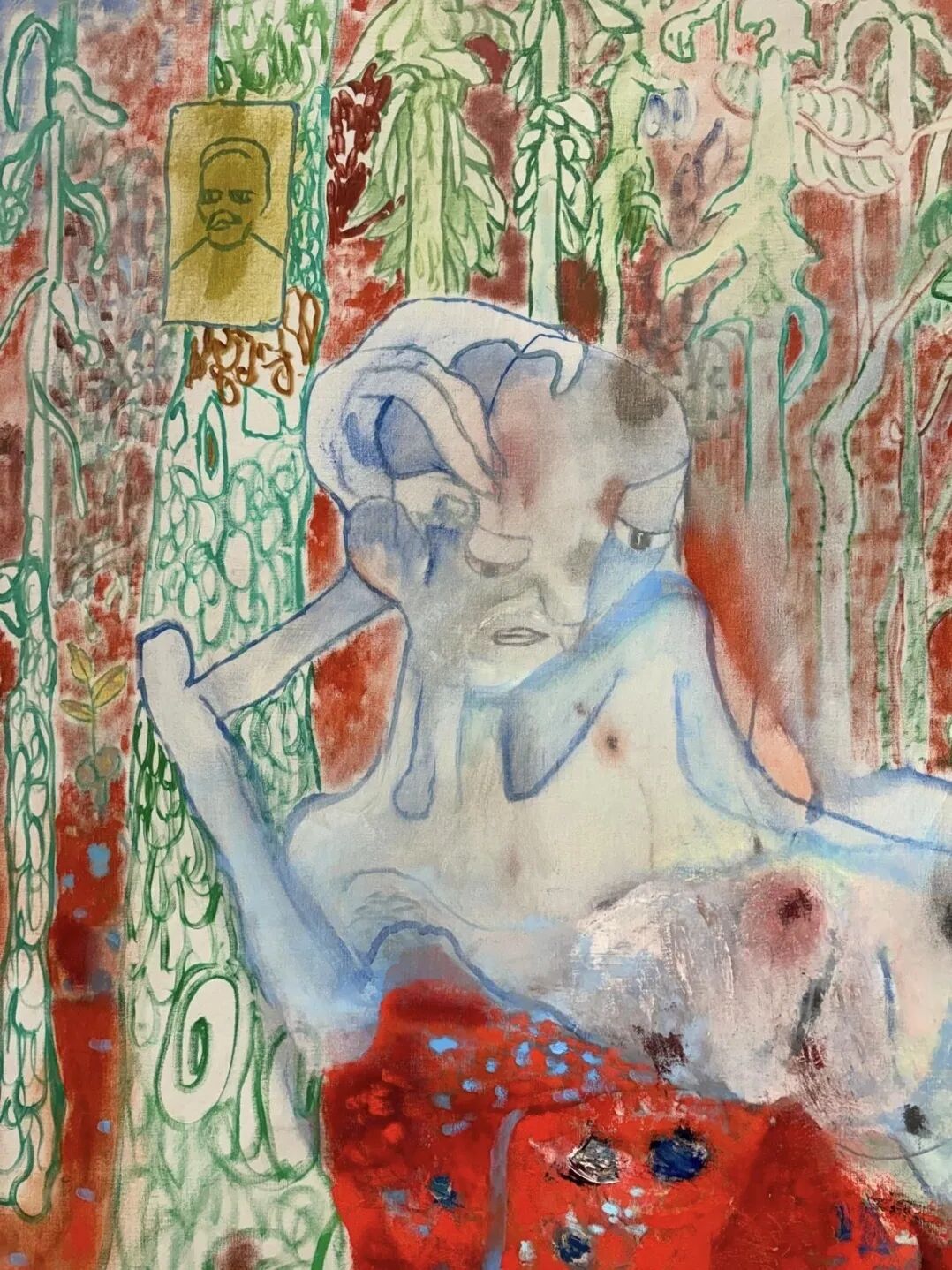
Looking back to his 2021 solo exhibition in New York at Pace Gallery, traces of his engagement with generational lineage had already begun to surface. At that time, figures charged with strong political and ideological symbolism—such as Leon Trotsky—served as mediating devices through which Qiu sought tension between grand historical narratives and personal perception.
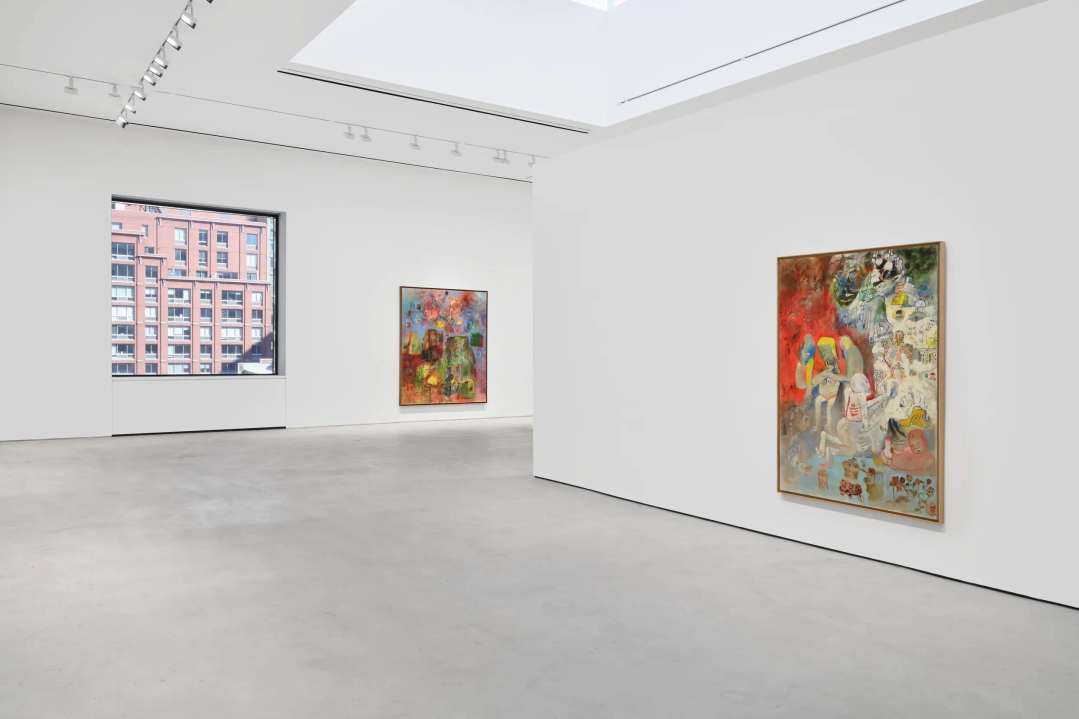
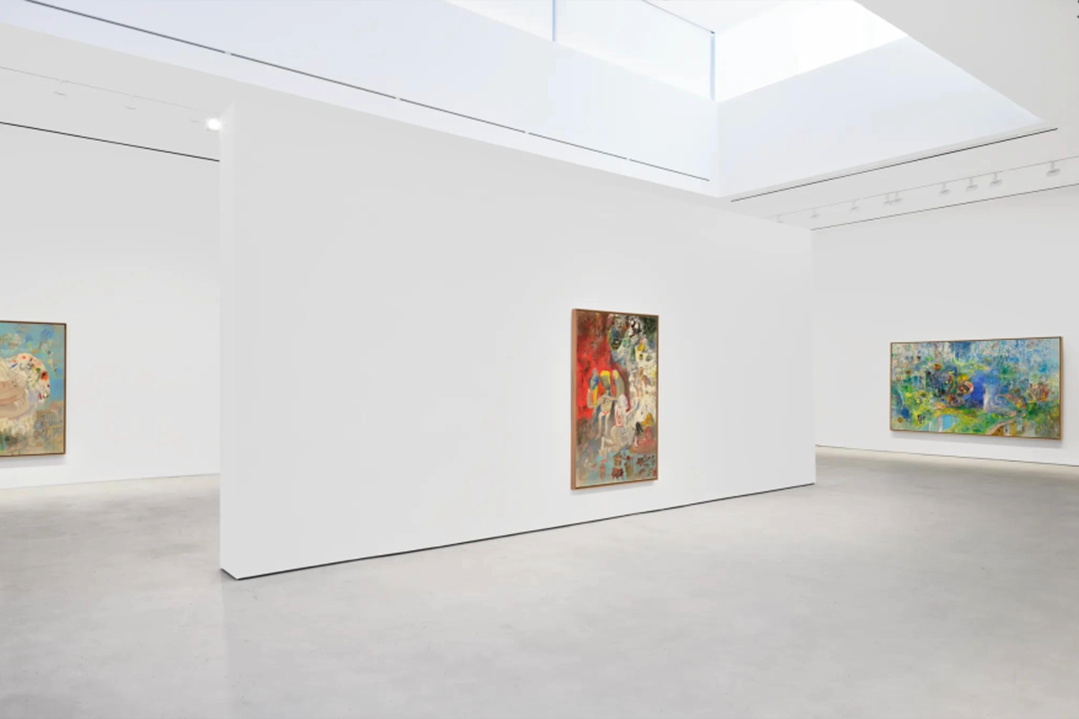
With The Theater of Winter and Thrive (2026), we now witness the most transformative turn in Qiu Xiaofei’s artistic trajectory. This exhibition is not merely a visual breakthrough, but a profound rite addressing the essence of life and the spirit of family lineage.
The psychological impetus behind these new works originated from a discovery among his father’s belongings: a long-forgotten set of photographic negatives. Time had oxidized and scarred the black-and-white film, yet in the moment of reappearance, love, loss, and the cyclical nature of life were laid bare before the artist. This transition—from personal memory to the cycle of life—has endowed his painting with an unprecedented coexistence of monumentality and subtlety.
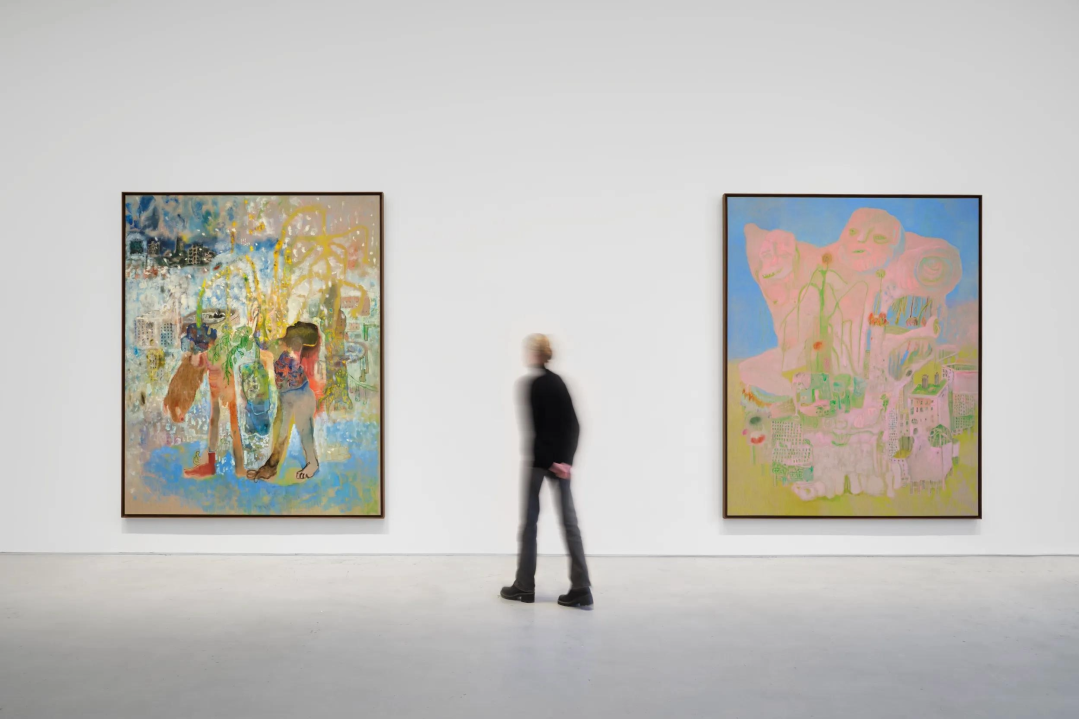
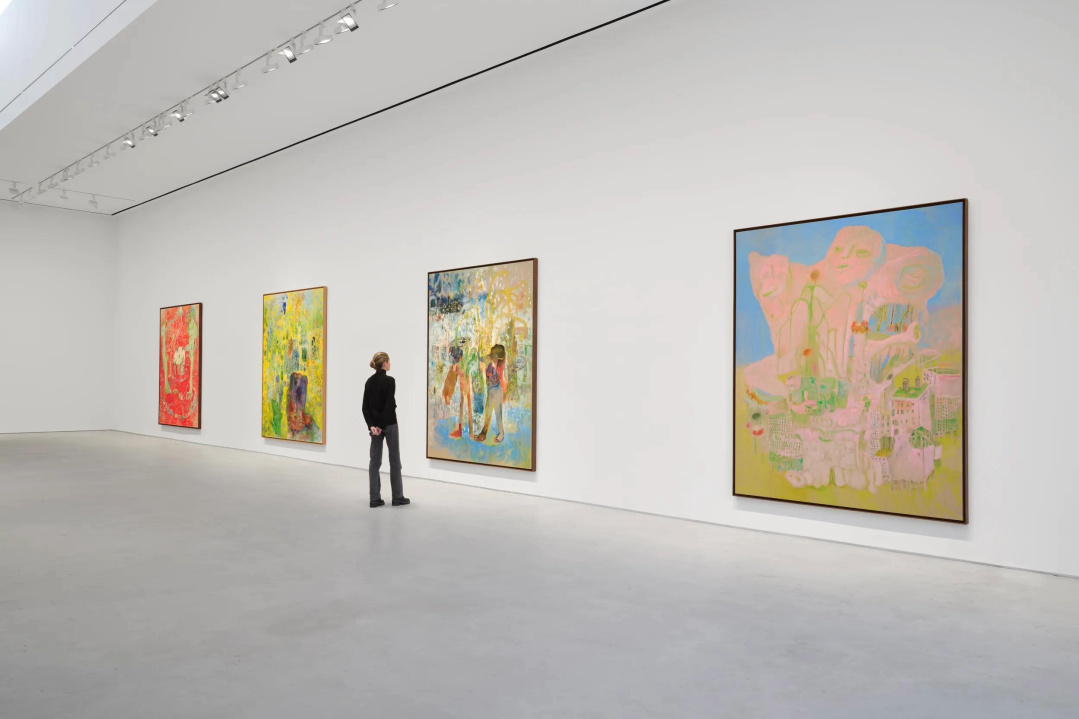
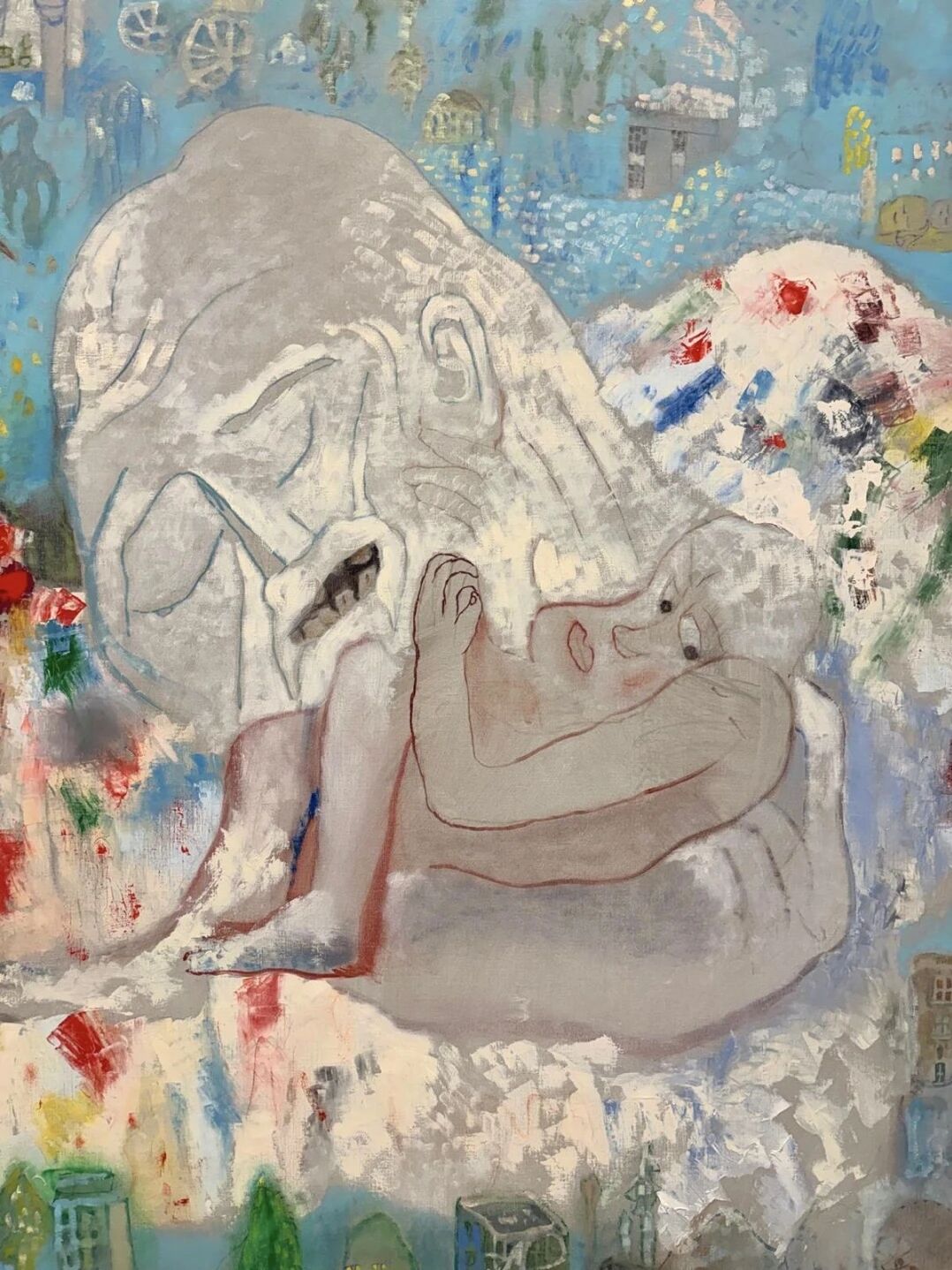
In Lullaby, one of the works acquired, emotional density emerges powerfully across the canvas. A monumental, stone-gray head—resembling a sculptural relic—appears as an ancestral presence rising from history and the subconscious. Cradled within it is a small figure rendered in soft pink hues, imbued with the fragile texture of life’s beginning. The work poignantly echoes the exhibition’s central theme: the bed, or cradle, as both the origin and the terminus of life, carrying the intertwined symbolism of birth and death.
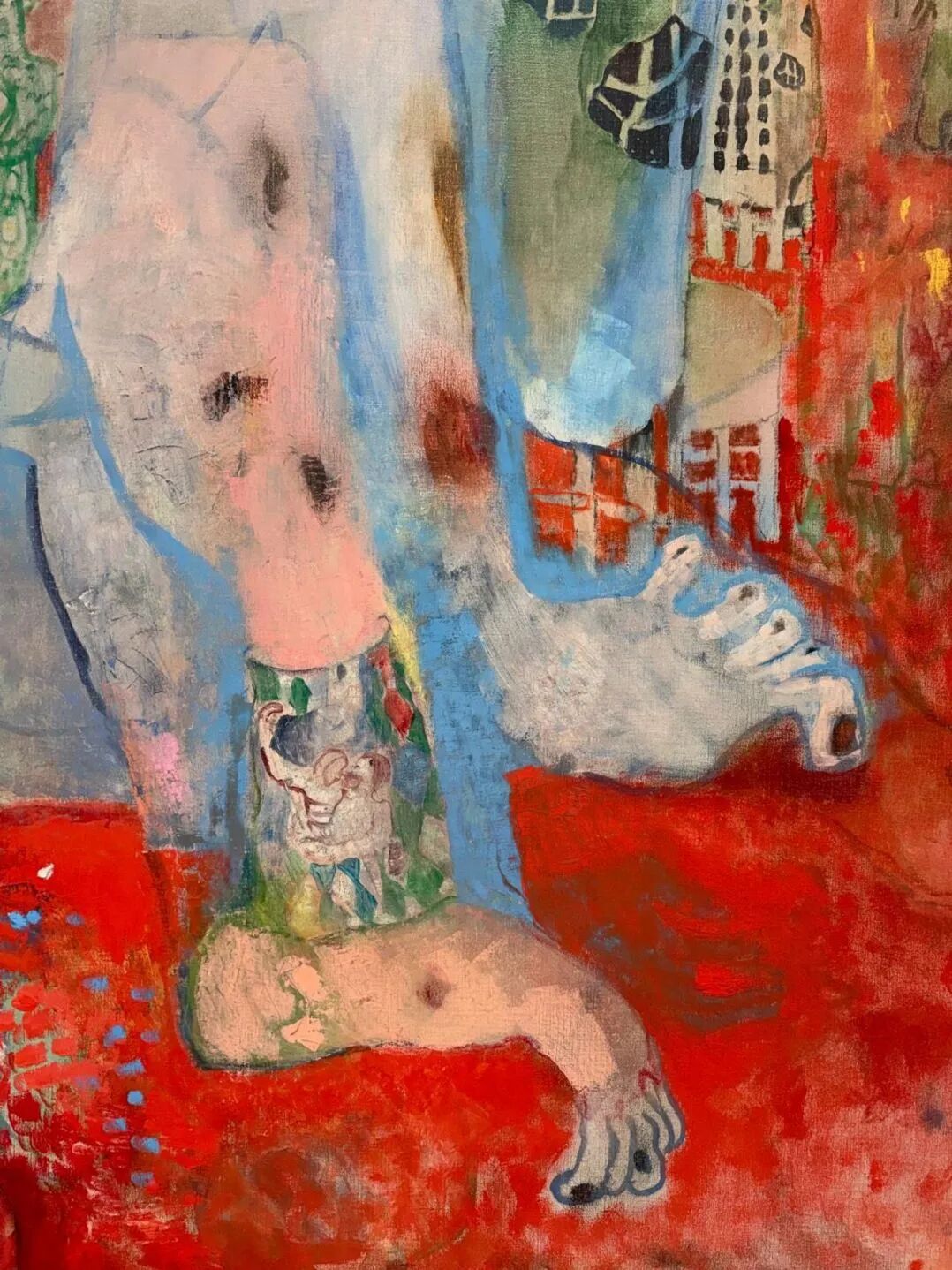
This narrative recalls Bare (2023–2024), in which a weakened body lies upon a sickbed, its collapse rendered with a haunting beauty. Here, Qiu captures the duality of the bed as both a vessel for life’s emergence and a site of earthly departure. Drawing from the Eastern philosophical cycle of formation, duration, decay, and emptiness, he condenses cosmic recurrence into dense layers of pigment. The juxtaposition of flourishing and withering becomes his most profound inquiry into existence itself: decay as the precondition for growth, and loss as the primal force of renewal.
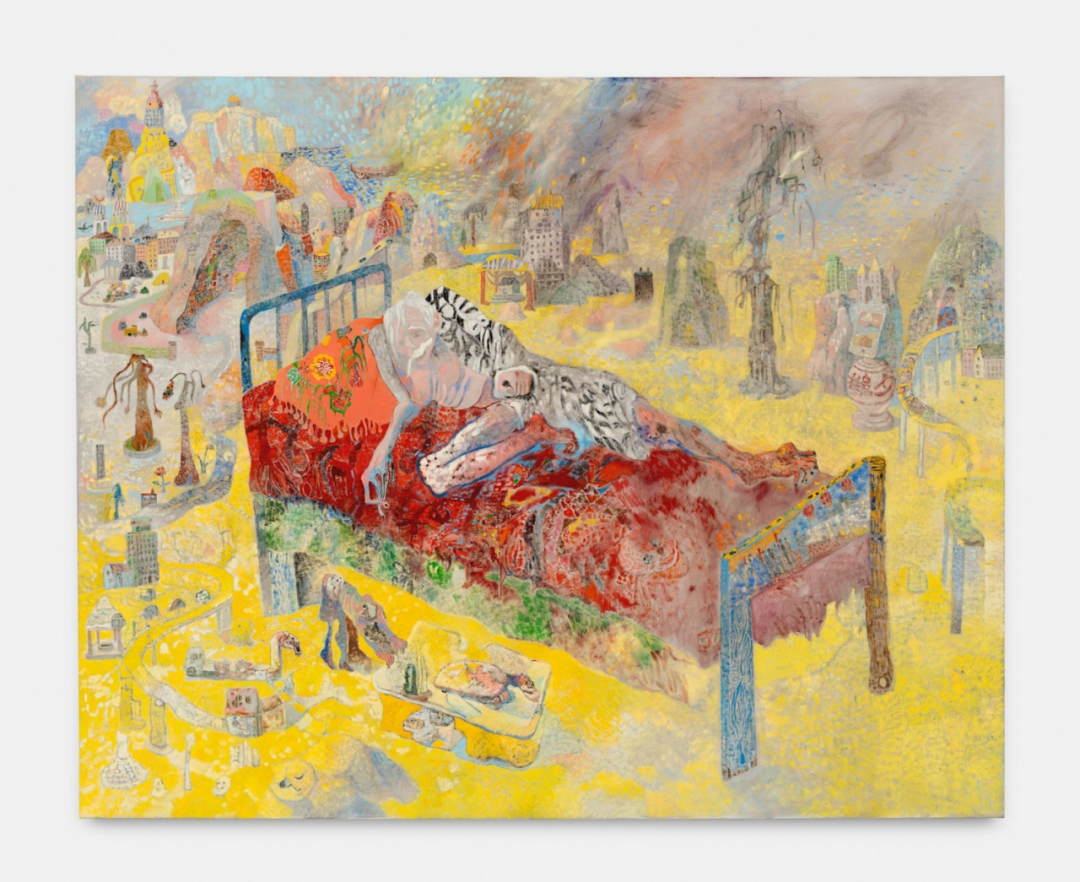
qiuxiaofei, Bare, 2025 © Hauser & Wirth
Qiu’s treatment of space reaches a new apex in this body of work. The term “theater” in the exhibition title references both his family history—his grandparents once managed the Peking opera troupe Yongfeng Society, and his father worked in stage design—and his redefinition of pictorial space.
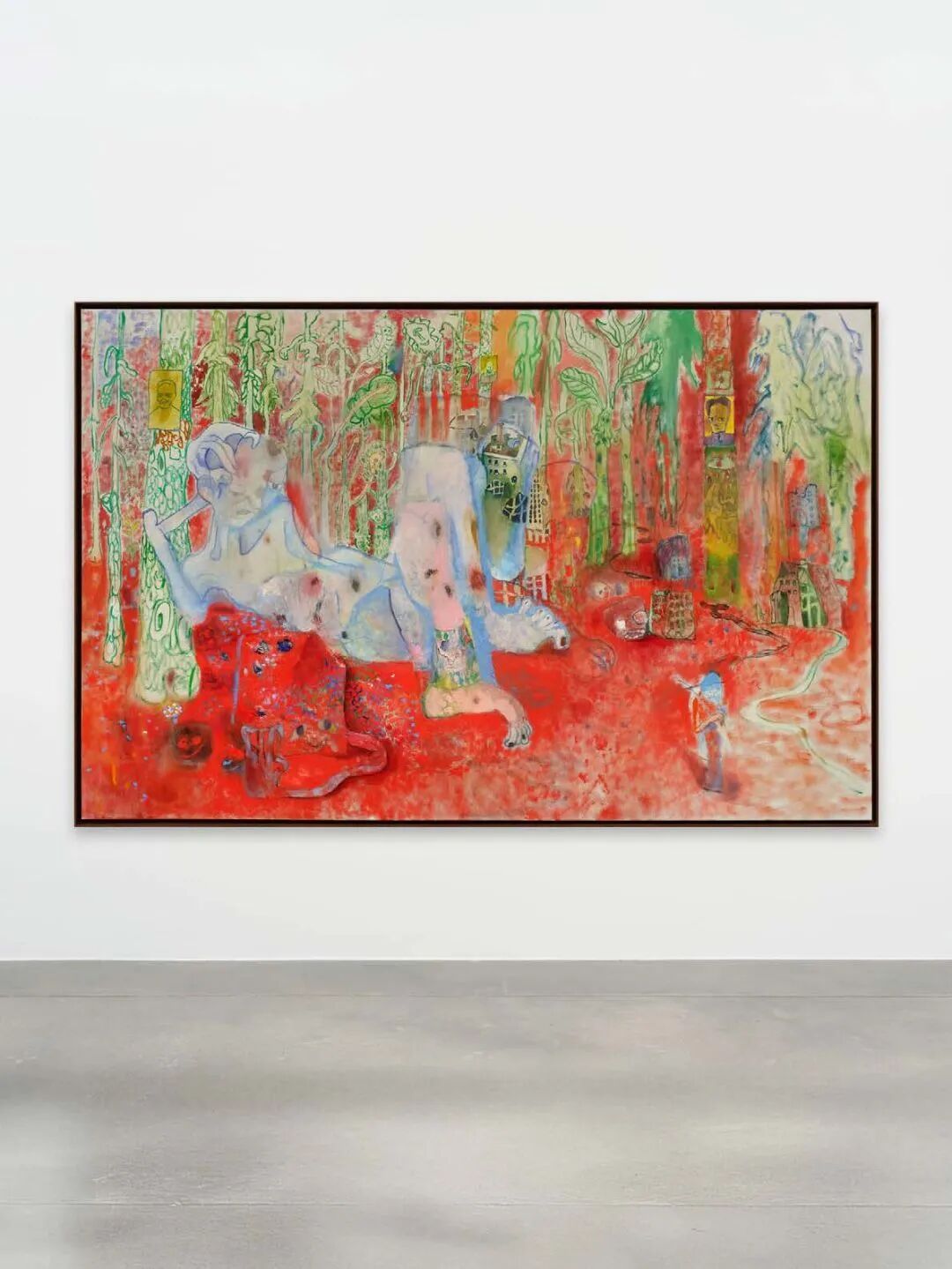
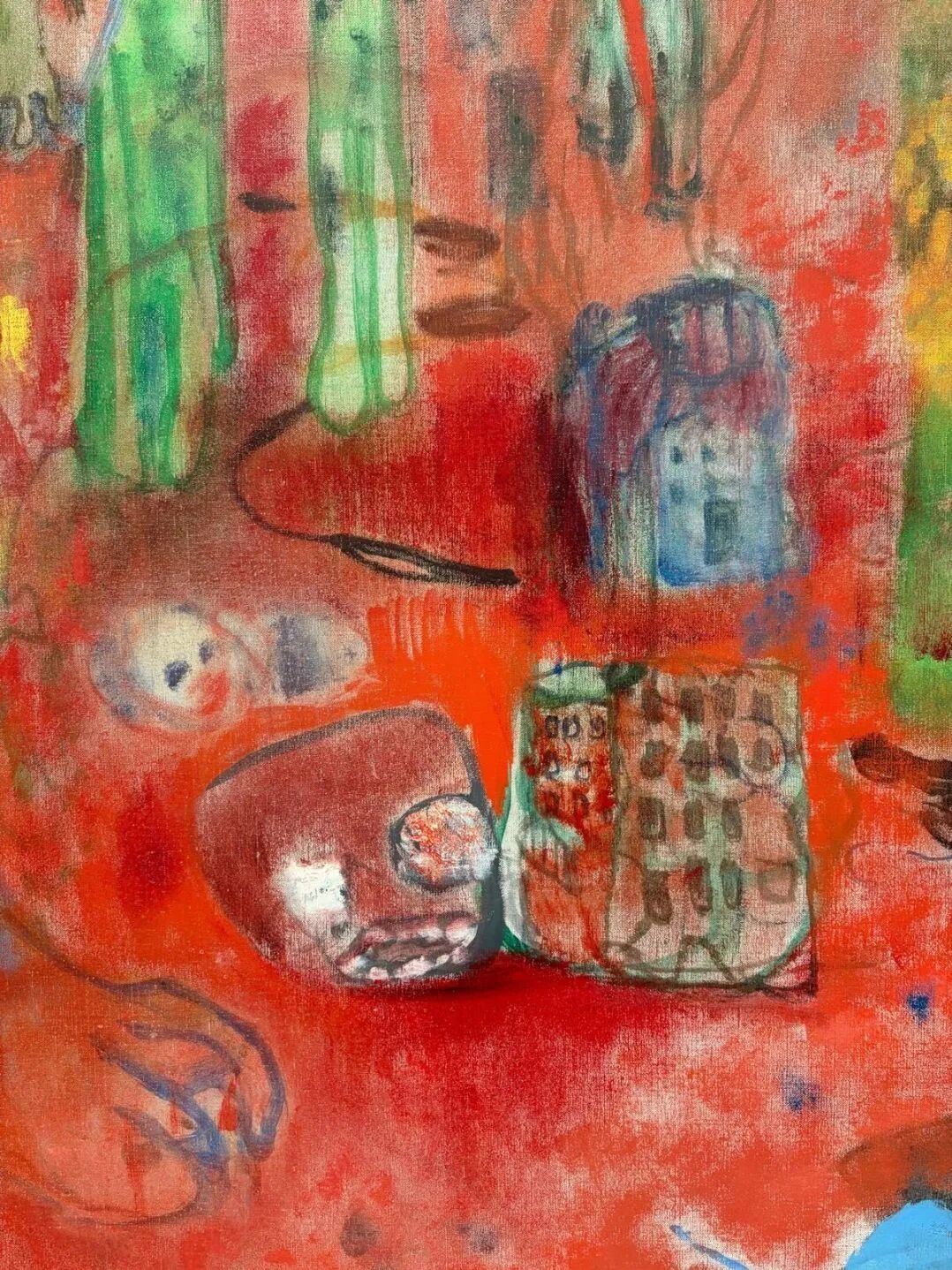
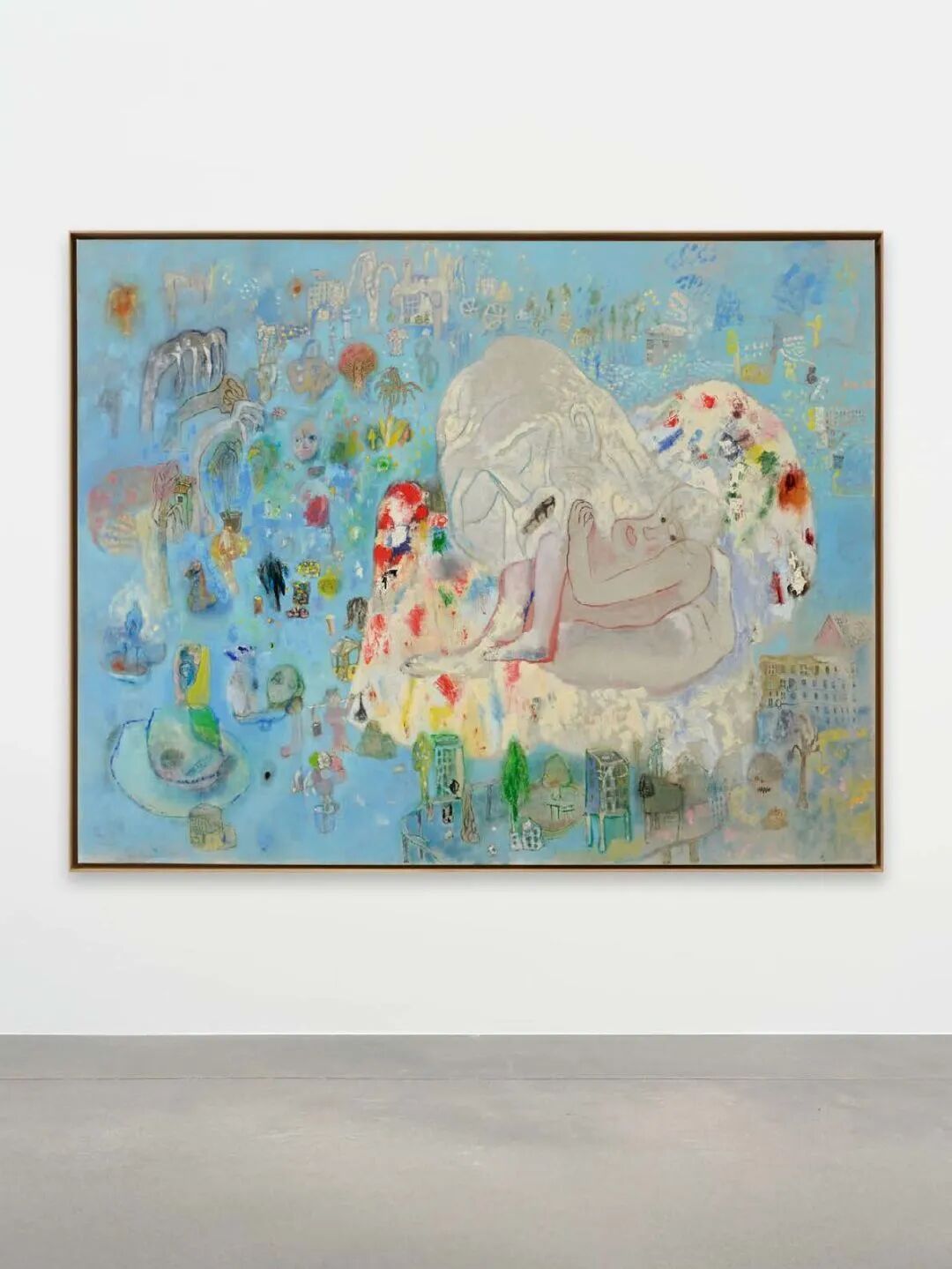
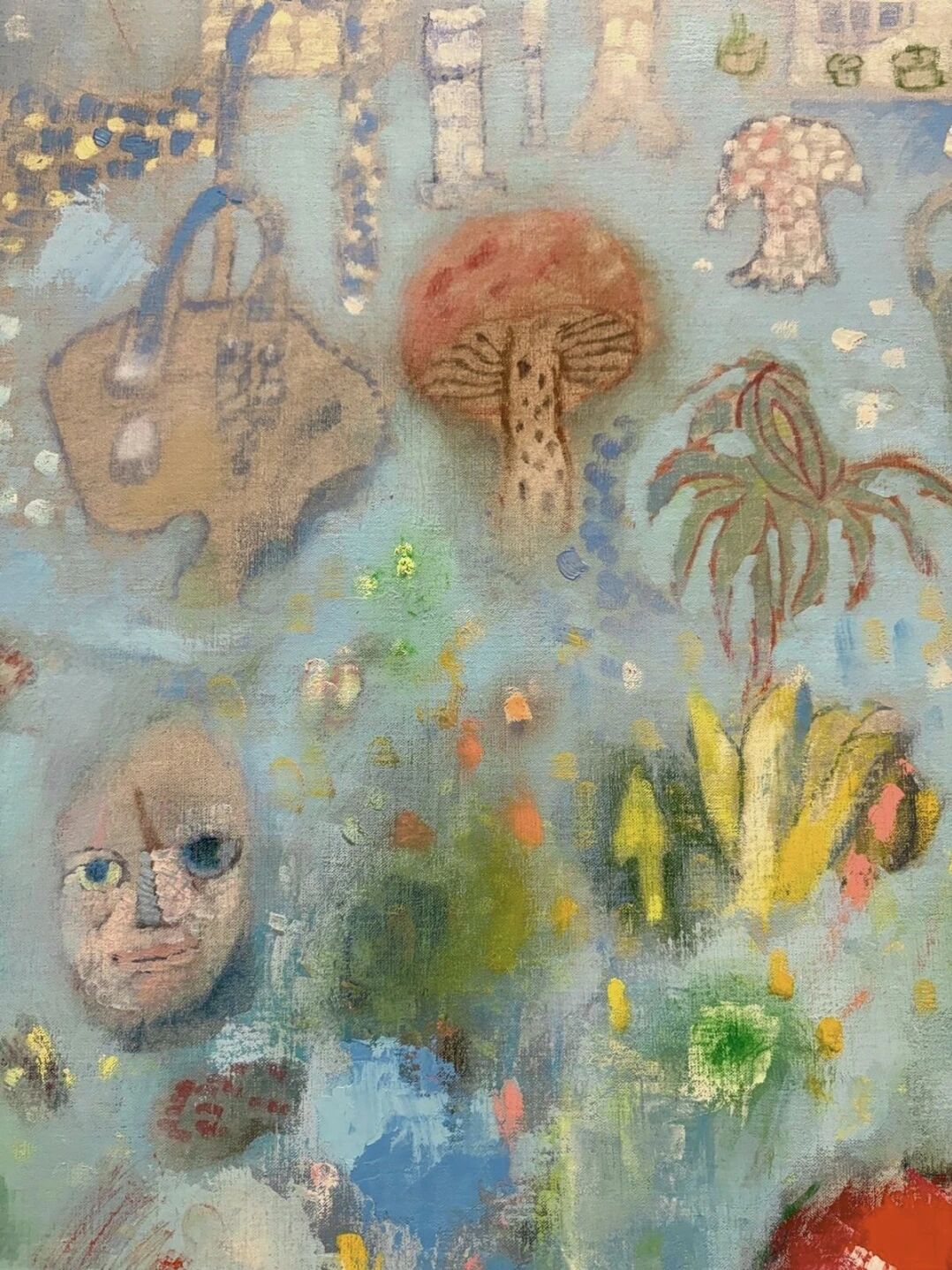
In The Theater of Winter and Thrive, the exhibition’s titular and acquired work, distorted horizons and altered scales evoke the theatrical environments that shaped the artist from an early age. This sense of theatricality generates an “artificial realism,” situating the viewer within a vast stage that transcends time. Scattered architectural fragments with futuristic undertones extend from personal family memory to the geopolitical relationship between Harbin and the former Soviet Union. The weight of geopolitics is transformed into an aesthetic spectacle—no longer mere representation, but a vessel for memory and imagination, merging past and present, the personal and the collective.
Natural elements in Qiu’s work consistently function as psychological projections. Though born in Heilongjiang, China’s most forested province, he grew up on expansive plains far removed from woodland. This distance fostered both longing and reverie, lending his vegetal imagery a dreamlike quality. In four large-scale works in the exhibition, flowing light transforms the landscapes of his homeland into purely spiritual visions, where trees and forest clearings become metaphors for meditation and existence.
The acquisition of these two works carries particular significance. As a leading figure of a new generation in Chinese contemporary painting, Qiu Xiaofei has successfully transformed private, intimate memory into a universal philosophy of life. Drawing poetic sustenance from Robert Lowell and Emily Dickinson, he situates Chinese painting within a global literary and spiritual discourse.
Equally vital is his commitment to the ontology of painting itself. In an age dominated by images and digital media, Qiu demonstrates painting’s enduring capacity to give form to the invisible. Through his engagement with photographic textures and distorted horizons, he reveals painting’s unique power to negotiate time and space. This exhibition at Hauser & Wirth firmly consolidates his position within the international art market. Qiu is not merely depicting China; he is addressing shared human experiences—existence and disappearance, flourishing and decline. For the collectors, these two works are not only milestones from a pivotal transitional period, but the most expansive theatrical unfolding of the artist’s life to date.