Flourishing Forms — Igshaan Adams, One of the Most Collectible Tapestry Artists of Our Time
In recent years, Igshaan Adams has rapidly entered the sphere of major international institutions and top-tier collections through his poetic practice of fiber-based and suspended works. Extending the postwar tradition of material-based art, his work draws on personal cultural experience to address questions of identity, belief, and belonging, combining strong academic significance with growing market potential as he moves steadily toward the center of contemporary art discourse.
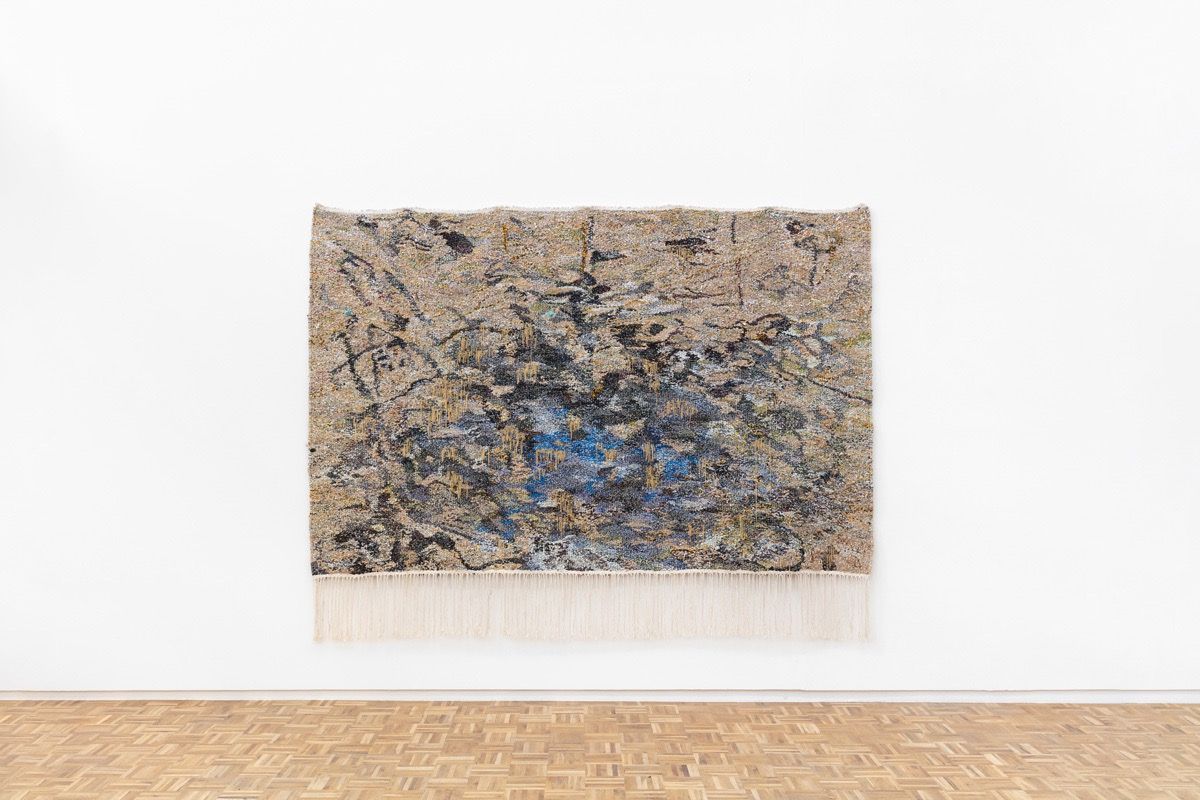
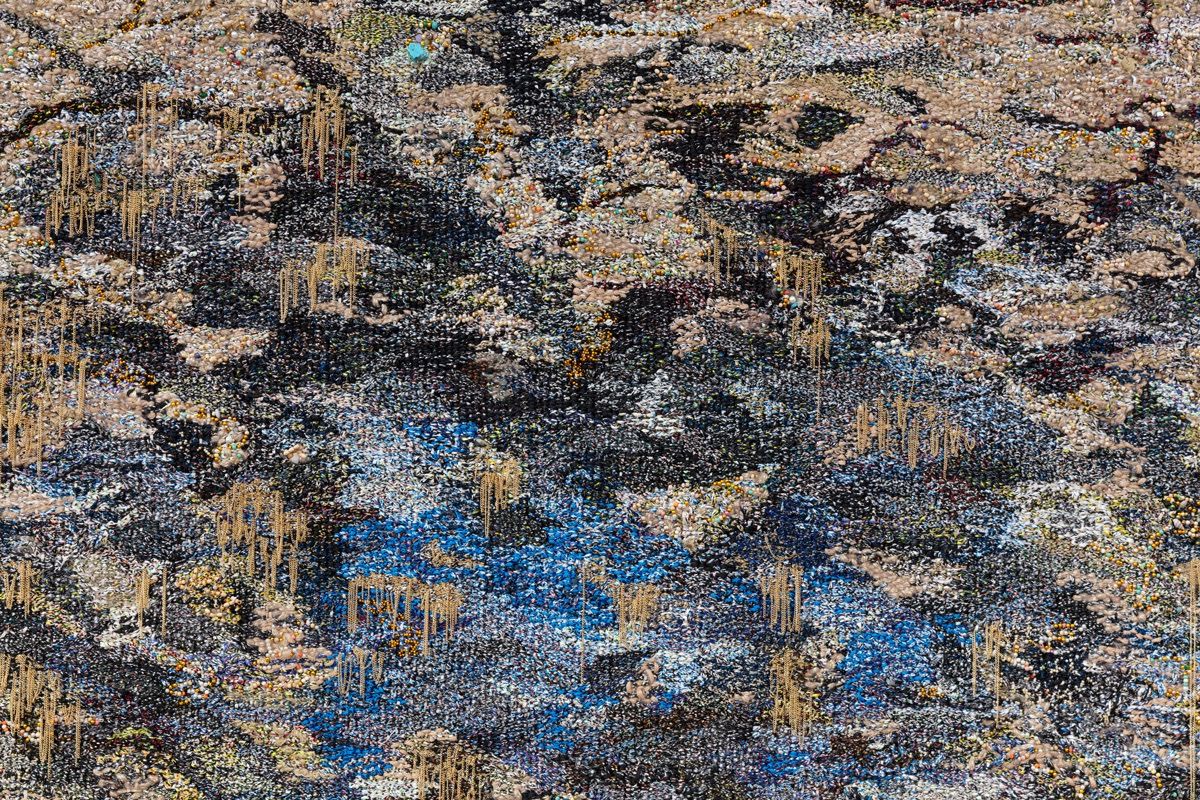
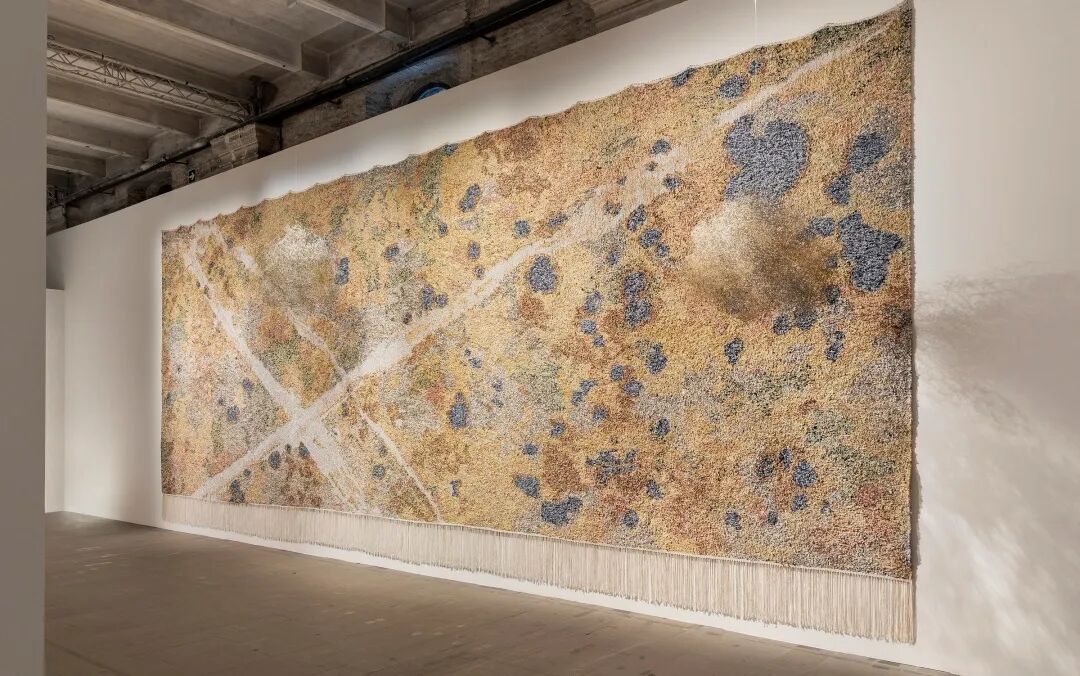
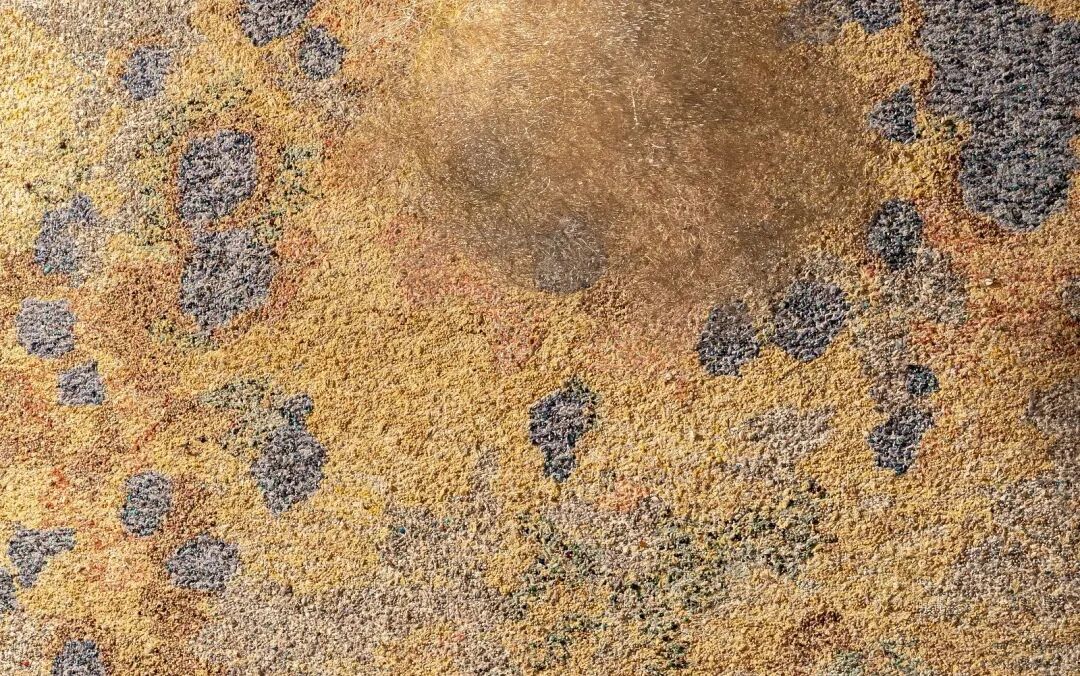
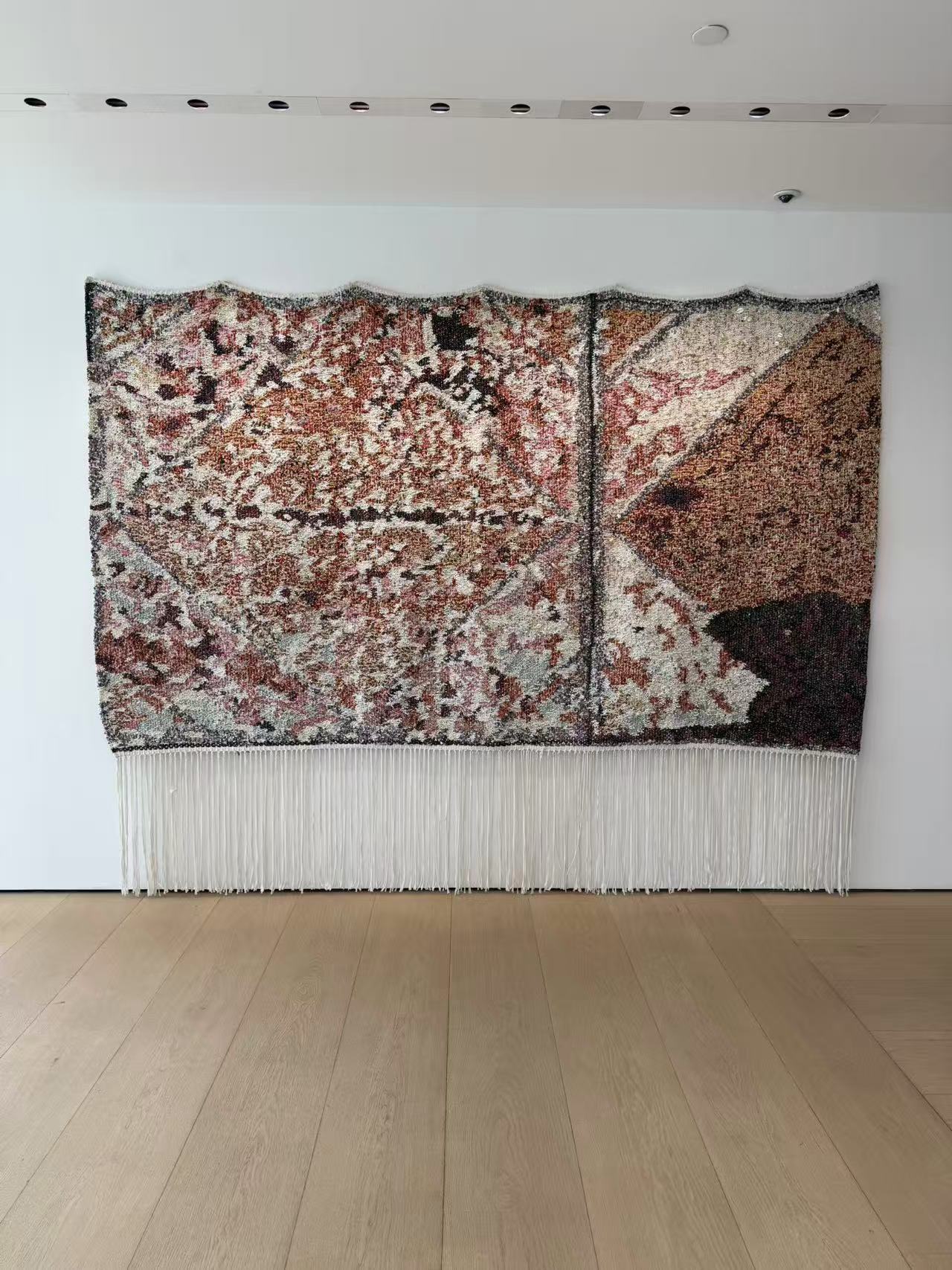
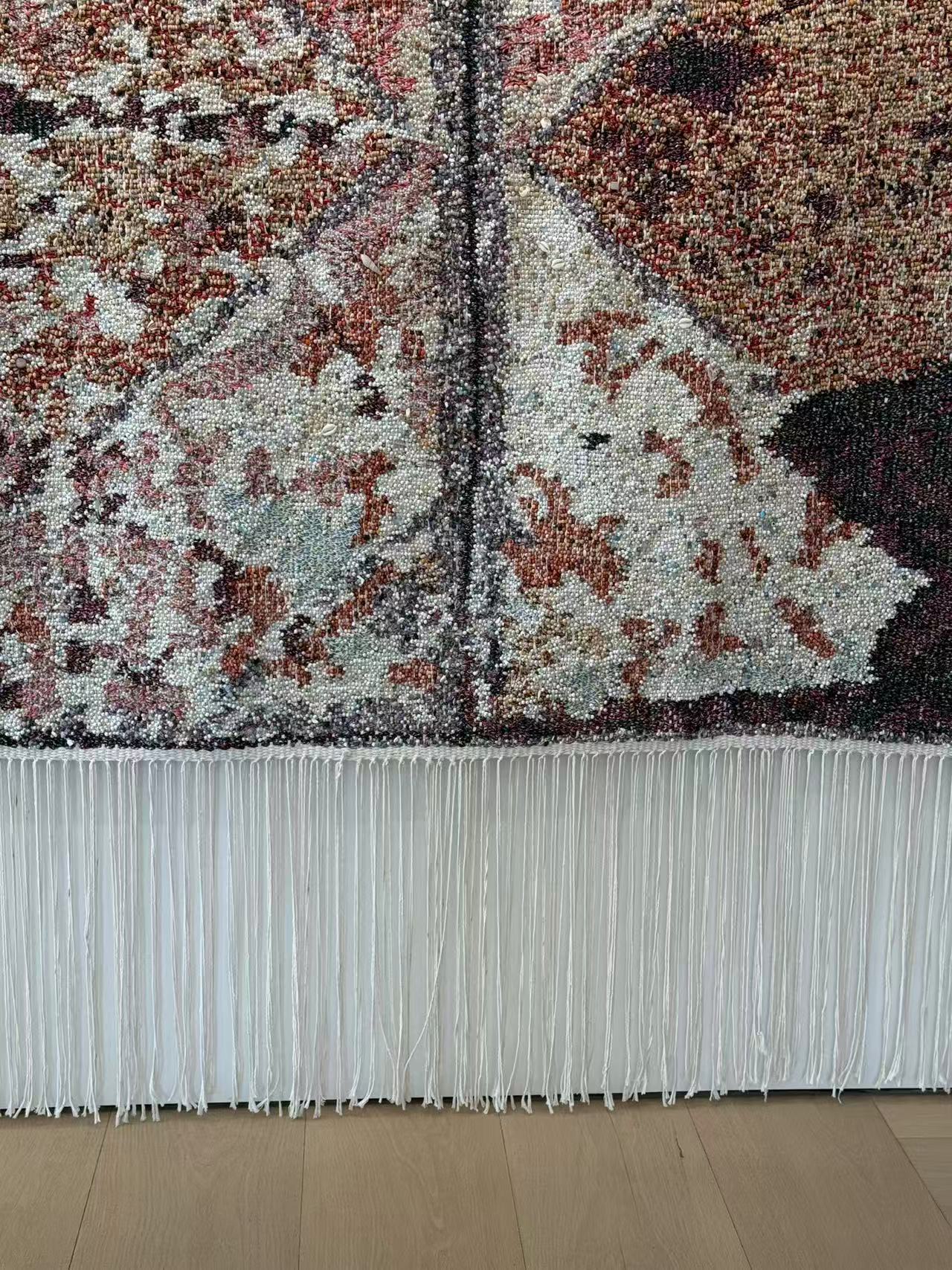
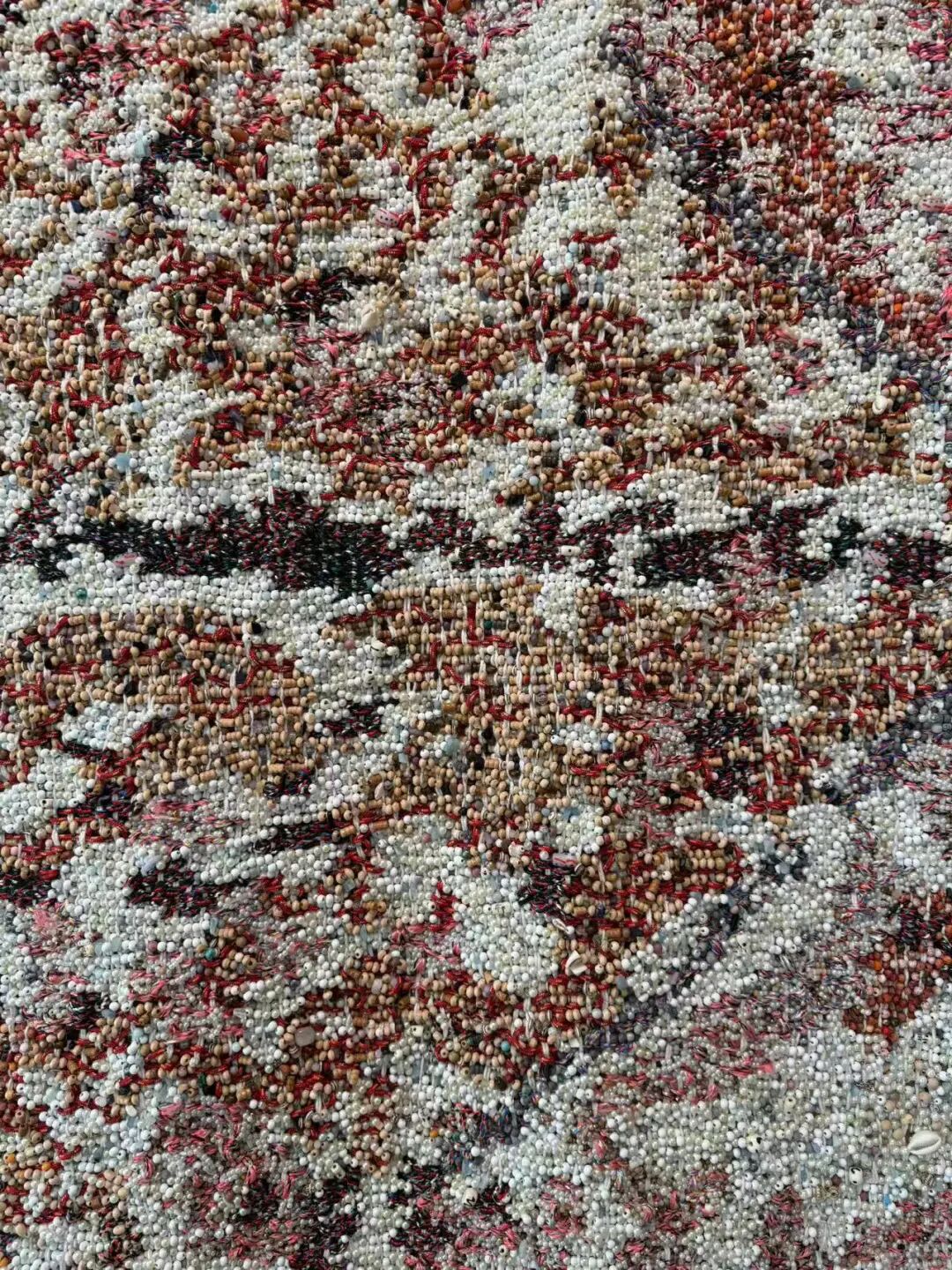
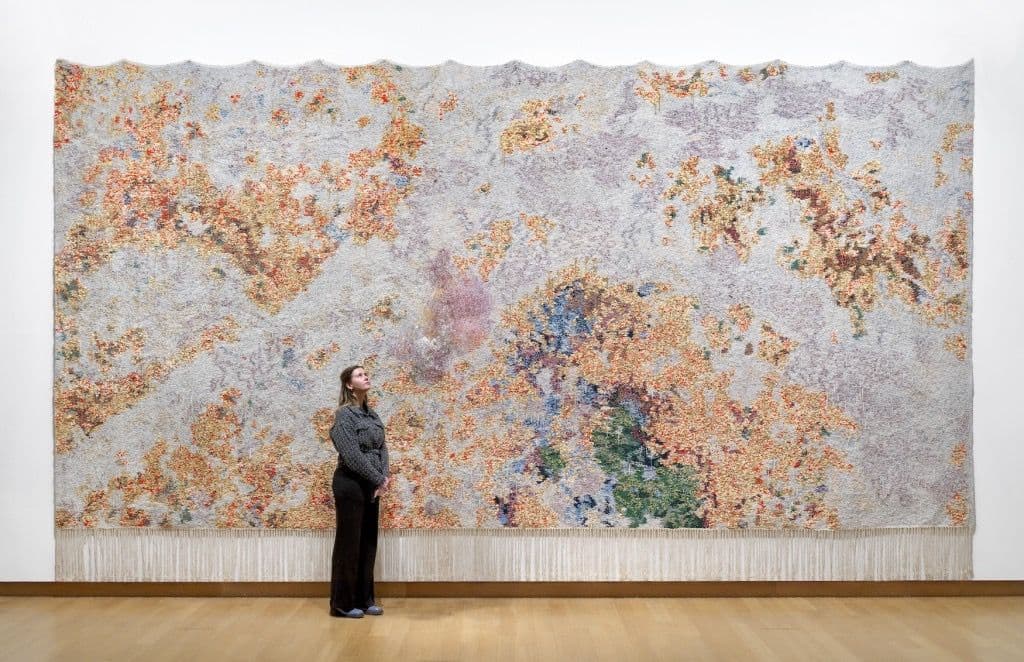
In recent years, we have repeatedly encountered the work of Igshaan Adams across the globe. From the nearly seven-meter-wide monumental work at the Stedelijk Museum Amsterdam, donated jointly by a group of leading collectors, to his solo booth at Art Basel Hong Kong this year, as well as his participation in the 59th Venice Biennale (La Biennale di Venezia), Adams’s presence has become increasingly visible. His soft sculptural works—resembling suspended rivers—allow cascades of multicolored beads to flow downward, as if time itself has momentarily crystallized in space. From a distance, they appear fluid and expansive; up close, the shimmering beads and fibrous threads cease to be mere materials and instead evoke a flowing galaxy, carrying a quiet yet overwhelming force. Soft yet resilient, the works recall a primordial state of life itself. One senses memory and trace embedded within them, like invisible maps woven with prayer, labor, and dreams.
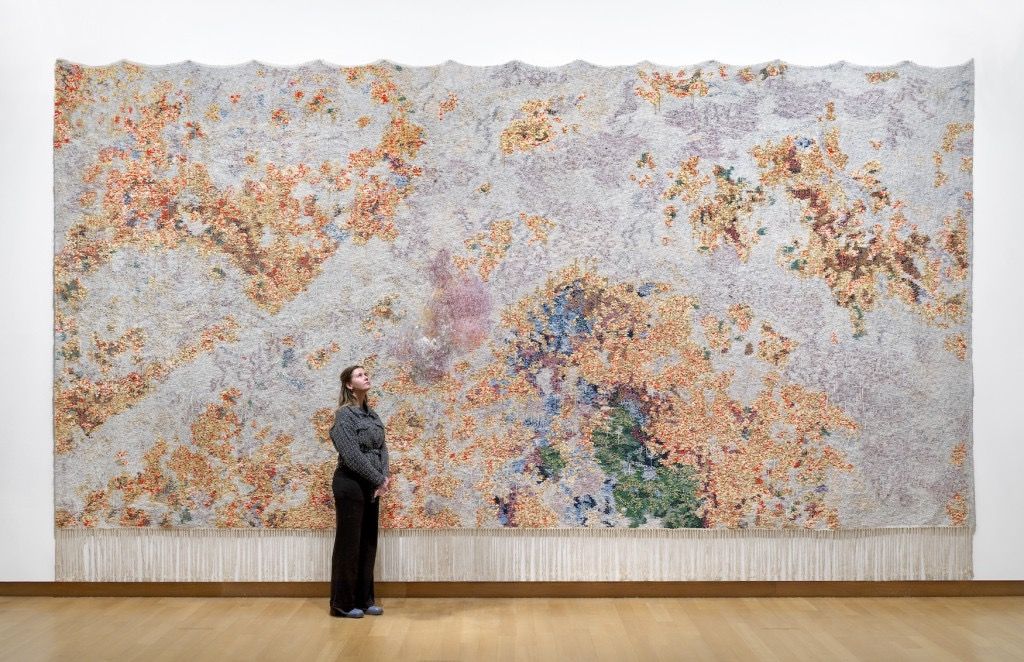
Nama Stap, 2023, Stedelijk Museum Amsterdam
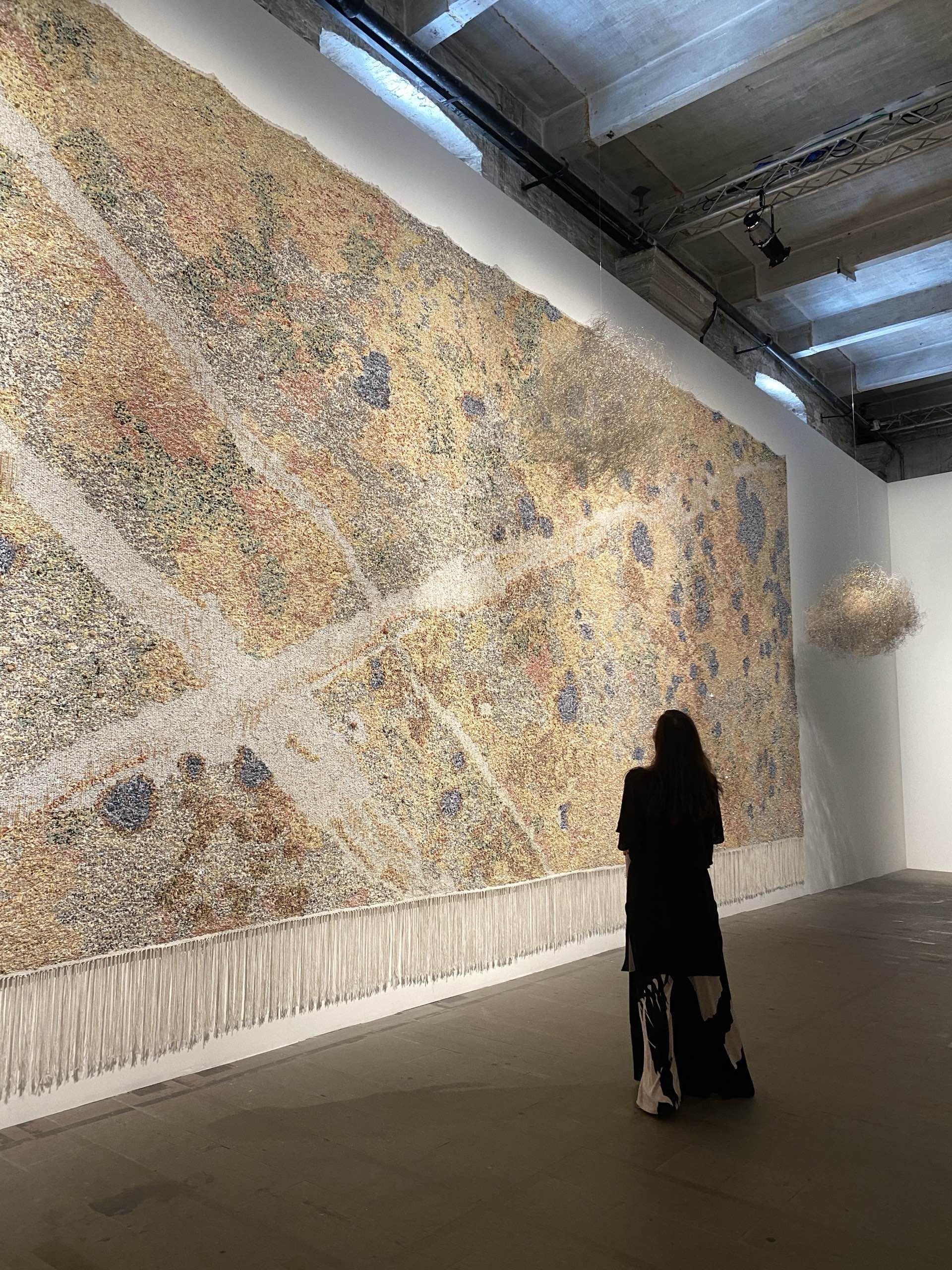
Exhibition view, 59th Venice Biennale (La Biennale di Venezia)
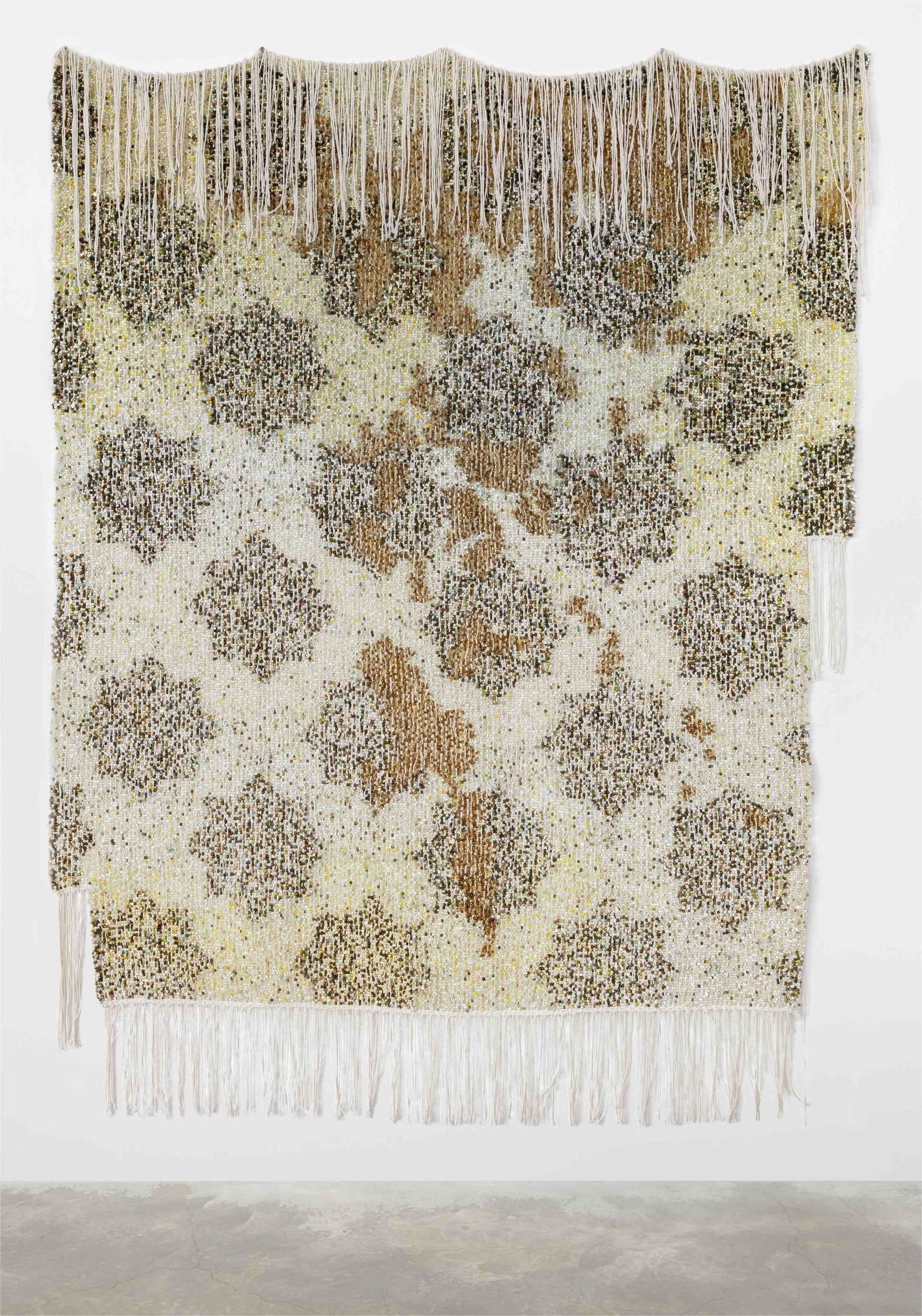
Vroeglig by die Voordeur (Early Light at the Front Door), 2020, exhibited at The Museum of Modern Art (MoMA), New York
This year, The Museum of Modern Art (MoMA), New York, presented its major annual exhibition Woven Histories: Textiles and Modern Abstraction, which surveys key material-based artists in postwar art and extends precisely along this trajectory. The two works by Adams included in the exhibition both come from collections belonging to individuals ranked among the world’s top collectors. The Speyer Family Collection, a crucial supporter of MoMA’s expansion in the early 2000s, and Beth Rudin DeWoody, one of the most prominent female collectors in the United States, whose private museum, The Bunker Artspace, is located in West Palm Beach, Florida, exemplify the caliber of Adams’s collectors. These facts clearly demonstrate that Adams’s work has quietly entered the highest tier of global collections. He is also scheduled to present a solo exhibition at the Hill Art Foundation in New York; Tom Hill, the foundation’s founder, has long been one of Adams’s most committed supporters and patrons, and this exhibition has been planned for years. Even more significantly, Adams will present a major solo exhibition next year at the Guggenheim Museum Bilbao, one of the most influential museums in Europe, which has recently staged major exhibitions of Martha Jungwirth, Yoshitomo Nara, and Hilma af Klint. We firmly believe that this Guggenheim exhibition will mark a milestone in Adams’s career—though by no means its culmination.
The rapid international recognition Adams has received from both institutions and collectors can be attributed to his distinctive approach to material. Raised in Cape Town, South Africa, amid complex intersections of culture, religion, and class, Adams developed a practice rooted in materials drawn from everyday life: thread, beads, wire, linoleum, cotton rope, and fabric. These materials carry not only personal memory but also collective symbolism. His works, often composed as fiber-based and suspended installations, evoke both textiles and cartographic forms. Embedded within their warp and weft are sustained inquiries into identity, belief, and belonging. This practice is deeply poetic, yet clearly situated within the broader discourse of international contemporary art.
Within the longer arc of art history, Adams’s work is understood as part of the lineage of postwar material-based art. From Eva Hesse to El Anatsui, numerous artists have used the weaving, assembling, and reconfiguration of materials to push art beyond the pictorial plane toward installation and spatial practice. Adams both extends and transforms this tradition. His works function like “breathing maps,” recording personal life trajectories while simultaneously addressing questions of cultural identity in the postcolonial era. That his work stands alongside a major scholarly exhibition such as MoMA’s Textiles and Modern Abstraction underscores the extent to which he has been integrated into the core discourse of contemporary art.
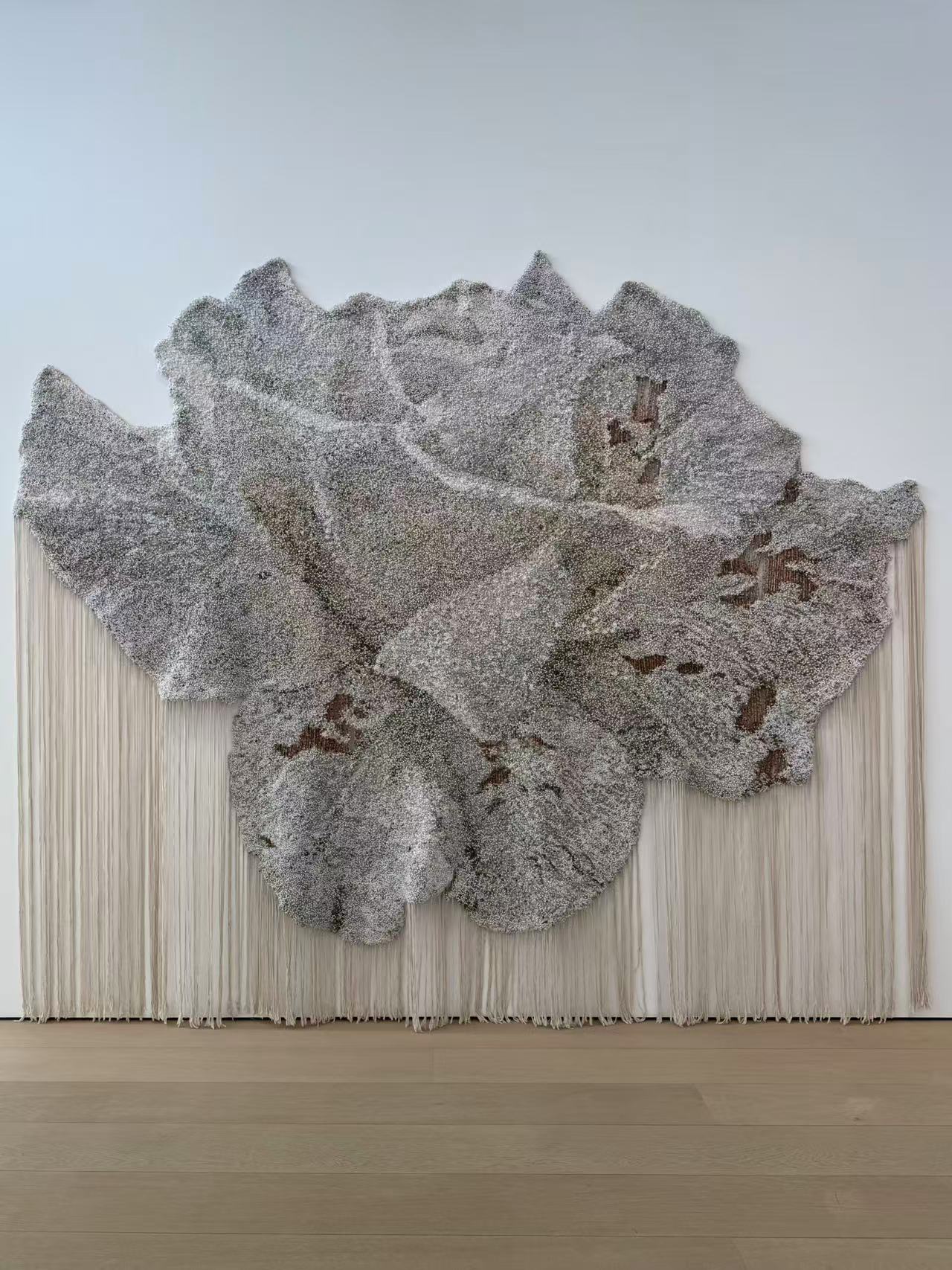
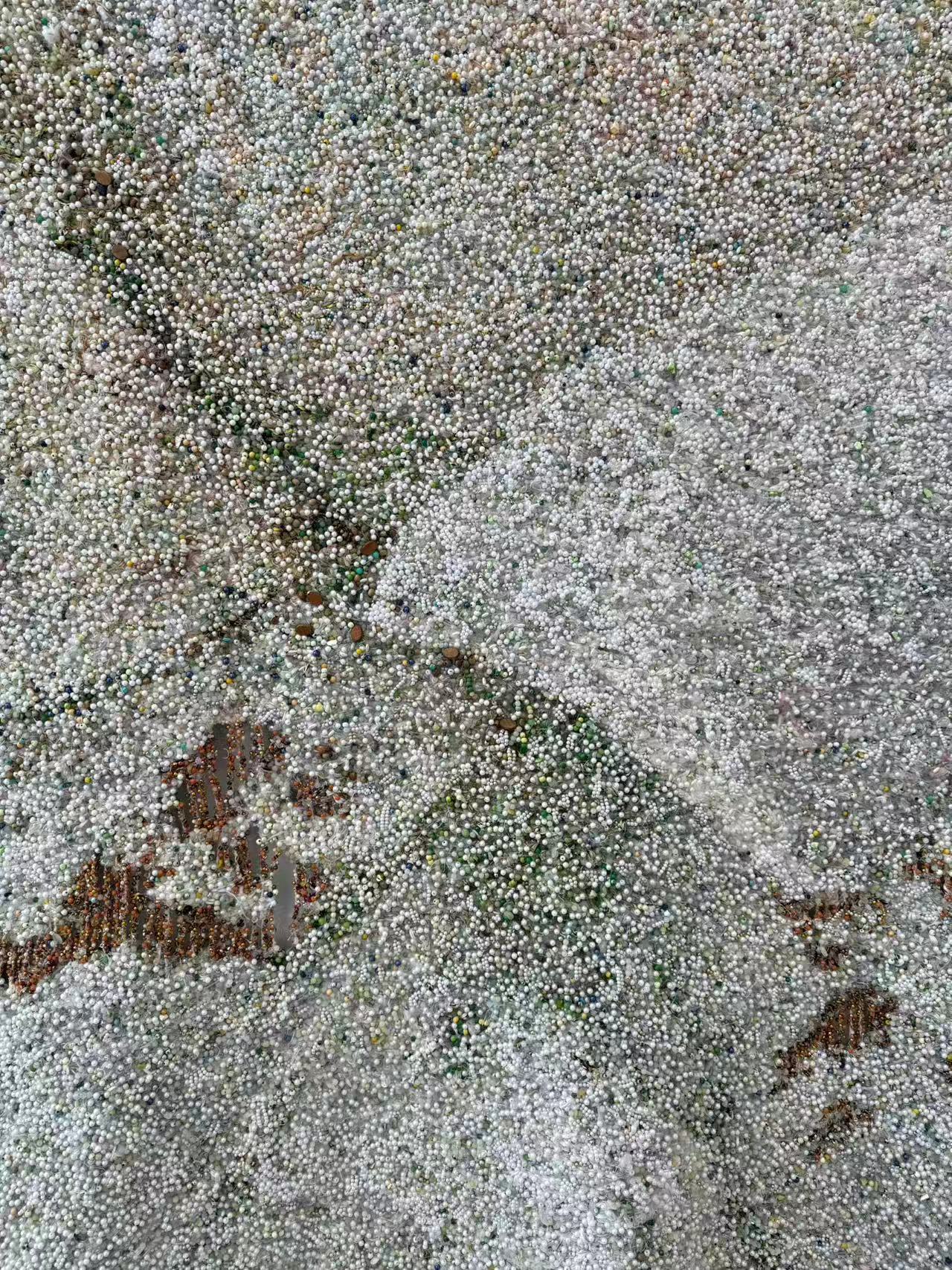
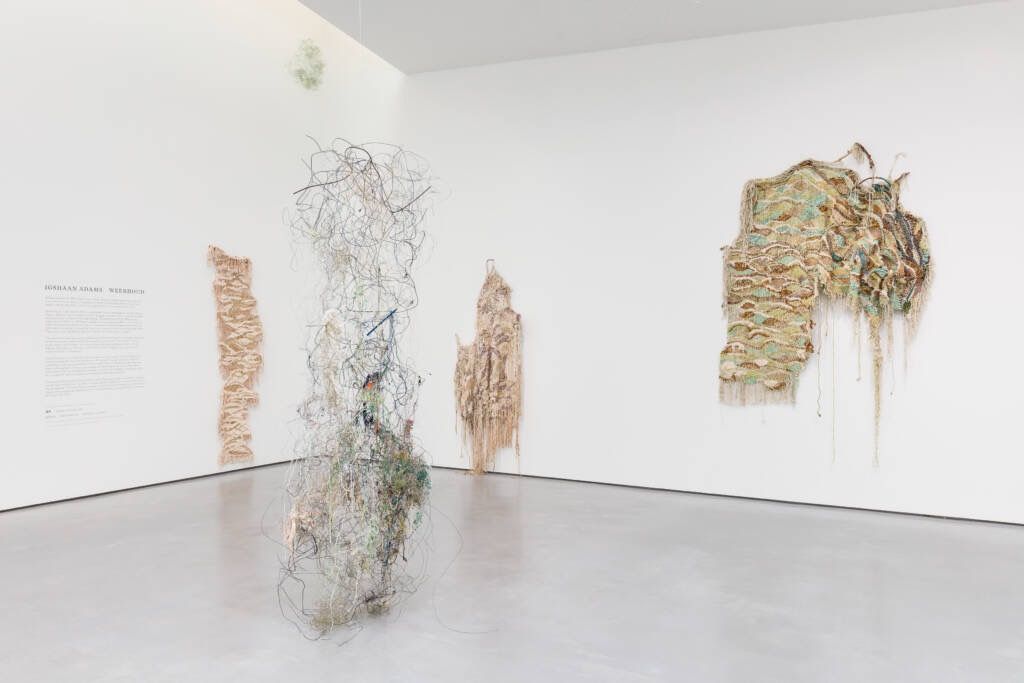
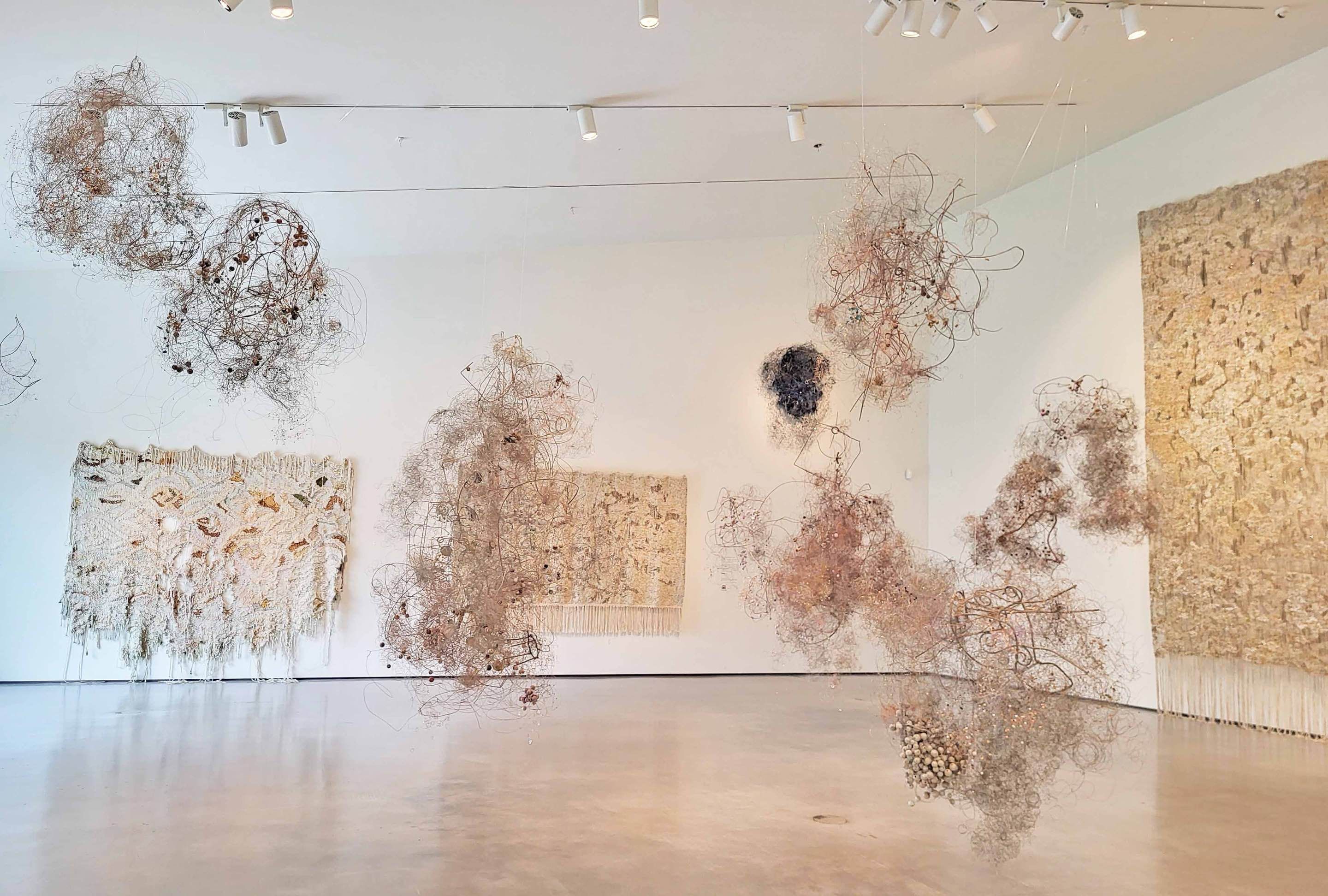
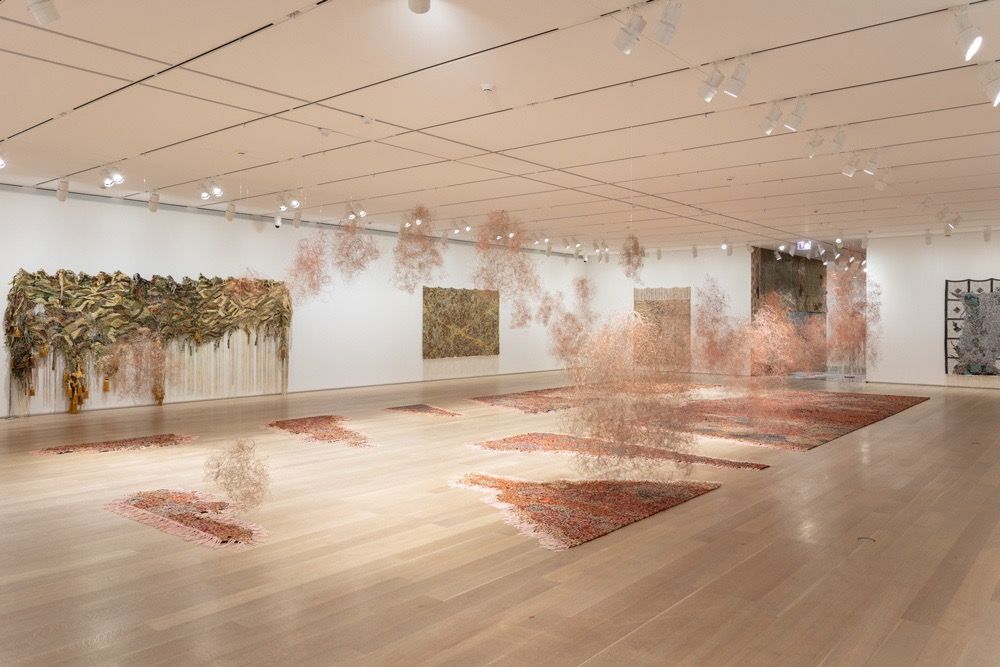
Exhibition view of Desire Lines, The Art Institute of Chicago
From a market perspective, Adams is currently in a phase of rapid ascent. His works have entered the collections of major international institutions and have been acquired by top-tier collectors such as the Speyer family and Beth Rudin DeWoody. This signals not only academic validation but also a steadily advancing market. At present, his price range remains largely below USD 200,000. Compared with established material-based artists such as El Anatsui, whose works often command prices between USD 1–2 million, Adams retains a clear relative advantage and substantial growth potential.
Equally noteworthy is the dual nature of Adams’s work, which balances installation-scale impact with collectability. His suspended installations create powerful, immersive spatial experiences in museum contexts, while his smaller-scale textiles and sculptural works offer strong potential for private collections. This flexibility enables him to maintain both institutional support and a solid collector base, providing a foundation for long-term market stability.
In summary, Igshaan Adams is an artist who combines significant academic weight, a highly distinctive material language, and strong market potential. His work carries forward the postwar tradition of material experimentation while infusing it with new narratives shaped by his cultural background. He is entering the sphere of top institutions and collectors at remarkable speed, and his forthcoming major solo exhibition at the Guggenheim Museum Bilbao will be a critical step in advancing his position within the international art world. For collectors, now is an ideal moment to engage with and acquire Adams’s work—not only as participation in a rapidly evolving career, but also as an investment in a lasting chapter of future art history.