Collecting Insights from Glenstone: Which Artists Are on the Radar of This Billion-Dollar Museum?
The artistic value of Jacqueline Humphries stems from her dialogue with the tradition of abstract painting and her critical engagement with the contemporary technological context. Her works possess both sensory tension and profound cultural analytical depth, capable of responding to multiple issues, and aesthetic politics. For contemporary art collectors pursuing cultural depth and asset stability, she is undoubtedly a target worthy of attention with great long-term layout value.
In recent news surrounding the Glenstone Museum, beyond the widely discussed and art-world–shaking divorce case, our attention has also turned to one artist whom Glenstone has collected with remarkable consistency over more than a decade: Jacqueline Humphries. Since acquiring its first work by Humphries—Untitled—in 2015, Glenstone has continued to build a substantial group of her paintings, most recently adding Untitled (Red). This trajectory also includes the monumental five-panel work JHWx (2021). Works of a similar scale appear in the collection of the Venice-based AMA Foundation, led by Belgian diamond magnate Laurent Asscher, which holds Humphries’s five-panel painting Neiman Marcus (also 2021). The collecting strategies of such institutions are often closely aligned with future academic discourse, long-term collecting trends, and cycles of value reassessment. Their sustained commitment is widely regarded as a key indicator of market confidence, underscoring Humphries’s firmly established position within the contemporary art landscape.
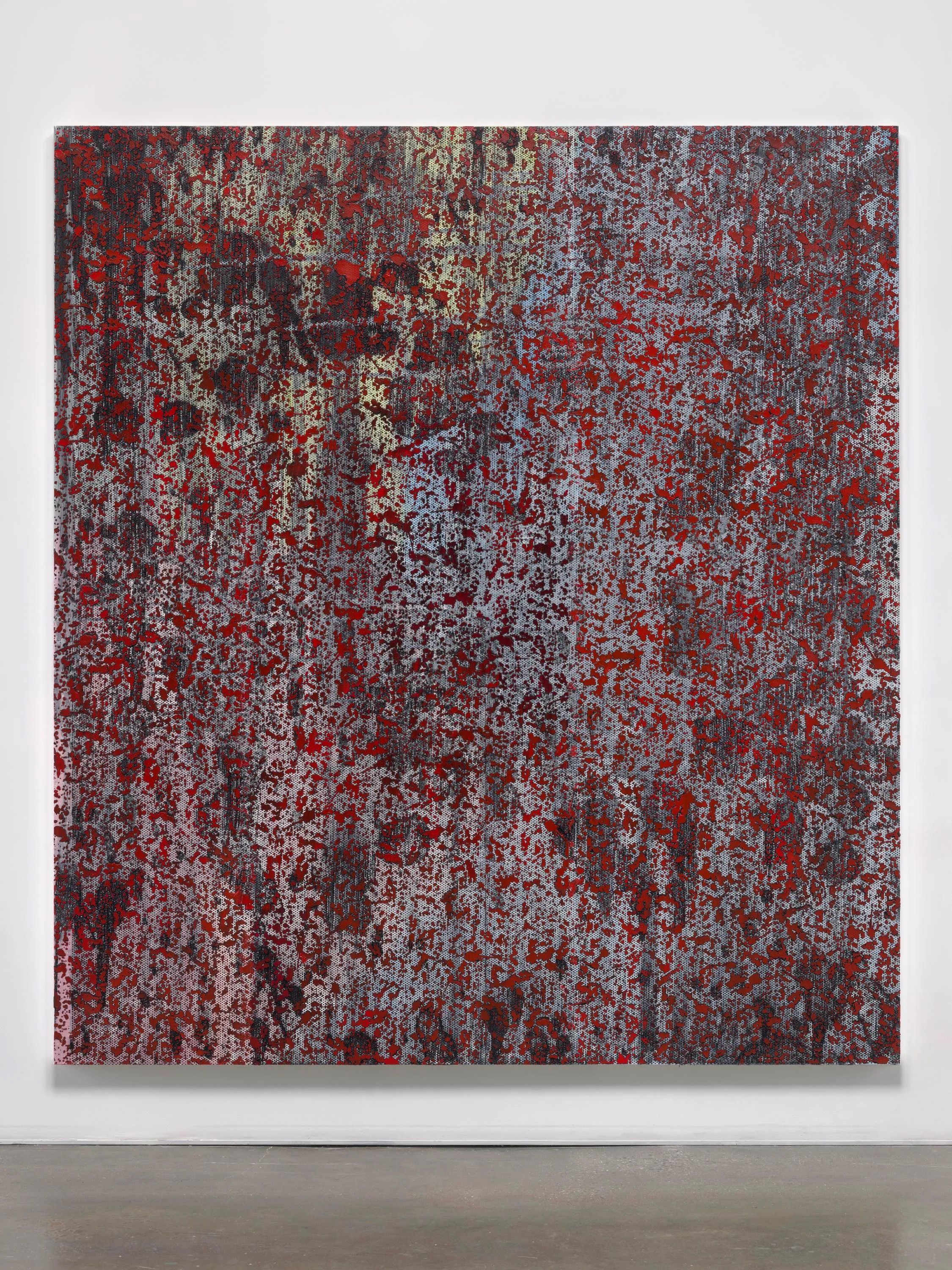
Jacqueline Humphries, Untitled(Red), 2022, Glenstone Museum
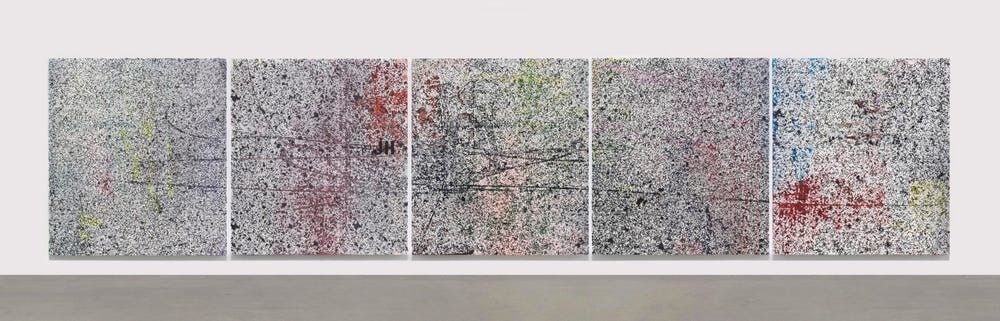
Jacqueline Humphries, JHWx, 2021, Glenstone Museum
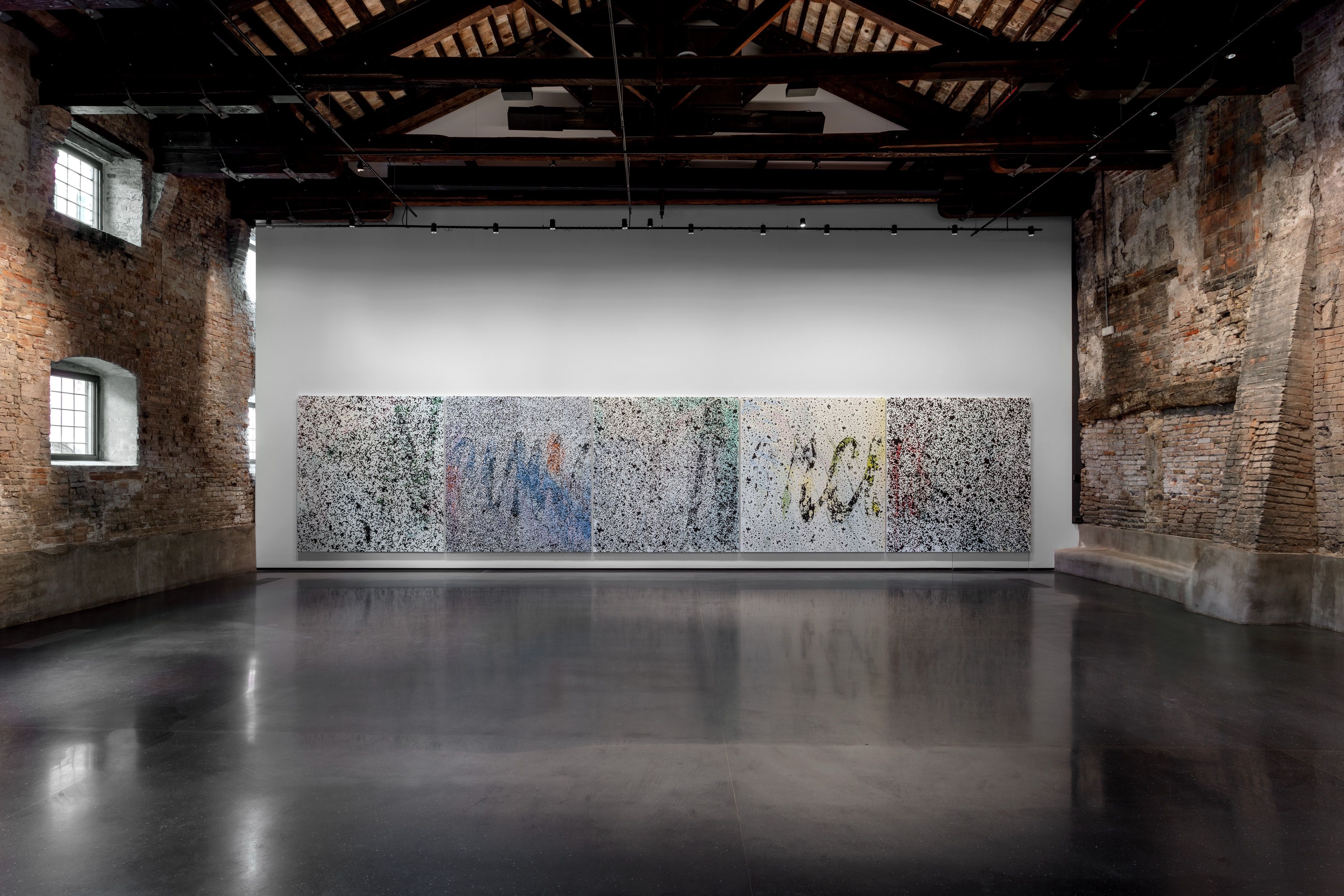
Neiman Marcus, 2021, AMA Foundation, Venice
Humphries’s exhibition history further attests to the depth and seriousness of her practice. In 2014, she was selected for the Whitney Biennial, a pivotal milestone for many American artists in establishing scholarly and institutional recognition. In 2022, her work entered an even broader international context through inclusion in the 59th Venice Biennale, The Milk of Dreams, curated by Cecilia Alemani. In addition, she has held major solo exhibitions at leading institutions, including the Carnegie Museum of Art in Pittsburgh, the Contemporary Arts Center (CAC) in New Orleans, Dia Bridgehampton (part of the Dia Art Foundation) in New York, and the Wexner Center for the Arts in Columbus. These exhibitions not only highlight the multifaceted nature of her artistic practice but also position her as a central figure engaging critically with the era of digital transformation.
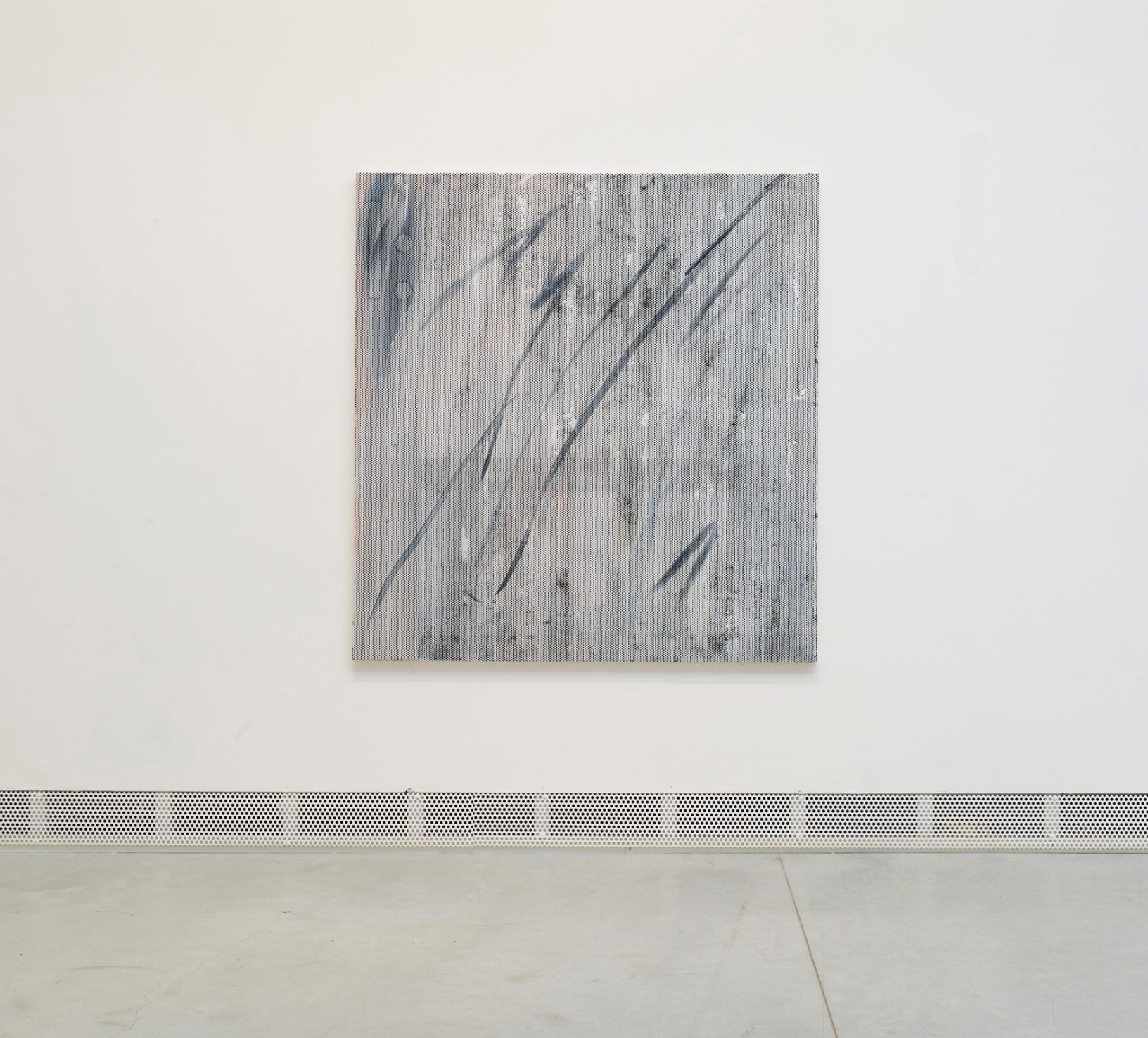
Jacqueline Humphries, Installation view at the 2022 Venice Biennale
At both Art Basel Hong Kong and Art Basel Basel this year, Humphries’s works sold rapidly. In her solo exhibitions, large-scale paintings are often reserved by institutions even before opening, leaving private collectors little opportunity to acquire major new works on the primary market. This phenomenon—where supply is effectively “locked in” by top-tier institutions and major collectors—means that acquiring a Humphries painting today requires not only financial capacity, but also long-term relationships and trust built with her representing galleries.
A closer examination of her work reveals that Humphries offers one of the most compelling interpretations of post-digital painting. Rather than simply embracing technology, she dissects, translates, and reconstructs the structures of digital language. ASCII characters, emojis, CAPTCHA systems, screen-based luminosity, and even blacklight-reactive paint are re-materialized on her canvases as components of an abstract visual vocabulary. Through dense oil paint and layered stencils, she brings technological elements back into the physical space of painting, emphasizing human intervention as a counterforce to automated generation. At a moment when AI has become a pervasive creative tool, Humphries’s work foregrounds the tension between human visual experience and machine-based symbols. She does not collaborate with AI; instead, she subjects it to critique and abstraction.
This visual language closely aligns with current curatorial and market interests in technology, aesthetics, and philosophical reflection. As curators and collectors increasingly engage with questions of subjectivity and the ethics of image production in the age of AI, Humphries’s work offers substantial potential for renewed interpretation and critical framing. In recent years, her use of “digital translation” strategies to process symbols and structures has become a key case study within curatorial discourse.
From a market perspective, her auction performance has shown a steady upward trajectory. Most of her works are estimated within the mid-to-upper price range (USD 50,000–300,000), with multiple examples exceeding presale estimates. More importantly, she currently occupies a rare and strategic position: strongly validated by museums, yet not overheated at auction. This balance makes her particularly attractive to collectors seeking artists with long-term potential. With her works now held by institutions such as AMA Foundation and Glenstone, as well as by London’s Asymmetry Foundation founded by Du Yu, and the prominent Lebanese Aïshti Foundation, her market is well positioned for further growth over the next two to five years—especially for large-scale works and paintings from key periods.
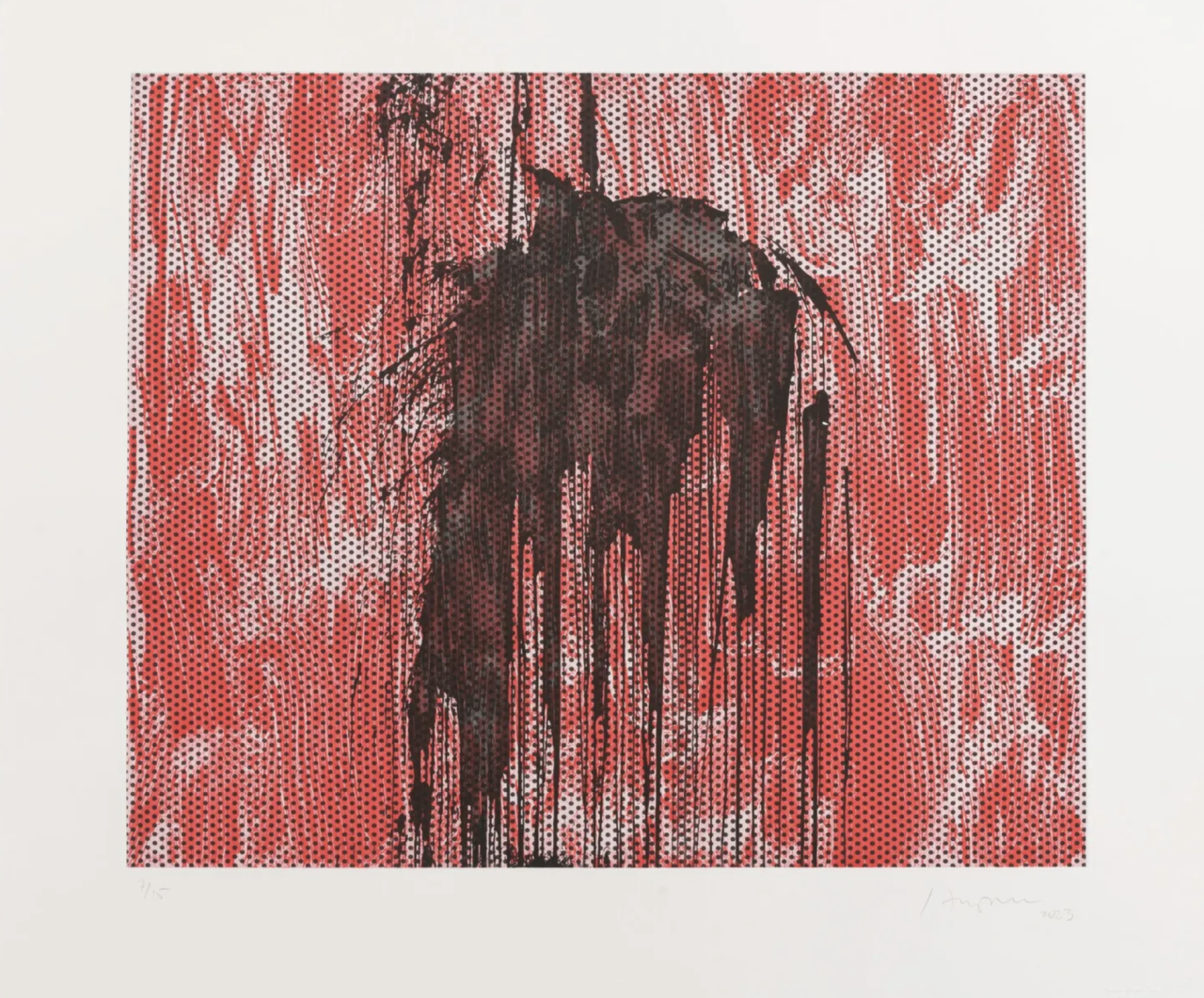
Jacqueline Humphries,Untitled (red),2023
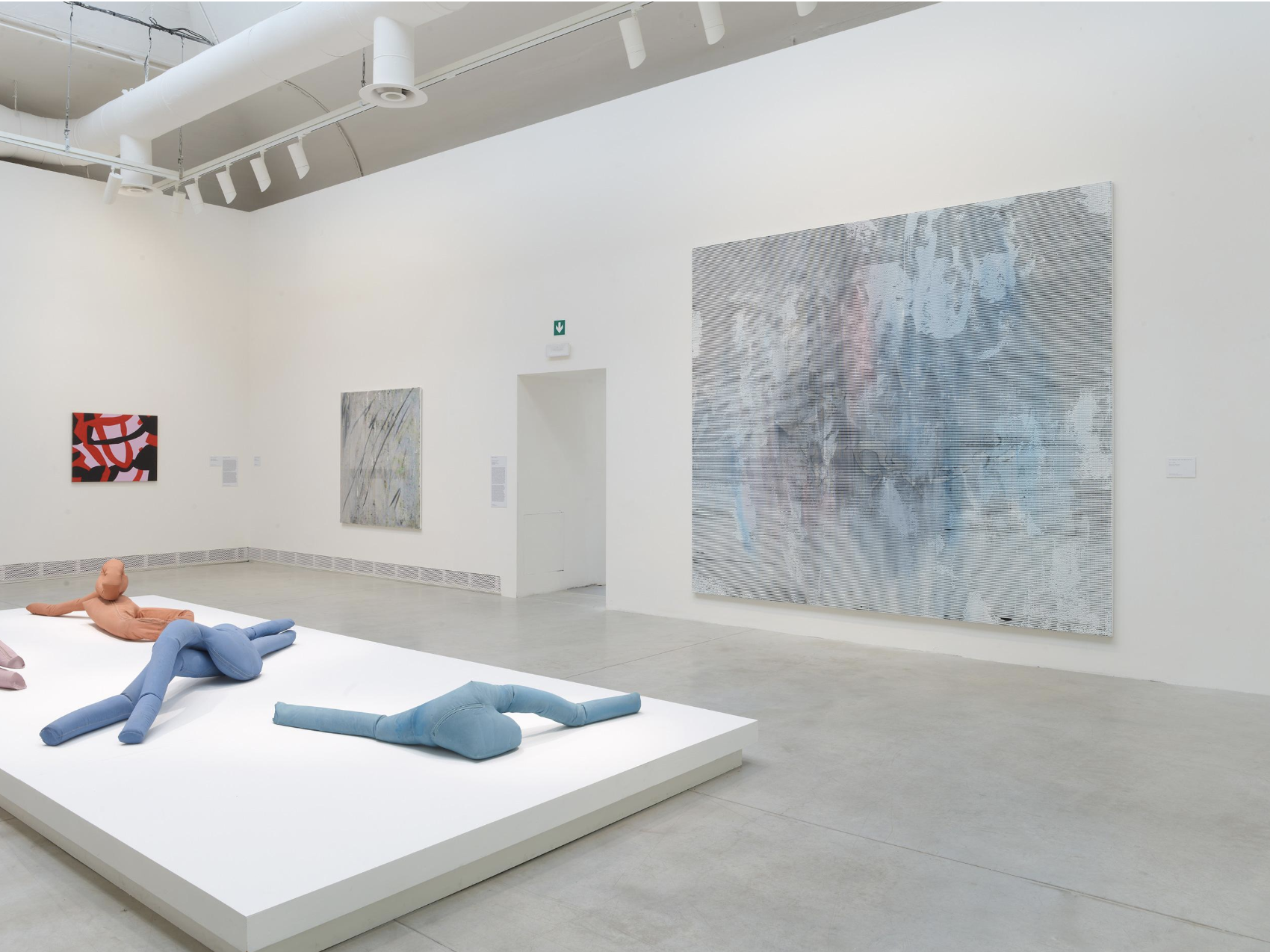
Jacqueline Humphries, Installation view at the 2022 Venice Biennale
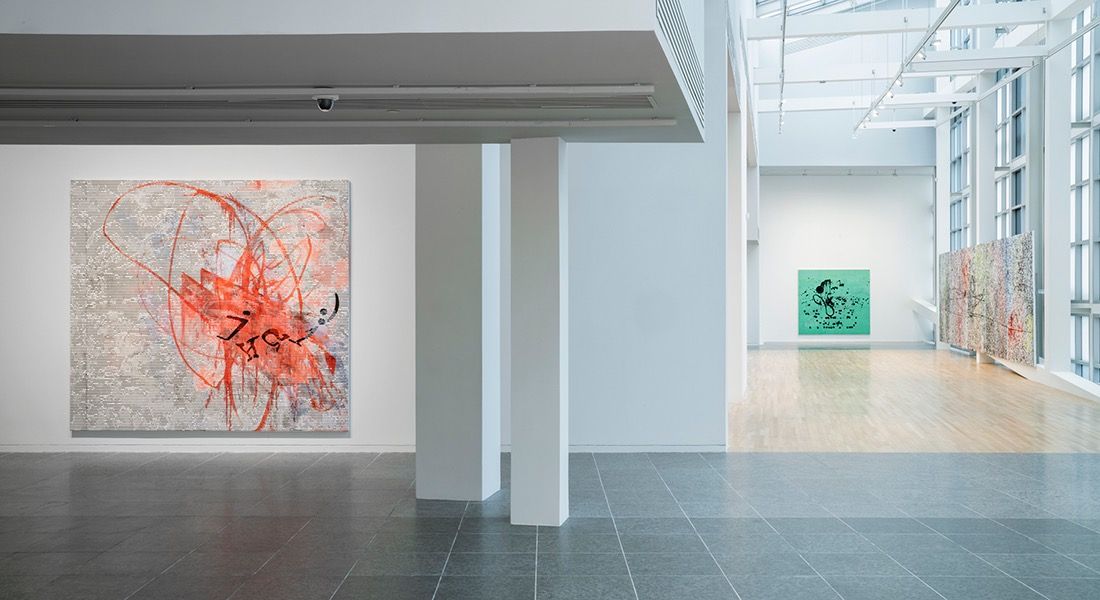
Jacqueline Humphries: jHΩ1:), Installation view at Wexner Center for the Arts, Columbus
In conclusion, Jacqueline Humphries’s value lies not only in her dialogue with the tradition of abstract painting, but also in her critical engagement with contemporary technological conditions. Her works operate simultaneously as sensory provocations and as cultural analyses, addressing art history, the history of technology, and the politics of aesthetics. For collectors seeking to build holdings that combine cultural depth with long-term asset stability in the contemporary art market, Humphries stands out as an artist of significant and enduring strategic value.
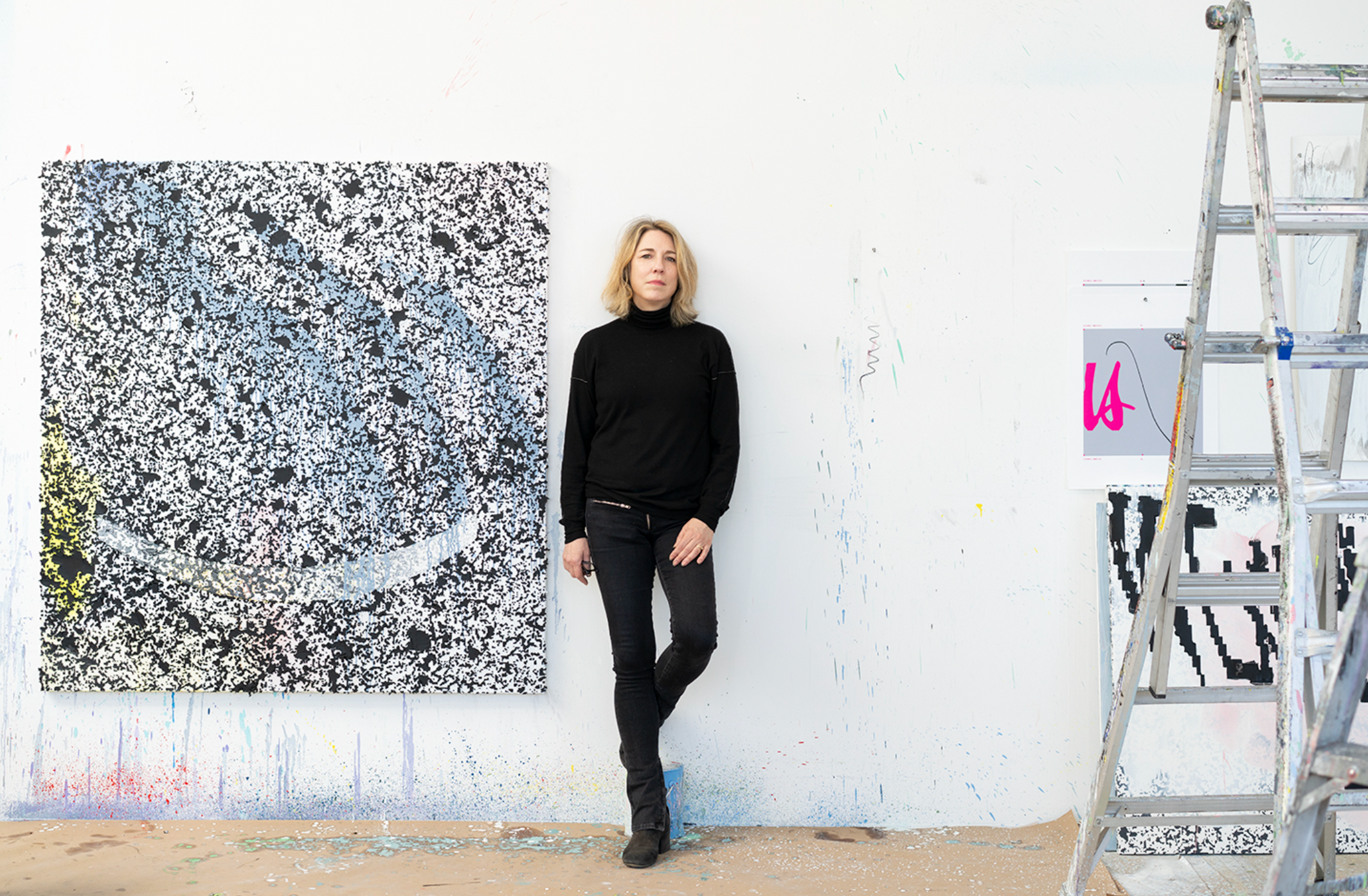
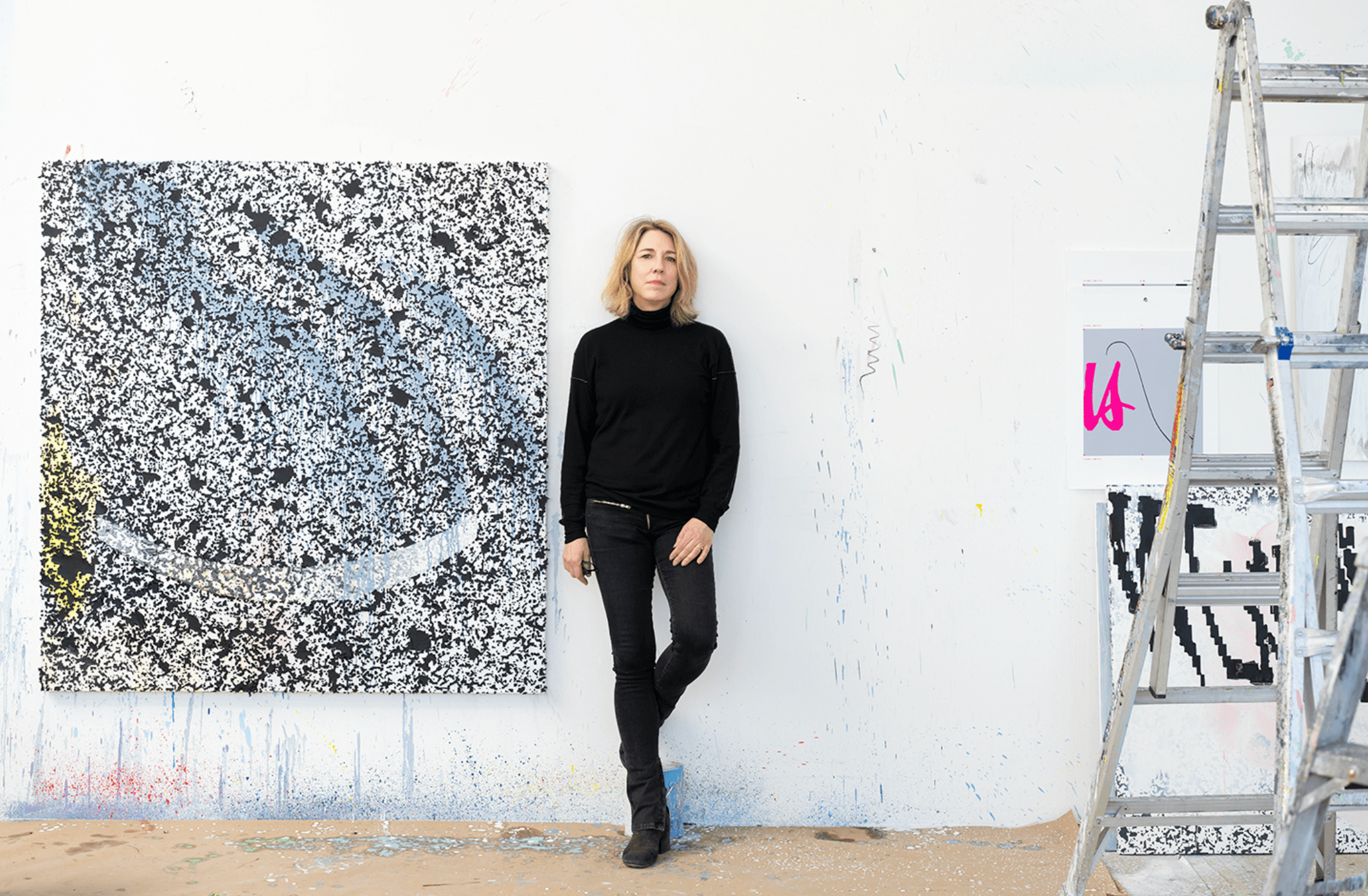
Jacqueline Humphries' Studio