WangShui: A New Chapter in Artificial Intelligence and Contemporary Art
WangShui’s practice employs artificial intelligence as a generative logic while extending the legacy of abstract painting toward future artistic possibilities. Rather than following trends, his work is deeply embedded in art-historical discourse, possessing lasting scholarly and collecting value, and stands as a significant chapter in the future of art history.
In recent years, WangShui has rapidly emerged as one of the most discussed names among curators and collectors on the international contemporary art stage. We first took note of the artist at the 2022 Whitney Biennial, where a three-channel video installation combined with LED wiring left a striking impression. The work not only captured the energy and chaos of the digital age, but also demonstrated WangShui’s precise command of new media language. However, what truly compelled collectors to pause, observe, and begin actively following his practice was his painting on aluminum panels.
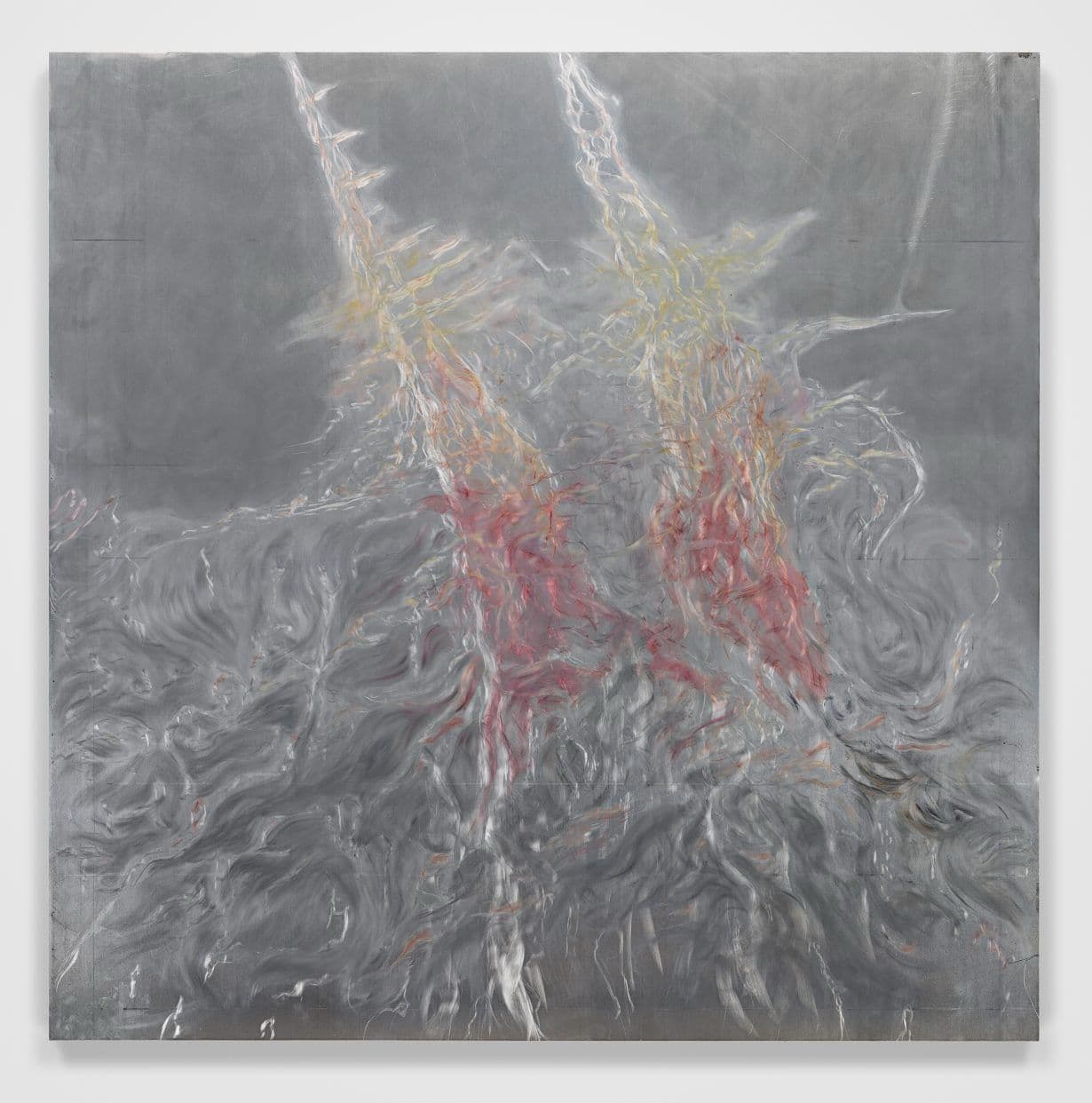
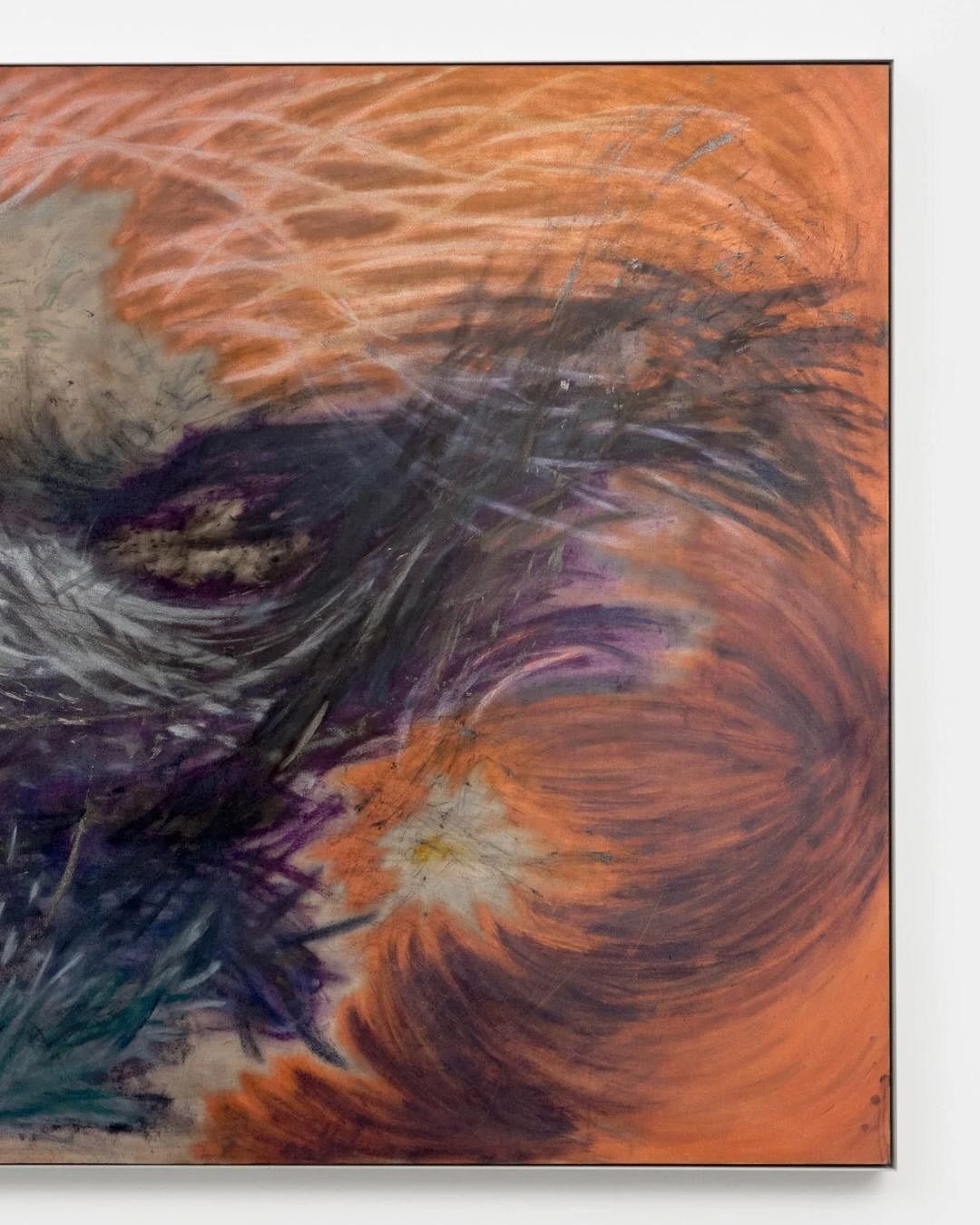
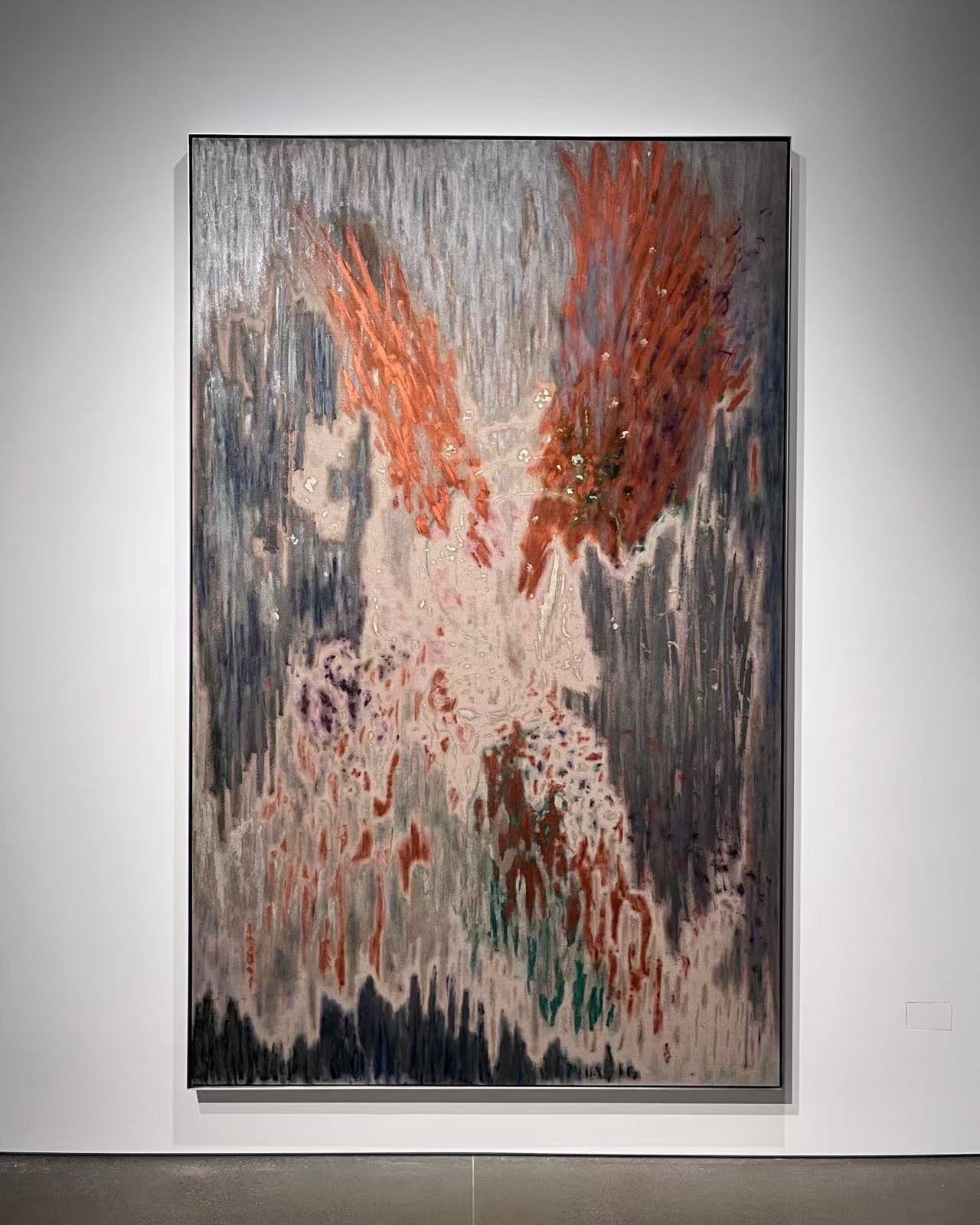
Exhibited at the Whitney Biennial, Hyaline Seed (Isle of Vitr∴ous) unfolds like a silver cascade—its iridescent metallic surface and sweeping gestures hovering between abstraction and figuration. This distinctive visual language originates from WangShui’s rigorous consideration of material. Aluminum, a high-tech industrial substrate, embodies both cool futurity and structural severity, while simultaneously offering paint a unique capacity for reflection and extension. The chromatic layers and luminous surfaces WangShui builds on aluminum break free from the absorptive limits of traditional canvas, allowing the work to shift continuously with changes in light and viewing angle, as if engaging in real-time interaction with the viewer. This painterly language resonates with the fluidity of his moving-image works and responds directly to his sustained inquiry into artificial intelligence and posthuman conditions.
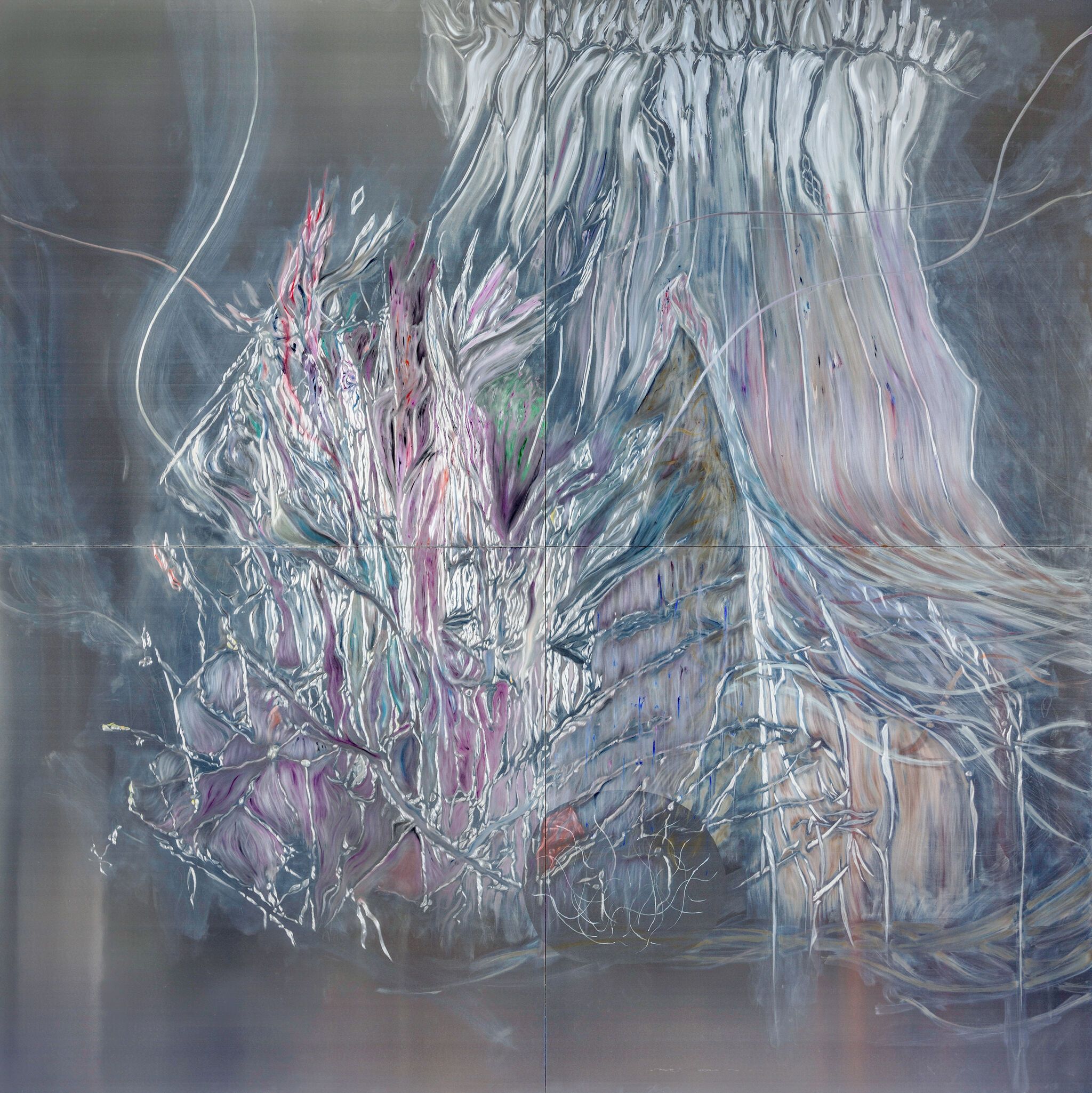
Hyaline Seed (Isle of Vitr∴ous), 2022, Whitney Biennial, New York
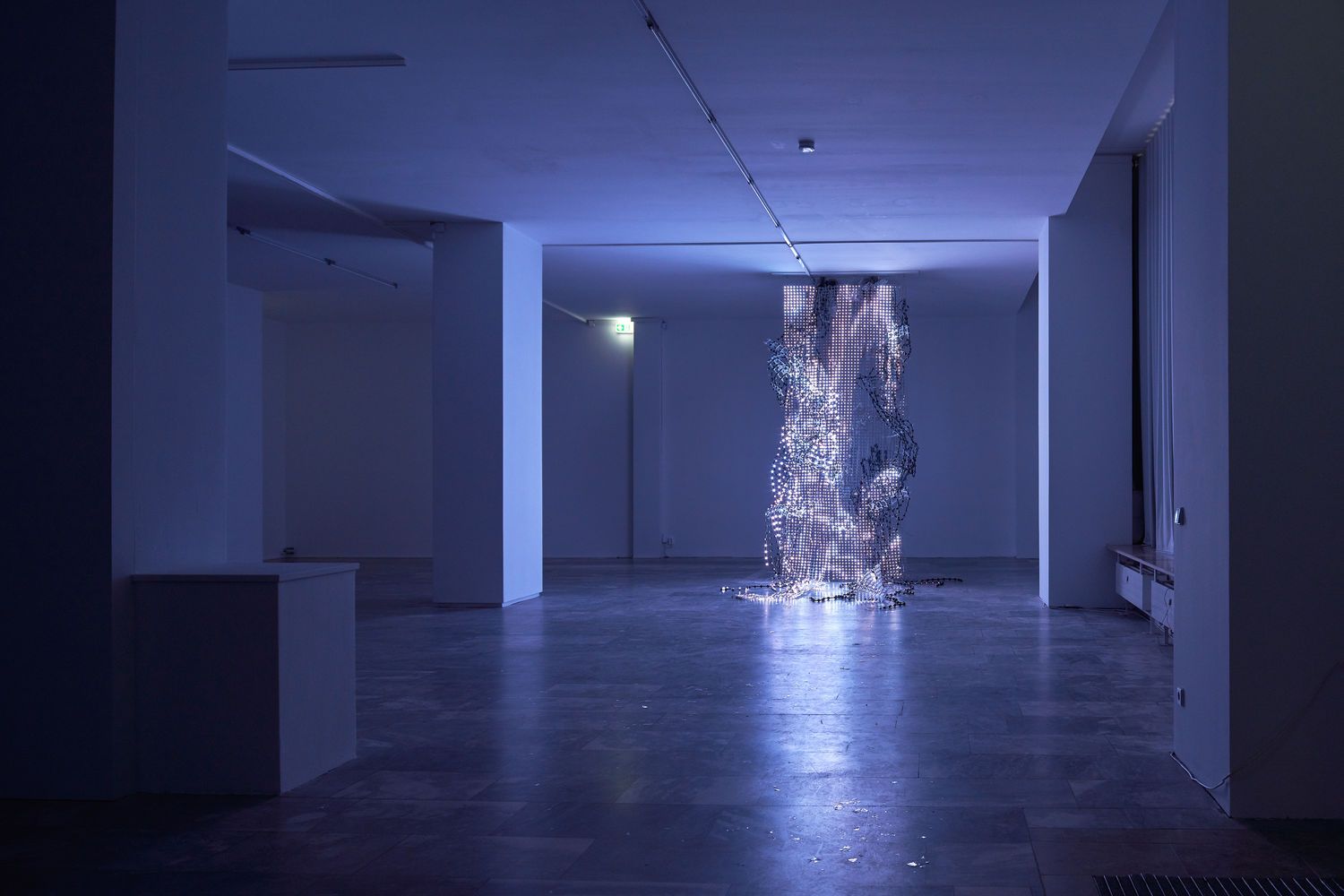
Weak Pearl, 2019, Hammer Museum, Los Angeles
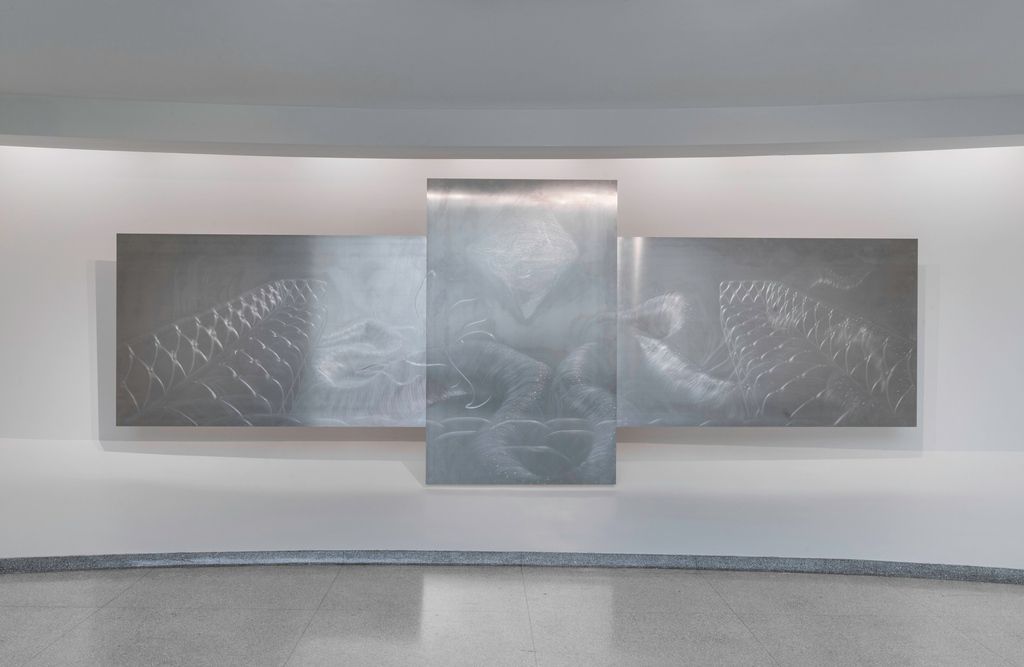
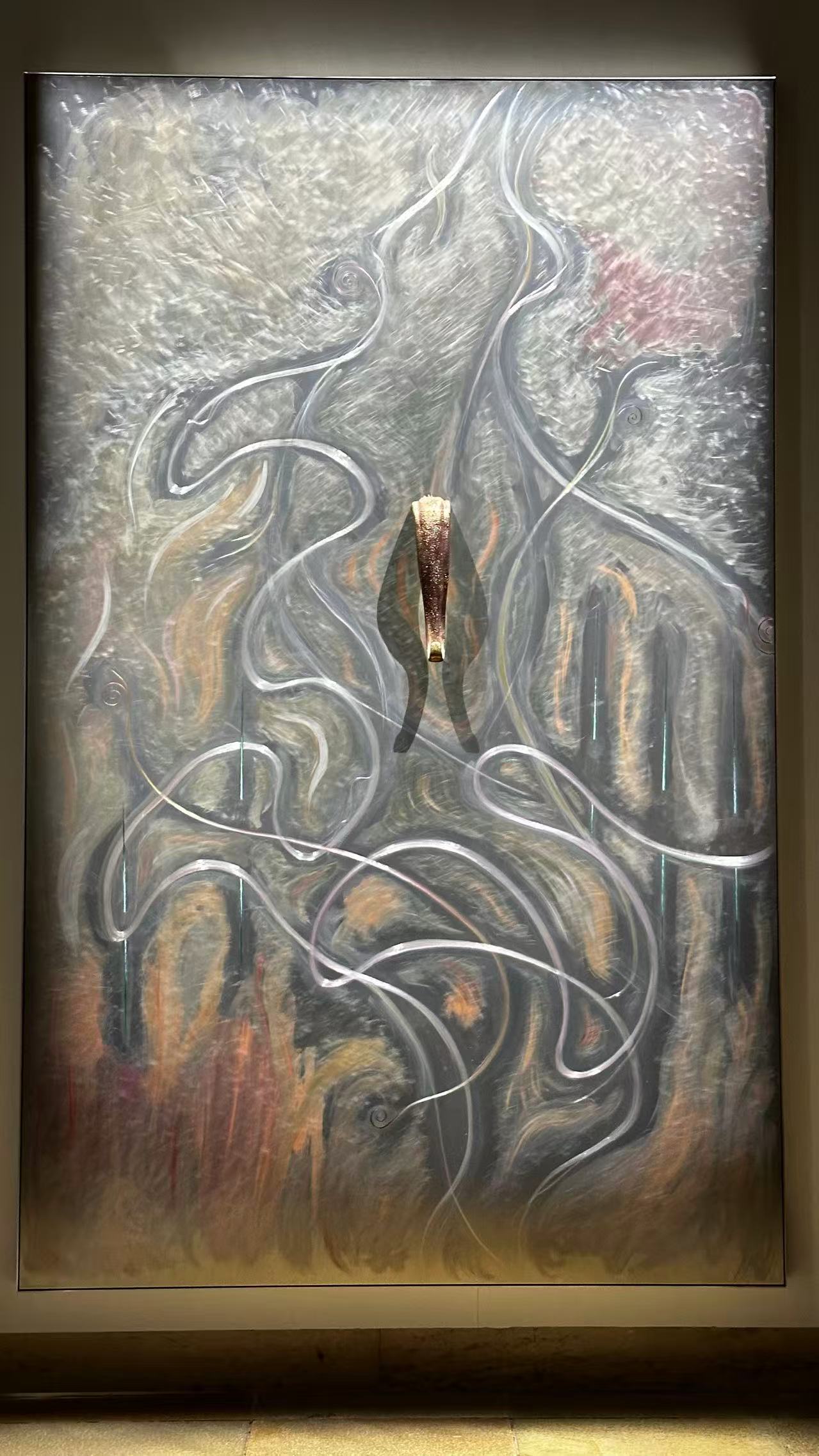
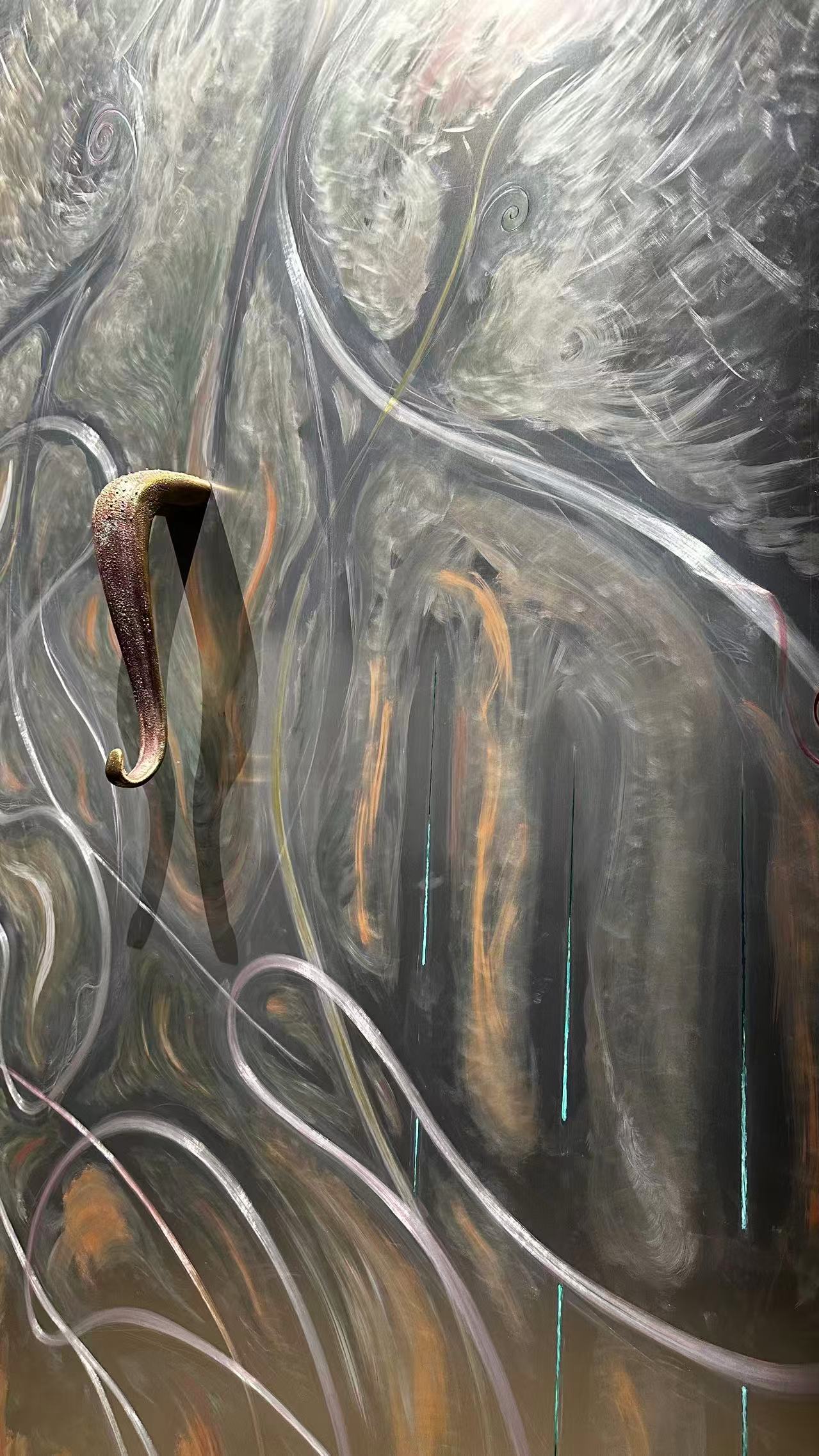
Ambiguous Congress, 2023, Solomon R. Guggenheim Museum, New York
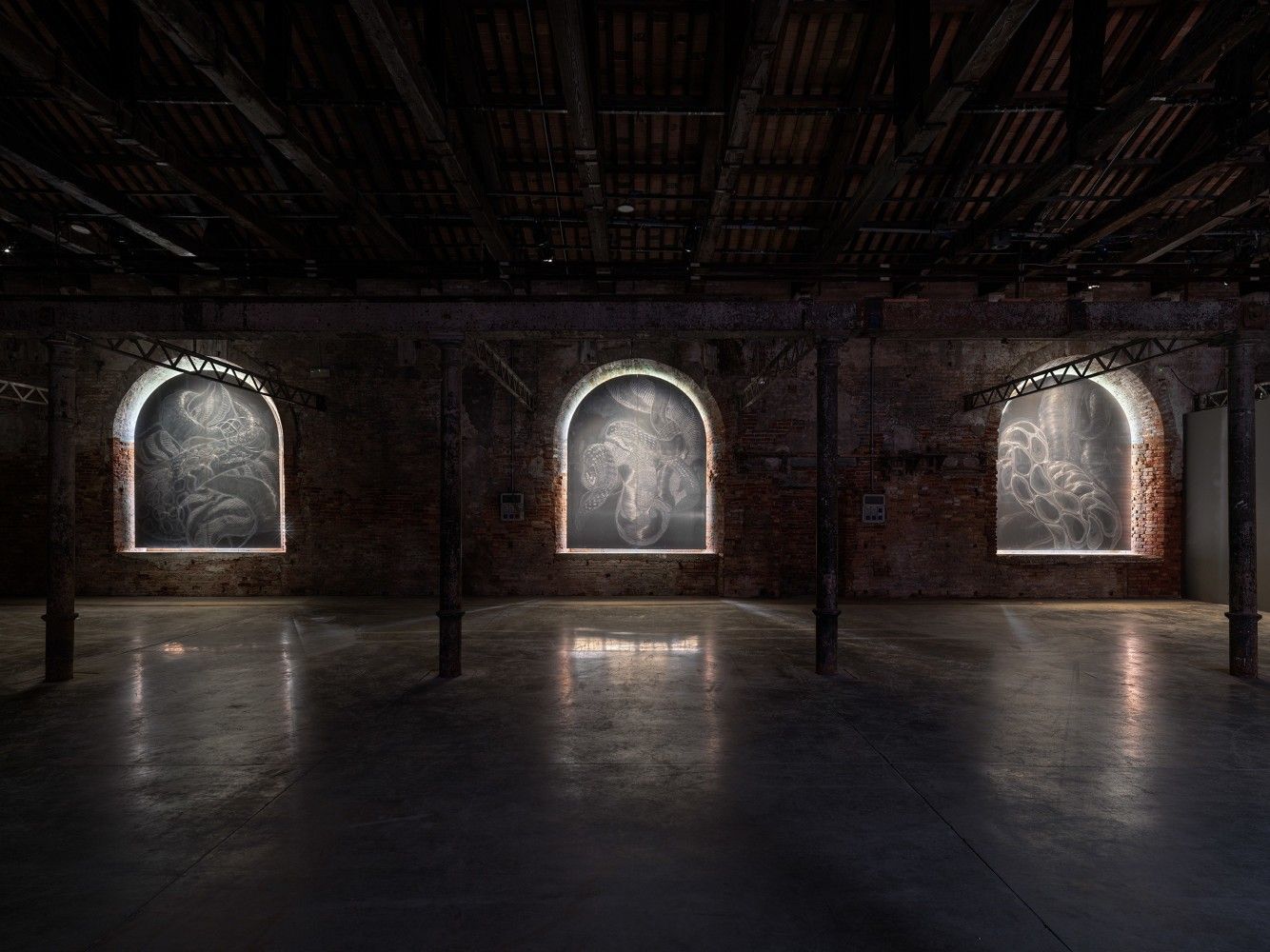
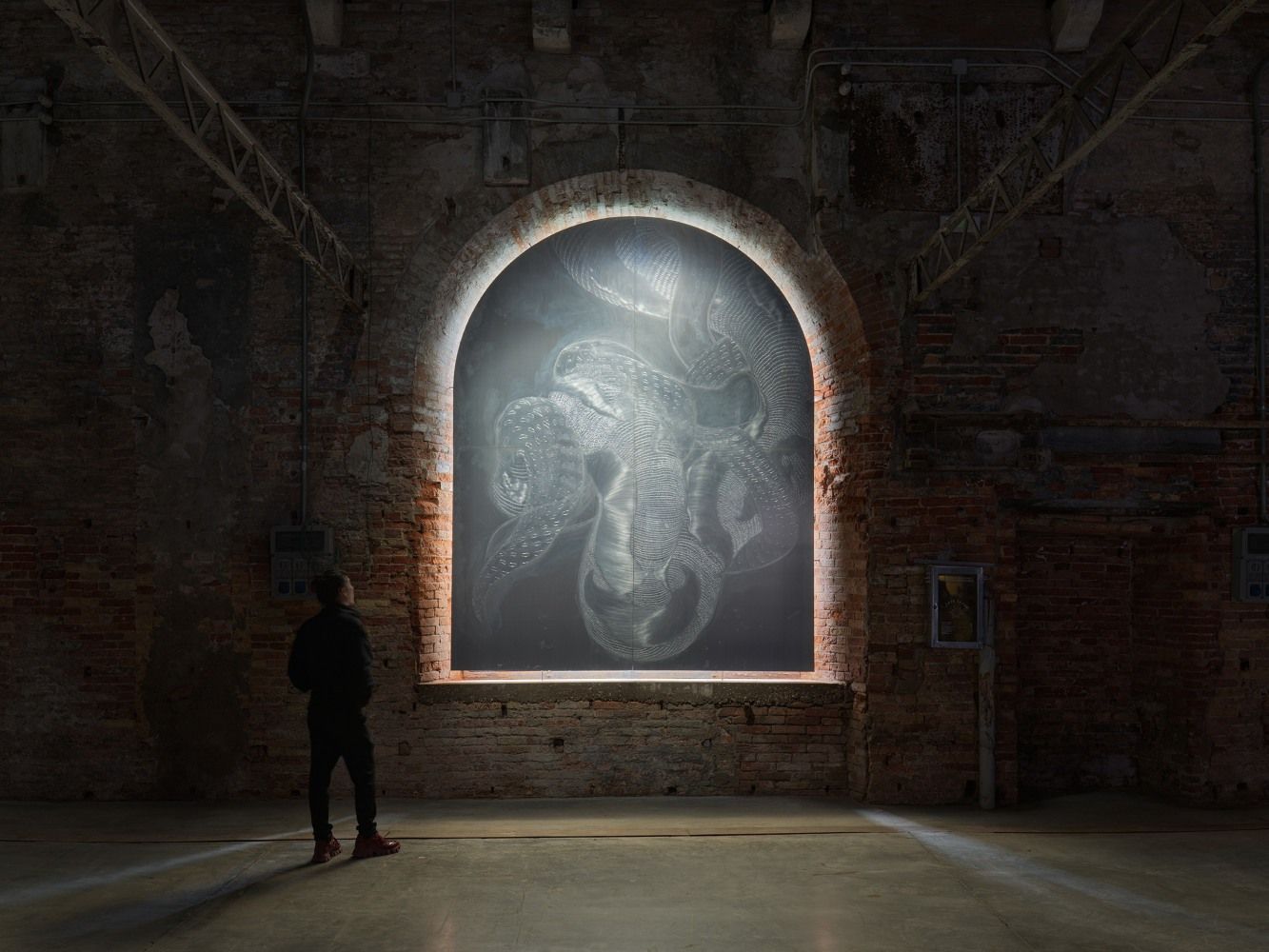
Following the Biennial, we were fortunate to acquire for our collectors another significant work from the Isle of Vitr∴ous series. In hindsight, this decision proved not only a matter of acute artistic judgment, but also a sound long-term collecting strategy. Since the Whitney exhibition, WangShui’s institutional trajectory has been nothing short of extraordinary. In 2022, he participated in the Lyon Biennale; in 2023, he returned to the Whitney Museum and presented a solo exhibition at Haus der Kunst in Munich; and he was subsequently commissioned by the Solomon R. Guggenheim Museum in New York to create the monumental three-panel painting Ambiguous Congress. At the 60th Venice Biennale in 2024, WangShui embedded three large-scale aluminum paintings into the fan-shaped windows of the Arsenale, generating a powerful tension with the historic architecture and firmly establishing his position within the global institutional landscape.
WangShui’s artistic inquiry extends far beyond material experimentation. At its core lies one of the most urgent issues of our time: the entanglement of artificial intelligence and human perception. Rather than treating AI as a mere tool, WangShui positions it as a co-author, juxtaposing technological logic with human emotional vocabularies to produce visual experiences that are at once unfamiliar and profoundly affecting. This approach has positioned him not only as a leading figure at the intersection of art and technology, but also as a critical case study for institutions concerned with how contemporary art history will be written. This is not a passing trend, but a central question that art historians and curators will be compelled to confront over the next two decades.
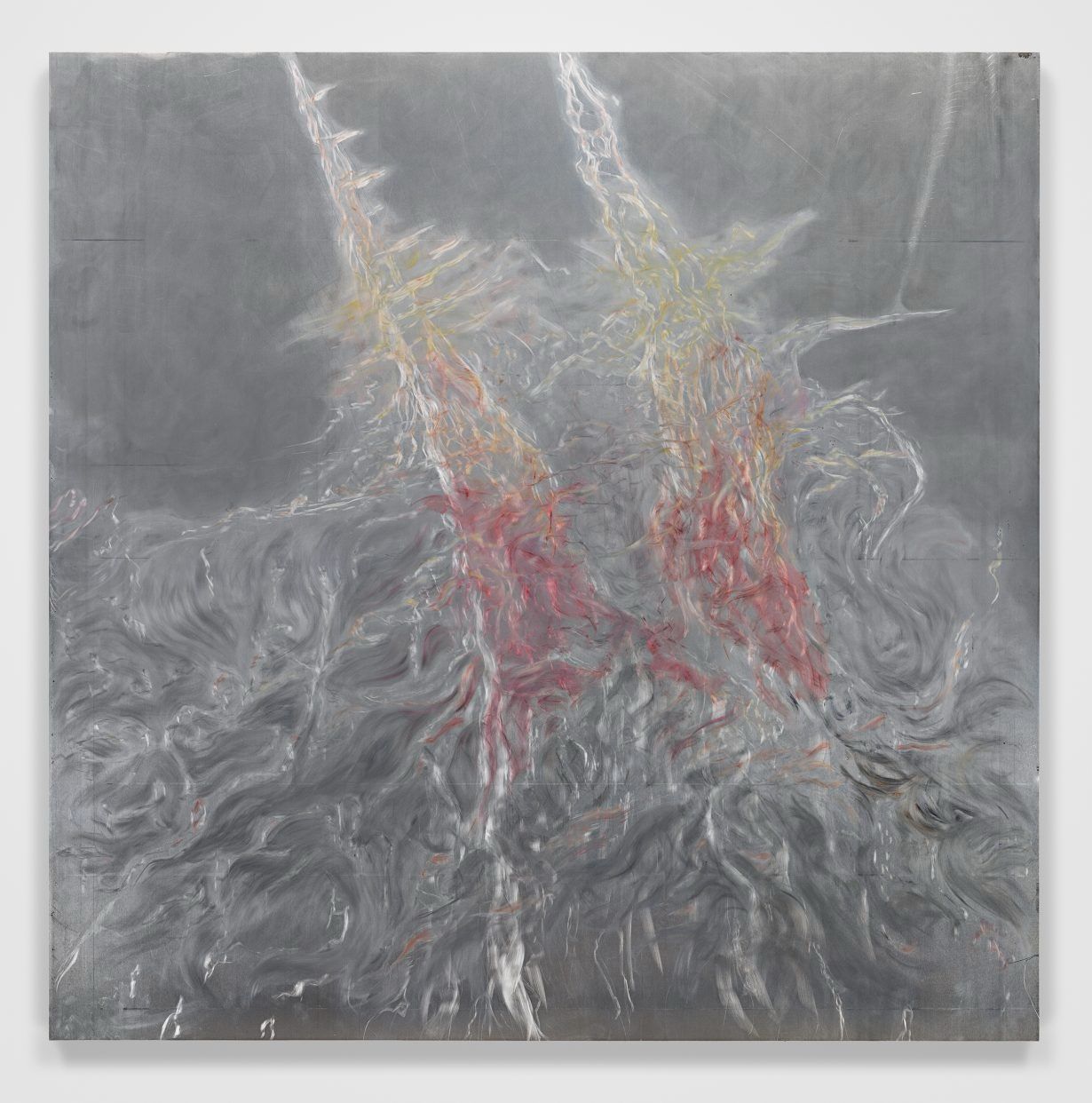
Double Lift (Fig re VII & VIII), 2023
This coming October, WangShui will present a major solo exhibition at Fondazione Iris in Rome. Founded by Cy Twombly and his heirs, the foundation invites only one artist each year to exhibit at Twombly’s former residence in Bassano in Teverina, with the explicit requirement that the work engage in dialogue with Twombly’s painterly spirit. Two years ago, Rita Ackermann created an entirely new body of work for the foundation—Manna Rain (a series we recently acquired for an important European collection and will discuss in a future essay). WangShui’s forthcoming presentation in this highly symbolic space represents both a profound affirmation of his painting practice and a prelude to his debut exhibition with a blue-chip gallery in London.
We believe there are two compelling reasons to collect WangShui’s work. First, his academic and institutional positioning is already firmly established. Since the Whitney Biennial, his exhibition history has encompassed North America, Europe, and the Venice Biennale—the highest international platform—an achievement attained by very few artists of his generation. Second, his visual language is both singular and forward-looking. By integrating aluminum-panel painting with AI-generated processes, WangShui simultaneously engages the legacy of material experimentation and opens new pathways for the future of painting. This is precisely why our collectors have developed such a strong and lasting affinity for his work.
It can be said that WangShui’s art no longer merely reflects the present; it actively anticipates the future. As art history increasingly turns to the convergence of artificial intelligence and human creativity, WangShui will undoubtedly stand as one of its most pivotal figures. For collectors with long-term vision, this moment represents an opportunity to participate in, collect, and become part of that history. More importantly, WangShui’s rise is not driven by momentary trends, but by a deep and sustained dialogue with art-historical tradition. His aluminum-panel paintings carry forward the spirit of abstraction while introducing AI as a generative force—an approach that engages tradition while simultaneously projecting it into the future. This dual orientation ensures that his work will not dissipate with shifting fashions, but will instead be gradually inscribed into the canon. In other words, to collect WangShui is to incorporate a core chapter of future art history into one’s own collection.
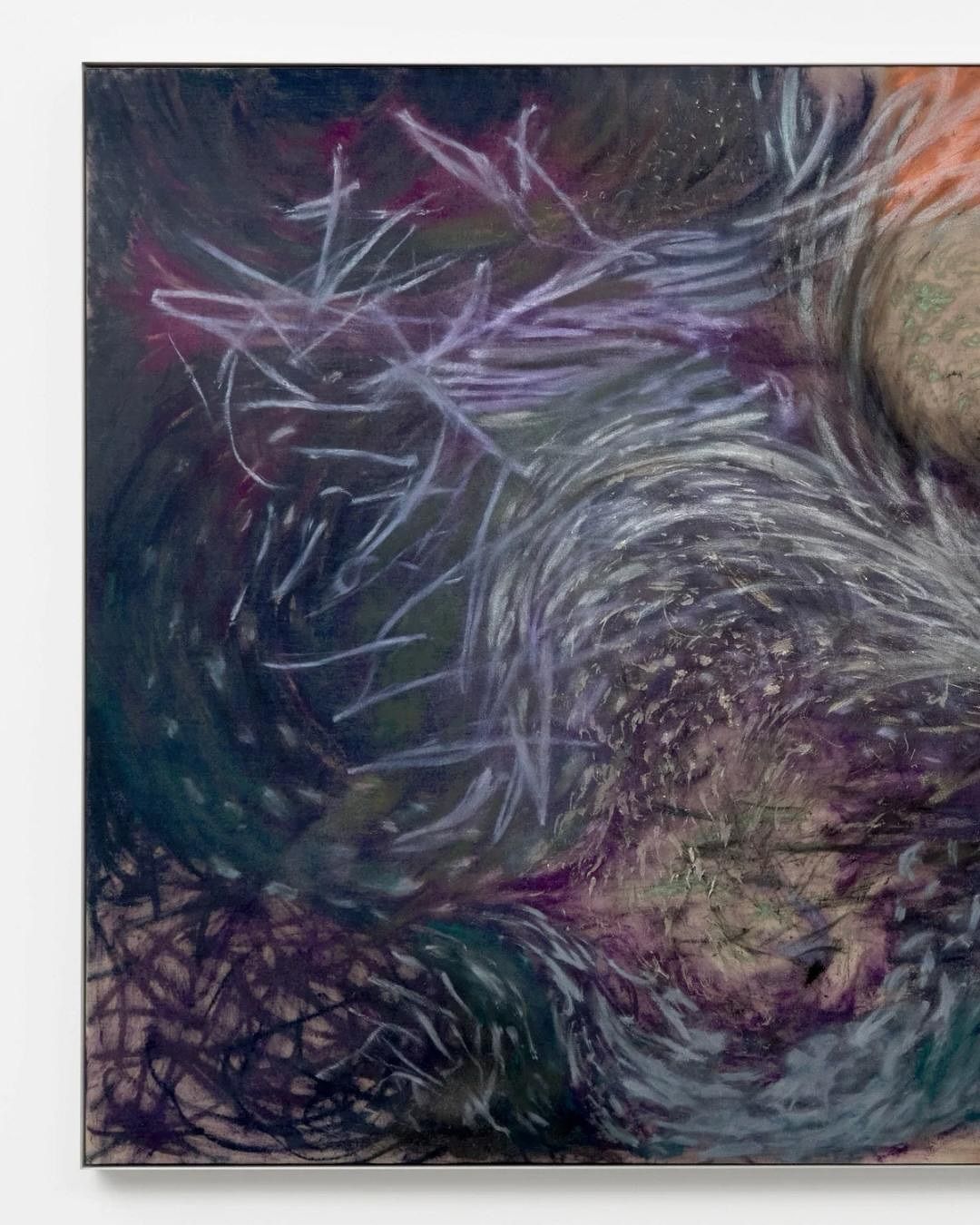
Transmissions, 2024